
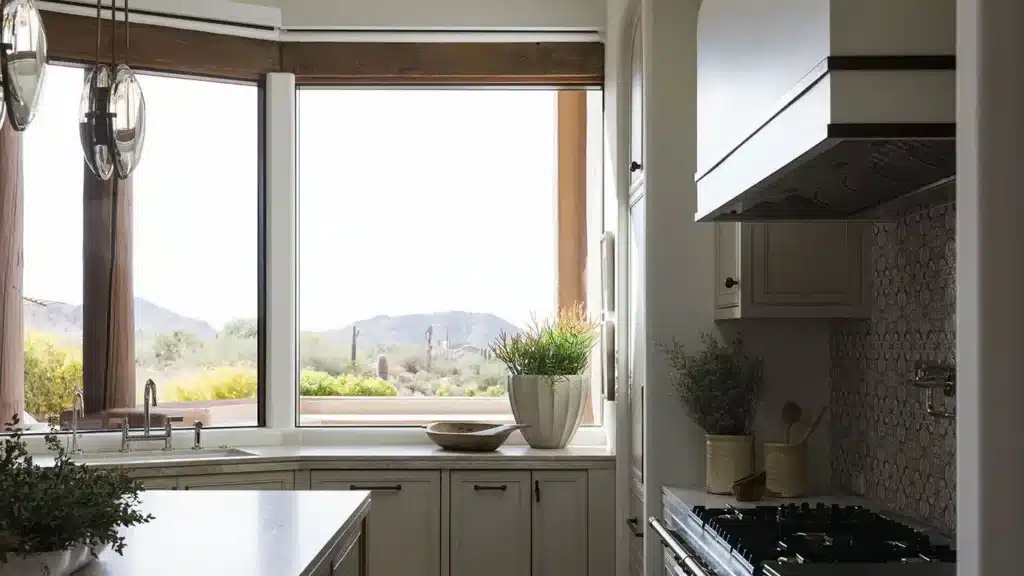
Average Window Replacement Cost in 2026
Replacing one window costs about $749 installed on average in 2026. A useful budget range is $509 to $1,600 per window, or $5,090 to $24,000 for a home with 10 to 15 windows. These are national estimates, not a quote for your home.
For homeowners in Northwestern Arizona, the final price depends on window size, frame material, glass, and whether the installer can use the existing frame. Start with your window count, then compare written quotes that spell out installation and any repair costs. This guide will help you see what is driving the price.
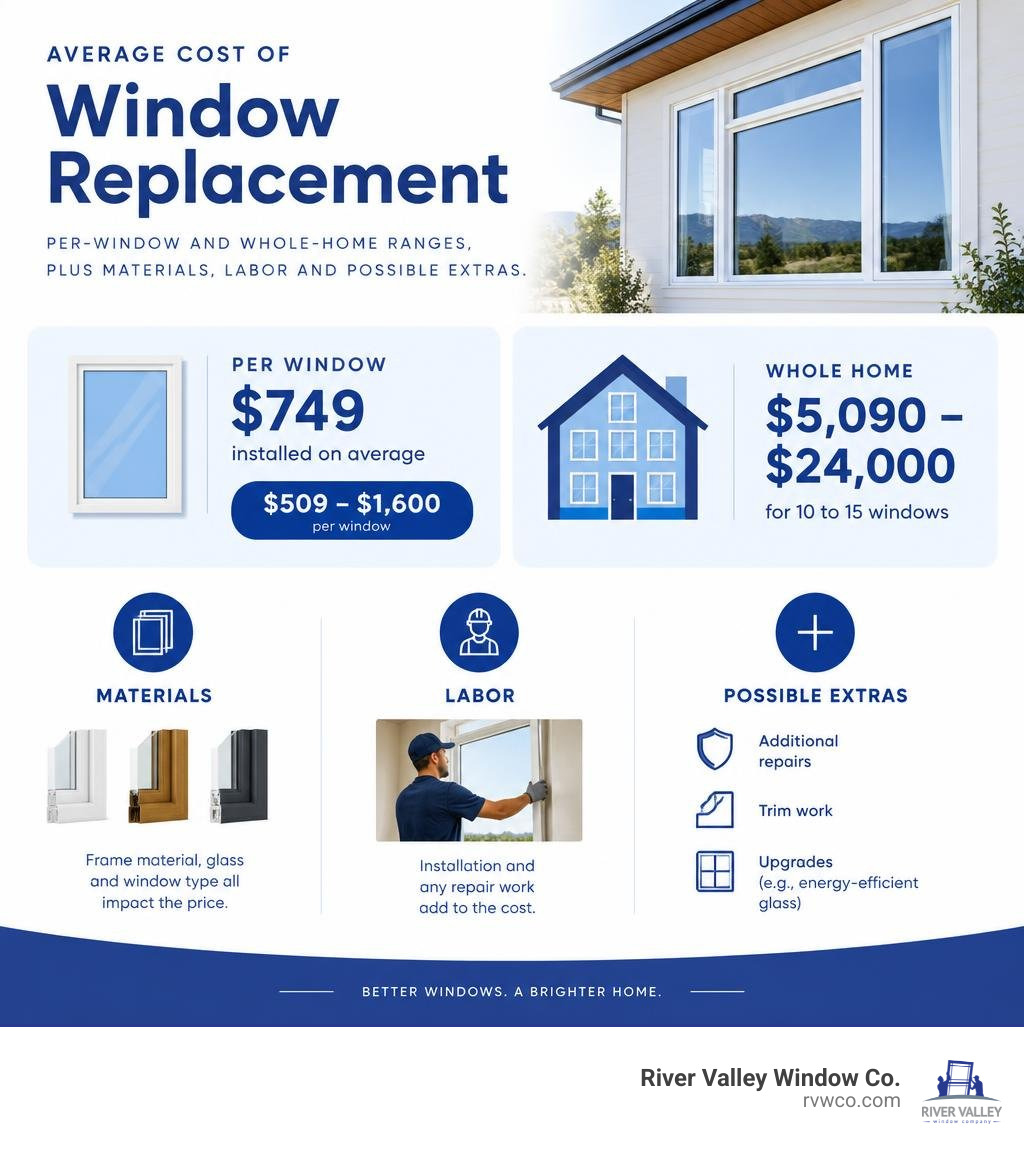
Average cost of window replacement vocab explained:
Benchmarking the Average Cost of Window Replacement in 2026
When evaluating estimates for your property, understanding per-unit pricing establishes a reliable baseline. Understanding the real cost of changing house windows prevents sticker shock when looking at initial contractor estimates. While national averages center around $749 to $900 per installed window, prices fluctuate based on quality tiers, structural scope, and regional labor markets.
In Lake Havasu City and across Northwestern Arizona, intense solar exposure makes proper glass specification and professional installation essential. A budget-grade window that fails under desert heat often ends up costing significantly more over time in lost energy efficiency and premature seal failure.
| Project Scope / Tier | Cost Per Window (Installed) | Typical 10-Window Project | Typical 15-Window Project |
|---|---|---|---|
| Budget Tier (Basic Vinyl/Insert) | $509 – $650 | $5,090 – $6,500 | $7,635 – $9,750 |
| Mid-Range Tier (High-Performance Vinyl) | $650 – $1,100 | $6,500 – $11,000 | $9,750 – $16,500 |
| Premium Tier (Fiberglass/Wood Clad) | $1,100 – $1,800+ | $11,000 – $18,000+ | $16,500 – $27,000+ |
Key Factors Influencing What You Pay Per Window
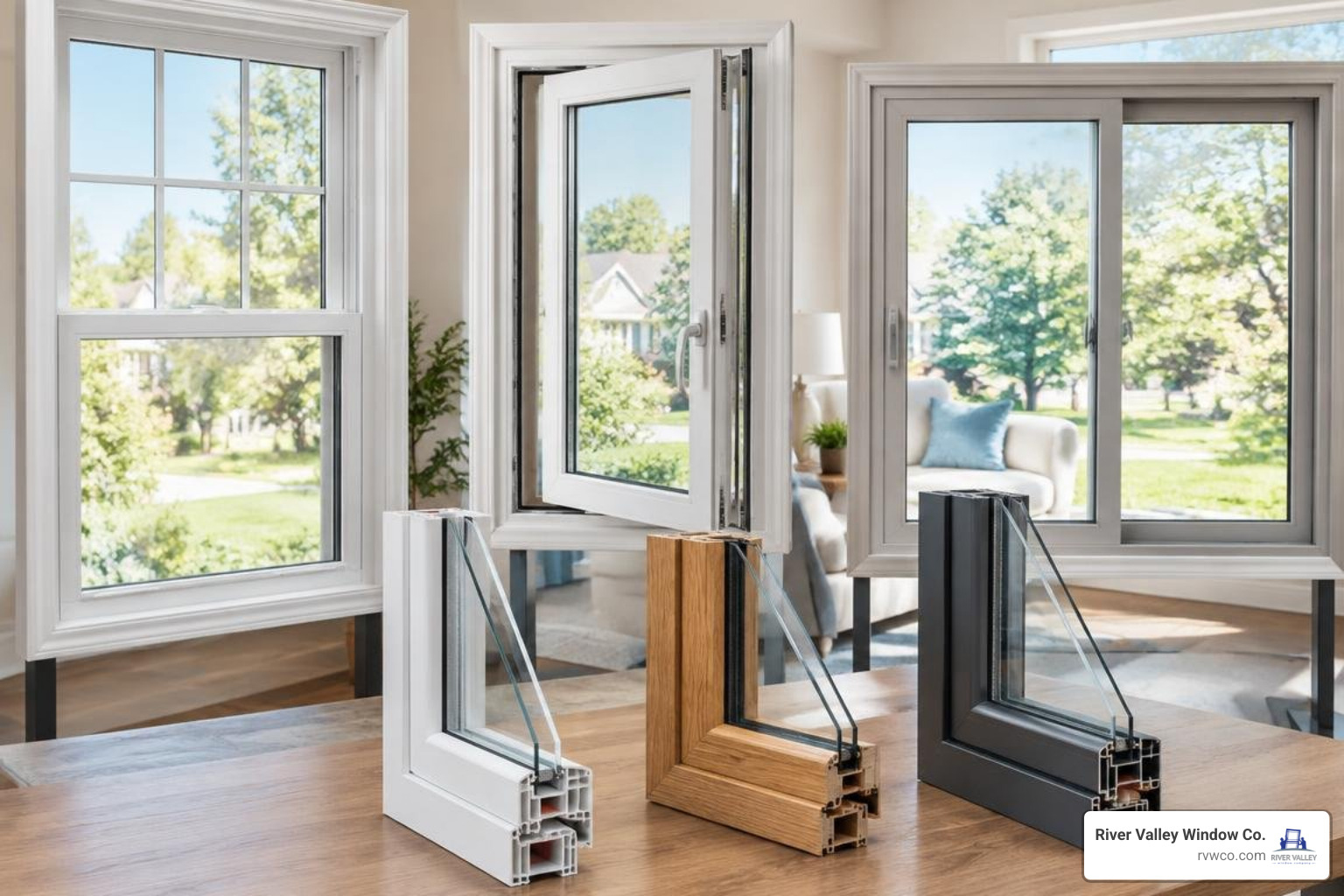
Every home features unique structural demands that influence material and labor costs. To establish an accurate spending plan, follow our guide to budgeting for window replacement. Several primary factors determine where your project falls within standard pricing bands:
- Frame Material: Vinyl remains the most cost-effective, while fiberglass, aluminum, and clad wood carry higher material premiums.
- Glass Technology: Low-E coatings, argon gas fills, and impact ratings add upfront costs while reducing solar heat gain.
- Sizing and Custom Shapes: Standard manufacturer dimensions cost substantially less than custom architectural openings.
- Installation Method: Retrofit pocket inserts save on labor, whereas full-frame replacements require tearing down to the rough opening.
Average Cost of Window Replacement by Frame Material
Frame material dictates both upfront expense and long-term durability. When evaluating choices, comparing vinyl window costs helps determine whether standard vinyl meets your performance criteria.
Choosing the best materials for replacement units requires balancing local climate conditions against your budget. Vinyl is the most widely installed material, offering excellent thermal insulation at an affordable price point. Fiberglass provides unmatched structural rigidity and withstands extreme temperature shifts without expanding or warping.
| Frame Material | Average Installed Cost Per Unit | Expected Lifespan | Maintenance Needs |
|---|---|---|---|
| Vinyl | $450 – $900 | 25 – 35 Years | Low (Wipe down occasionally) |
| Fiberglass | $900 – $1,800 | 40 – 50 Years | Very Low (Highly dimensionally stable) |
| Wood-Clad | $1,200 – $2,400 | 30 – 60 Years | Moderate (Maintain interior finish) |
| Aluminum | $450 – $1,200 | 20 – 30 Years | Low (High thermal conductivity) |
Cost Differences by Window Style and Operation
Operating style directly impacts hardware complexity and manufacturing costs. Single-hung and sliding windows feature fewer moving parts, keeping costs lower, while double-hung units provide versatile ventilation at a modest upcharge. Casement and awning windows utilize compression seals and mechanical cranks that provide tighter thermal closures at slightly higher costs.
When upgrading patio access points, evaluating balcony sliding doors involves factoring in larger glass spans and specialized rolling mechanisms. Specialty units—such as multi-panel bay or bow windows ($2,162 to $5,832) or code-mandated egress openings ($3,046 to $7,669)—require dedicated framing support and represent higher investment levels.
Retrofit Inserts vs. Full-Frame Installation
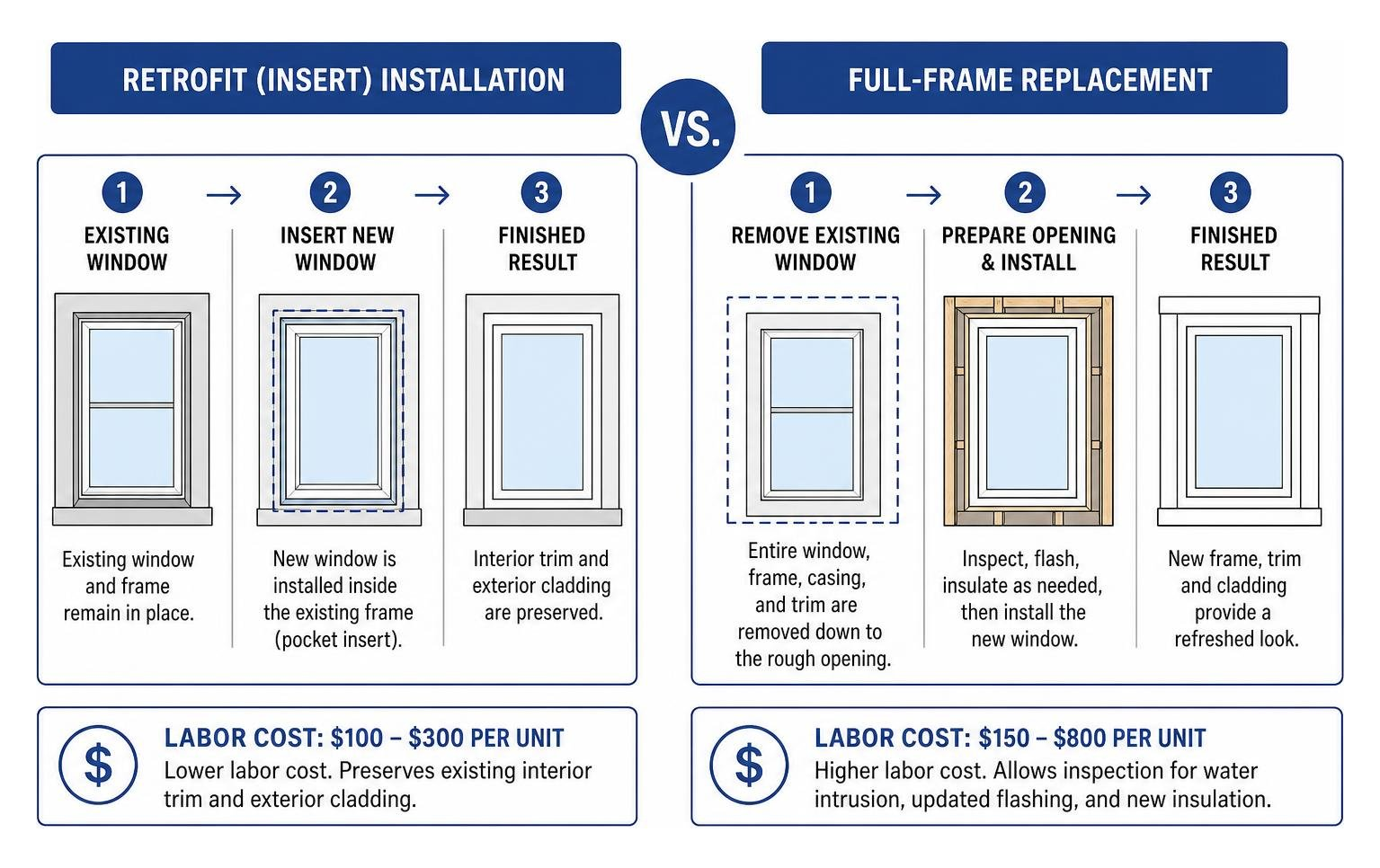
Understanding your installation options is essential when choosing the best replacement approach.
- Retrofit (Insert) Installation: The installer mounts the new window inside the existing, structurally sound window frame. This approach preserves existing interior trim and exterior cladding, requiring $100 to $300 in labor per unit.
- Full-Frame Installation: The entire existing frame, casing, and trim are removed down to the rough stud opening. This method allows installers to inspect for hidden water intrusion, apply updated flashing, and install new insulation, with labor running $150 to $800 per unit.
Project Scope: Estimating Whole-House Expenses
Upgrading every window at once allows contractors to optimize labor and pass along volume savings. Review our checklist for local replacement projects before scheduling your initial consultation.
How House Size Impacts the Average Cost of Window Replacement
Project scope dictates final pricing, with larger jobs amortizing fixed operational and permitting costs. Tracking the signs you need new windows ensures you replace failing units before extensive structural issues develop.
| Total Window Count | Scope Description | Typical Project Cost (Vinyl Inserts) | Typical Project Cost (Mid-to-High Tier) |
|---|---|---|---|
| 10 Windows | Small Home / Partial Upgrade | $5,090 – $8,000 | $8,000 – $16,000 |
| 15 Windows | Average Single-Family Home | $7,635 – $12,000 | $12,000 – $24,000 |
| 20 Windows | Large Single-Family Home | $10,180 – $16,000 | $16,000 – $32,000 |
| 25 Windows | Multi-Story / Estate Home | $12,725 – $20,000 | $20,000 – $40,000 |
Labor, Permitting, and Hidden Structural Expenses
Labor generally accounts for 17% to 40% of the total installation estimate. In specialized circumstances, additional expenses may arise:
- Municipal Permits: Building permits typically run $50 to $300 depending on local municipal requirements.
- Structural Repairs: Correcting dry rot or frame settling discovered after tear-out can add $100 to $2,000+ depending on framing damage.
- Exterior Stucco Remediation: Stucco saw-cutting and patching in Southwestern builds can add $300 to $900 per opening during full-frame replacements.
- Glass Unit Only Failures: When frames are intact, identifying insulated glass seal failure allows for targeted glass pane replacement rather than tearing out entire assemblies.
Energy Savings, ROI, and Value Breakdown

High-performance windows create an airtight thermal barrier that keeps cooled air indoors during scorching summer months. You can explore how energy-efficient windows reduce bills to see how modern glass coatings lower cooling load demands.
Energy Efficiency and 2026 Tax Credit Updates
The federal Section 25C Energy Efficient Home Improvement Credit expired on December 31, 2025; windows installed in 2026 do not qualify for this federal tax credit. Homeowners can still take advantage of local utility rebates and long-term utility bill savings by exploring local energy efficiency options. Upgrading old single-pane glass to modern ENERGY STAR rated double-pane windows can yield $300 to $780 in annual heating and cooling savings.
Resale Value and Return on Investment
Upgrading old windows delivers strong returns at resale. According to industry remodeling data, vinyl window replacement projects recoup roughly 67% to 76% of their installed cost at resale, while enhancing curb appeal and structural weatherproofing. Review the top benefits of home window upgrades to see how upgraded fenestration enhances living comfort and marketability.
Strategic Ways to Maximize Your Window Budget
- Gather Detailed Written Quotes: Have contractors specify installation types, glass packages, and cleanup fees. Review these key questions to ask your installer before signing an agreement.
- Balance Materials by Elevation: Learn practical strategies for finding affordable quality windows by using premium glass on sun-drenched southern exposures and standard configurations on shaded walls.
- Select Certified Local Experts: Use our guide on picking top-rated local installers to ensure clean craftsmanship and preserved manufacturer warranties.
Frequently Asked Questions About Window Replacement Costs
Is it cheaper to replace all windows at the same time?
Yes. Contractors incur fixed setup costs for mobilization, disposal bins, and crew scheduling. Bundling your project into a single 10-to-15 window installation often yields a 10% to 15% discount on labor and volume materials compared to piecemeal jobs.
What is the cheapest time of year to replace residential windows?
Late fall and winter generally offer the best pricing. Installers frequently run seasonal promotions to keep crews active, allowing homeowners to secure discounts of 10% to 20% on overall project costs.
Can I replace just the glass if the window frame is in good condition?
Yes. If your vinyl or fiberglass frame remains level, plumb, and free of leaks, you can replace failed insulated glass units. Read our guide to replacing window glass to determine whether a glass-only repair fits your needs.
Conclusion
Understanding replacement costs helps you make informed choices for your home’s long-term comfort and efficiency. With typical replacements averaging $749 per unit, investing in high-quality materials and professional installation protects your property from the elements.
At River Valley Window Co., we serve homeowners across Lake Havasu City and Northwestern Arizona with fast, non-invasive installations of premium Milgard products. Milgard offers a standard Limited Lifetime Warranty that varies by new construction versus replacement scope and occupancy; if transferred after sale, it becomes a 10-year parts-only limited warranty calculated from the manufacture date, with 10-year hardware coverage and product-specific finish and weatherstripping limitations. For original consumer owners, an optional paid Full Lifetime Warranty upgrade is available for the natural lifetime of the original owner, is non-transferable, and covers parts and labor, including glass breakage for Tuscany® V400 and V450; glass breakage is an added upgrade for Trinsic™ V300. Applicable shorter limits include 10-year limits for insulated glass unit delamination, blind defects, and peeling or fading finishes, and 1-year limits for weatherstripping, screens, and corrosion on stainless steel hardware.
Ready to upgrade your home’s comfort? Explore our professional window and door replacement services and schedule your personalized consultation today.