
What Does a Balcony Sliding Door Actually Cost in 2026?
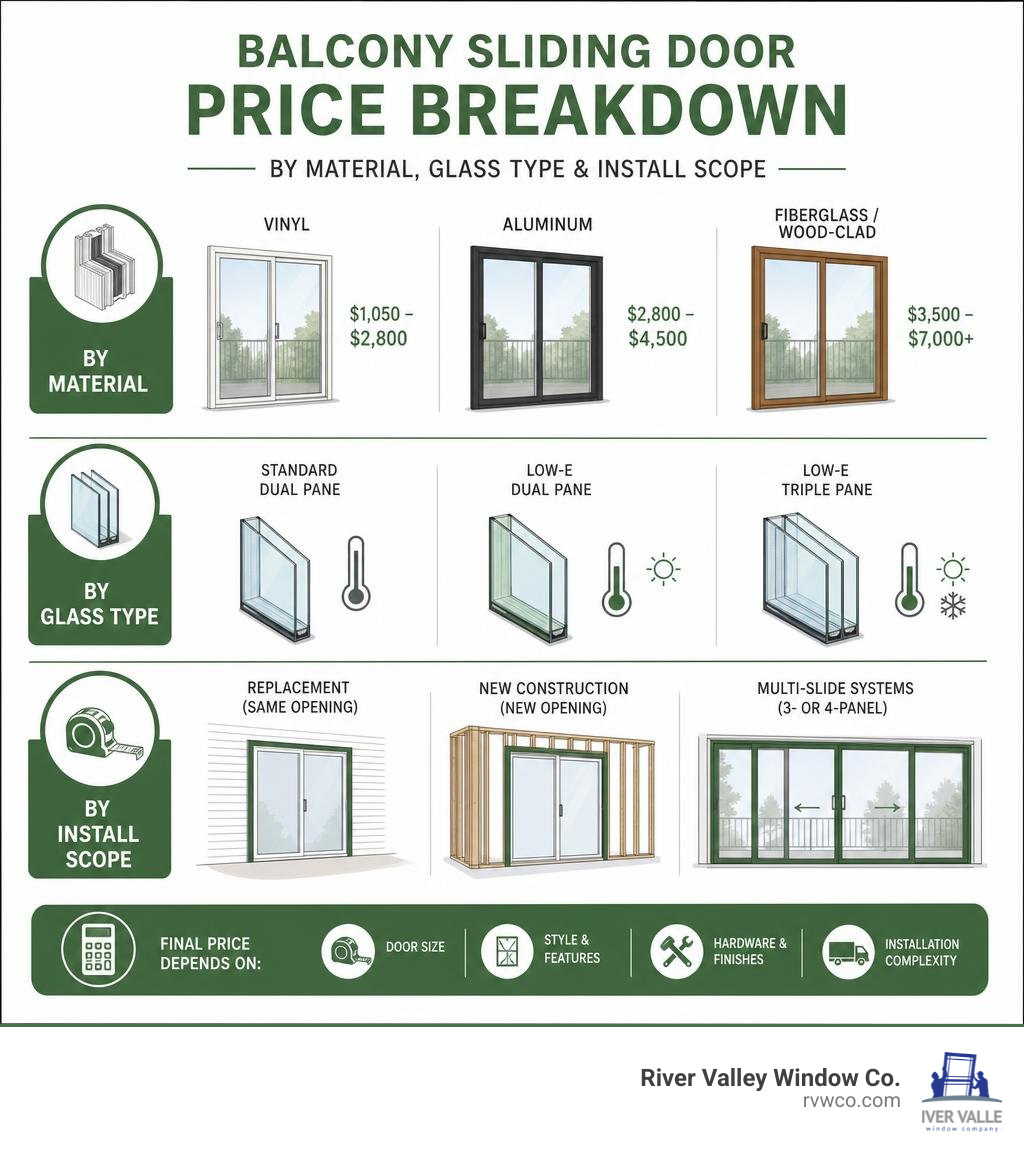
The balcony sliding door price in the US typically falls between $1,050 and $7,000+, fully installed — and knowing what drives that range can save you from a nasty surprise on your final bill.
Here’s a quick breakdown of what most homeowners pay:
| Door Type / Scope | Typical Installed Cost (US) |
|---|---|
| Basic vinyl 2-panel (replacement) | $1,050 – $2,800 |
| Mid-range vinyl or aluminum 2-panel | $2,800 – $4,500 |
| Premium fiberglass or wood-clad | $3,500 – $7,000+ |
| New-construction install (any material) | $4,000 – $8,000+ |
| 3- or 4-panel multi-slide systems | $5,000 – $12,000+ |
These numbers shift based on four main things: frame material, glass package, door size, and whether you’re doing a straight replacement or a new-construction install.
For homeowners in Northwestern Arizona, there’s an extra layer to consider. The desert heat means your glass choice — especially the solar heat gain coefficient (SHGC) — matters just as much as the frame. A door that looks affordable upfront can quietly cost you hundreds more each year in cooling bills if it’s not spec’d right for your climate.
The good news? A quality sliding door doesn’t just replace an old one — it pays back. ENERGY STAR-certified sliding doors can cut heating and cooling costs by up to 15% annually, and a new door can add 3% to 5% to your home’s resale value.
The sections below walk through every cost factor in plain language, so you can budget accurately and ask the right questions before you buy.
Key Factors That Determine Your Balcony Sliding Door Price
When budgeting for a sliding door, it is easy to focus solely on the sticker price of the door unit itself. However, the final invoice is a combination of several distinct components. Understanding how these factors interact allows you to make strategic compromises that keep your project on budget without sacrificing performance.
The primary cost drivers of any balcony sliding door installation include:
- Frame Material: This forms the structural backbone of your door and dictates its longevity, maintenance requirements, and thermal resistance.
- Glass Packages: Because glass accounts for 70% to 80% of the door’s total surface area, the type of glazing, coatings, and gas fills you choose will heavily influence both the upfront cost and your ongoing utility bills.
- Panel Configurations: The number of panels and how they operate (whether they slide, stack, or remain fixed) scale the price significantly.
- Sizing: Standard off-the-shelf sizes are highly economical, whereas custom dimensions carry substantial manufacturing surcharges.
By selecting the right combination of these elements, you can maximize your investment. For a deeper look at how a high-quality installation improves your daily living experience, read about The Perks of Having New Sliding Doors Installed.
How Frame Material Affects the Balcony Sliding Door Price
The frame material you choose is the single largest factor in the base cost of the door unit. Each material behaves differently under the intense solar radiation and extreme temperature fluctuations characteristic of Northwestern Arizona.
Vinyl Frames ($400 – $1,500 for the unit)
Vinyl is the most popular and cost-effective material on the market. Modern, high-quality vinyl formulations are engineered with UV stabilizers to prevent cracking, warping, and yellowing in hot climates like Lake Havasu City. Vinyl is a natural insulator, meaning it does not conduct heat into your home. It requires virtually zero maintenance, never needing to be painted or stained.
Thermally Improved Aluminum ($800 – $2,500 for the unit)
Standard aluminum is highly conductive, making it a poor choice for hot climates. However, thermally improved aluminum solves this issue by incorporating a “thermal break” — a structural polyamide strip that separates the interior and exterior aluminum profiles. This dramatically reduces heat transfer. Aluminum frames offer incredibly slim profiles and modern sightlines, making them ideal for contemporary home designs.
Fiberglass Frames ($1,500 – $4,000 for the unit)
Fiberglass is a premium material that offers unmatched durability. Because fiberglass is composed of glass fibers and resin, it expands and contracts at virtually the same rate as the glass panes it holds. This identical expansion rate minimizes stress on the glass seals, virtually eliminating premature seal failure. Fiberglass is exceptionally strong, impervious to rot, and can be painted to match any color scheme.
Wood-Clad Options ($2,500 – $6,000+ for the unit)
For homeowners seeking a traditional, high-end interior aesthetic, wood-clad frames offer the best of both worlds. They feature a solid wood interior frame for warmth and beauty, protected by a durable aluminum or vinyl exterior cladding to withstand the harsh desert sun. While beautiful, they represent the highest tier of the balcony sliding door price spectrum.
To help you decide which material aligns with your home’s architectural style and layout, explore Our Top Tips for Choosing a New Patio Door and see how sliding configurations compare to other styles in Comparing Sliding vs Swing Doors for Small Spaces.
How Glass Type and Energy Efficiency Impact the Balcony Sliding Door Price
In Northwestern Arizona, where summer temperatures regularly exceed 100°F, your choice of glass is not just an aesthetic consideration — it is a financial one. Investing in high-performance glass prevents your home from acting like a greenhouse, keeping your air conditioning system from running constantly.
Double-Pane vs. Triple-Pane Glass
Standard modern sliding doors feature double-pane glass, which consists of two layers of tempered safety glass separated by an insulating air gap. Upgrading to triple-pane glass adds a third layer of glass and a second insulating pocket. While triple-pane glass is highly effective at reducing noise and heat transfer, the upgrade typically adds $300 to $700 to the cost of the door. In mild climates, the payback period for triple-pane glass can exceed 15 years, but in extreme desert environments, it provides immediate, noticeable relief to your HVAC system.
Low-E Coatings
Low-emissivity (Low-E) coatings are microscopically thin metal oxide layers applied to the glass surfaces. These coatings are designed to reflect infrared heat (which carries temperature) and ultraviolet light (which fades furniture) while allowing visible light to pass through. In hot climates, a multi-layer Low-E coating is essential. It can reject 50% to 70% of solar heat, paying for itself in utility savings within 3 to 5 years.
Gas Fills
To further improve insulation, manufacturers replace the air between the glass panes with dense, non-toxic noble gases, most commonly Argon. Argon gas is heavier than air, which significantly slows down the transfer of heat through the glass unit.
Solar Heat Gain Coefficient (SHGC)
When reviewing quotes, pay close attention to the SHGC rating on the NFRC label. SHGC measures how much solar radiation passes through the door. In Arizona, you should target an SHGC of 0.25 or lower.
If you suspect your current door is letting in too much heat, check out these 3 Signs Your Patio Door Isn’t Energy Efficient.
Sizing and Panel Configurations: Standard vs. Custom Costs
The physical dimensions of your balcony opening and how you want the door to open will dictate whether you can purchase a standard retail size or if you must order a custom-fabricated unit.
Standard rough opening widths for sliding patio doors typically cluster around:
- 60 inches (5 feet): Commonly configured as a 2-panel door (one fixed, one sliding).
- 72 inches (6 feet): The most common residential size, offering an excellent balance of view and affordability.
- 96 inches (8 feet): A wider 2-panel option that provides an expansive view but requires heavier-duty hardware.
If your structural opening does not match these standard dimensions, ordering a custom width or height will incur a 15% to 30% custom surcharge from the manufacturer.
Additionally, the number of panels you choose scales the pricing. While a standard 2-panel door is the most economical, 3-panel (such as an OXO configuration where the center panel slides) and 4-panel systems allow you to open up massive structural spans. Adding more panels is often more cost-effective than purchasing a single, extraordinarily large pane of glass, as oversized glass sheets require specialized shipping and handling.
| Configuration | Standard Widths | Average Unit Price Range (Vinyl/Aluminum) |
|---|---|---|
| 2-Panel (1 Active, 1 Fixed) | 5 ft, 6 ft, 8 ft | $1,100 – $2,800 |
| 3-Panel (1 Active, 2 Fixed) | 9 ft, 12 ft | $2,500 – $5,000 |
| 4-Panel (2 Active, 2 Fixed) | 12 ft, 16 ft | $4,000 – $8,500+ |
To see how modern homes utilize these different configurations to create striking visual transitions, read about 3 Stylish Patio Door Designs for Modern Homes.
Installation Labor and Potential Hidden Costs
The door unit itself is only half of the financial equation. Professional installation is critical to ensure the door slides smoothly, locks securely, and maintains a perfect weather-tight seal against dust and monsoon rains.
Replacement vs. New-Construction Installation
The scope of the physical installation work heavily impacts labor costs:
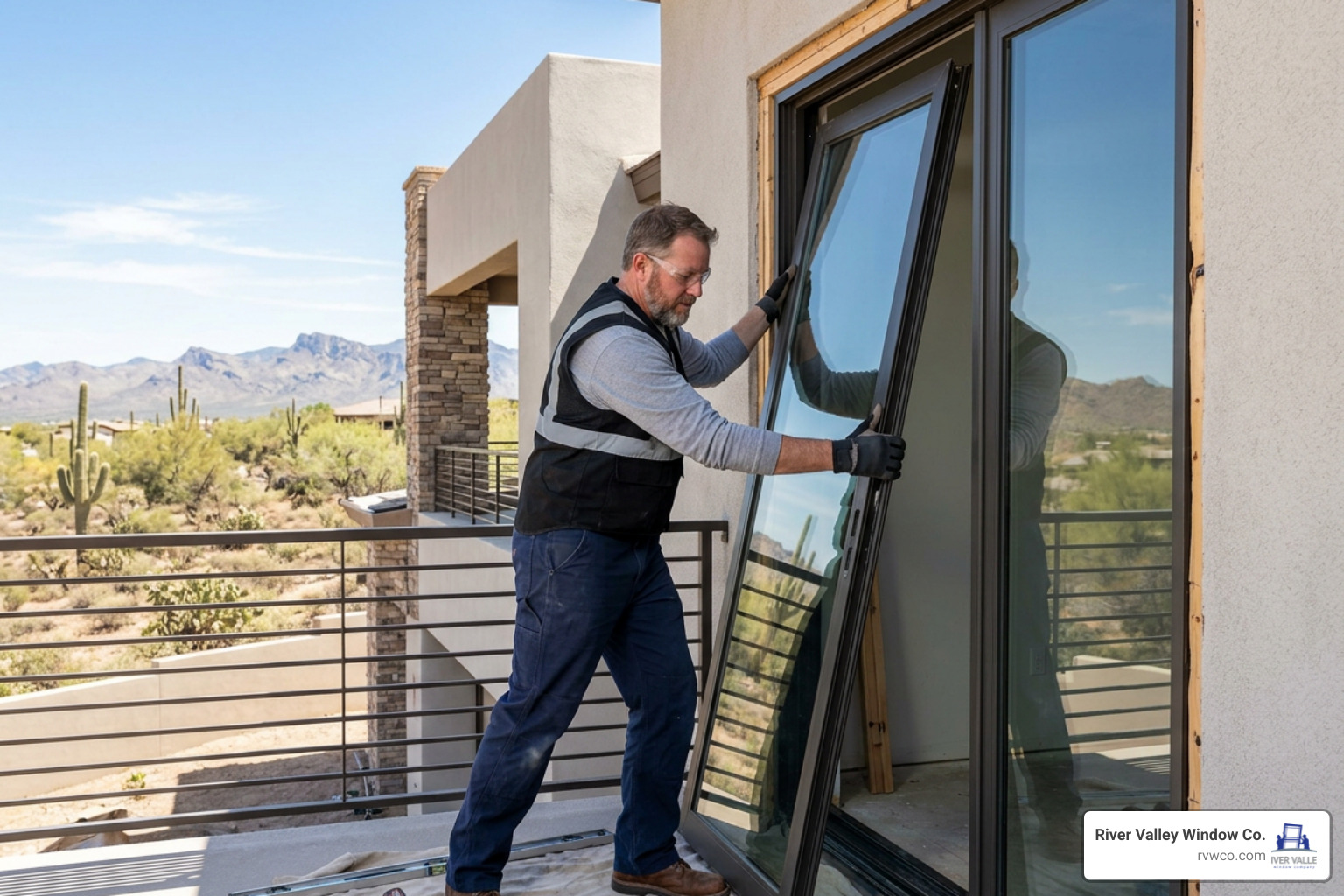
- Replacement Installation ($400 – $850 labor): This involves removing the old sliding door panels and frame, cleaning the existing rough opening, and sliding the new door frame directly into the existing space. It is a fast, non-invasive process that rarely requires structural changes.
- New-Construction Installation ($1,100 – $2,100+ labor): This occurs during a major remodel or new build. The door features a “nailing fin” that is fastened directly to the exterior structural framing of the house. This process requires integrating the door with the home’s water barrier, flashing, stucco, or siding, which requires significantly more time and labor.
Potential Hidden Project Costs
When budgeting, set aside a contingency fund of 10% to 20% to cover unforeseen structural issues that may be uncovered once the old door is removed:
- Dry Rot and Subfloor Repair ($200 – $800): If your old balcony door had a slow, unnoticed leak, rainwater may have rotted the wooden subfloor beneath the track. This wood must be cut out and replaced before the new door can be safely anchored.
- Structural Header Modifications ($1,500 – $5,000+): If you are widening your balcony opening (for example, converting a 6-foot opening into a 12-foot multi-slide opening), a structural engineer must design a new, load-bearing header beam to support the weight of the roof above the expanded span.
- High-Rise or Second-Story Balcony Logistics ($150 – $500 extra): Delivering heavy, oversized glass panels to a second- or third-story balcony requires extra safety rigging, additional crew members, and sometimes specialized hoisting equipment.
- Permitting Fees ($100 – $300): Most municipalities require a building permit for exterior door replacements, especially if structural framing or load-bearing walls are modified.
For a comprehensive breakdown of what goes into professional installation pricing, consult our guide on Everything You Need to Know About Door Replacement Cost.

Upgrades, Accessories, and Warranty Considerations
Once you have selected your base door and glass, you can customize your installation with functional upgrades. However, these additions will directly influence your final balcony sliding door price.
- Built-In Blinds ($400 – $800): Sealed between the double-glazed glass panes, these blinds are operated magnetically. They never gather dust and are safe from pets and children. However, they are a permanent design choice and cannot be removed later without replacing the glass unit.
- Integrated Pet Doors ($250 – $600): Some manufacturers offer sliding door panels with built-in, energy-efficient pet doors, allowing your pets balcony access without leaving the main door wide open.
- Security Upgrades ($150 – $500): Upgrading from a standard latch to a multi-point locking system or adding an auxiliary foot lock at the bottom track significantly improves home security.
Understanding Your Warranty Options
A warranty is a critical component of your investment, protecting you from manufacturing defects and seal failures. When purchasing Milgard products through an authorized dealer like us, you have access to a tiered warranty structure:
Standard Limited Lifetime Warranty
This warranty comes standard with your purchase. The coverage varies depending on whether the door was installed as part of a new-construction project or a replacement project, as well as the occupancy of the building. If you sell your home, the warranty can be transferred to the next owner. Upon transfer, it transitions into a 10-year parts-only limited warranty calculated from the original manufacture date, which includes 10-year hardware coverage and product-specific finish and weatherstripping limitations.
Paid Full Lifetime Warranty Upgrade
For ultimate peace of mind, you can opt for the paid Full Lifetime Warranty upgrade. This option is valid for the natural lifetime of the original consumer owner and is non-transferable. It covers both parts and labor for repairs.
- Glass Breakage: The Full Lifetime Warranty automatically includes glass breakage coverage for premium lines like the Tuscany V400.
- Trinsic V300: For the contemporary Trinsic V300 line, glass breakage coverage must be purchased as an additional, dedicated upgrade.
Important Shorter Limitations to Keep in Mind:
Regardless of which warranty tier you select, certain components carry shorter, industry-standard coverage limits:
- 10-Year Limits: Applies to insulated glass unit (IGU) delamination, internal blind defects, and peeling, cracking, or fading of frame finishes.
- 1-Year Limits: Applies to weatherstripping, insect screens, and surface corrosion on stainless steel hardware.
To explore these premium product lines and find the perfect fit for your home, view our pages on Milgard Patio Doors and read our Step-by-Step Guide to Milgard Patio Doors.
Frequently Asked Questions About Balcony Sliding Doors
Is it cheaper to repair or replace a sliding balcony door?
It depends entirely on the root cause of the issue. If your door is simply difficult to slide or makes a screeching noise, it is usually a maintenance issue. A thorough track cleaning to remove desert dust and replacing worn-down rollers is a highly cost-effective repair.
However, if you notice condensation or fogging between the glass panes (indicating glass seal failure), a warped frame that prevents the door from closing flush, or significant drafts, a full replacement is recommended. Trying to repair a warped frame or a failed seal is often a temporary fix that will continue to cost you money in wasted energy. Learn how to keep your investment performing optimally with our guide on Routine Maintenance for Your New Patio Doors.
How much value does a new sliding glass door add to a home?
Installing a modern, energy-efficient sliding glass door can increase your home’s market value by 3% to 5% on average. Realtors and builders note that high-quality sliding doors drastically improve a home’s curb appeal and interior brightness, helping properties sell faster. Furthermore, upgrading to energy-efficient models yields an average return on investment (ROI) of up to 65% through immediate utility savings and enhanced home appeal.
How long does a typical sliding door installation take?
A standard, straightforward replacement installation of a 2-panel sliding door typically takes a professional two-person crew 4 to 8 hours to complete. This includes removing the old door, prepping the opening, installing the new unit, sealing, and cleanup.
If your project is a new-construction install or requires structural framing adjustments (like widening the opening or replacing a rotted subfloor), the process can take 1.5 to 3 days. Additionally, keep in mind that the silicone sealant used to weatherproof the exterior frame requires a full 24 hours to cure completely before the door should be subjected to heavy use.
Conclusion
Investing in a new balcony sliding door is one of the most impactful home improvement projects you can undertake. While the balcony sliding door price can vary based on your choice of materials, glass, and installation complexity, choosing the right configuration for your specific climate ensures long-term comfort and substantial energy savings.
At River Valley Window Co., we specialize in helping homeowners throughout Northwestern Arizona find the perfect, high-performance solution for their homes. Based in Lake Havasu City, we offer fast, non-invasive installations of premium, energy-efficient Milgard products tailored specifically to withstand our demanding desert heat. Whether you are looking for the modern, sleek lines of the Trinsic V300 or the classic elegance and robust performance of the Tuscany V400, our team is here to guide you every step of the way.
Ready to transform your living space and enjoy seamless indoor-outdoor living? Contact us today to schedule your consultation, and read more about how the right door can elevate your home in Patio Doors: A Fluid Transition Between Your Home and Outside.