

What Does the Cost of Vinyl Windows Look Like in 2026?
In 2026, the cost of vinyl windows typically ranges from $450 to $800 installed for a standard double-hung replacement window with double-pane Low-E glass. Basic units may start near $150 installed in simple openings, while larger windows, premium frames, triple-pane glass, or full-frame work can push the price above $1,000 per window.
For a whole-home project, replacing 10 to 15 windows commonly costs $6,500 to $18,650. The final price depends most on window size and style, glass package, frame quality, installation method, and local labor rates.
Vinyl remains a popular choice because it offers strong energy performance, moisture resistance, and low upkeep at a lower upfront price than wood or fiberglass. Quality vinyl windows can last 20 to 40 years with routine cleaning and occasional weatherstripping or seal checks.
For Northwestern Arizona homes, it is especially important to compare more than the sticker price. Low-E glass, argon gas fills, and a low Solar Heat Gain Coefficient can help reduce unwanted heat from intense sun and improve indoor comfort.
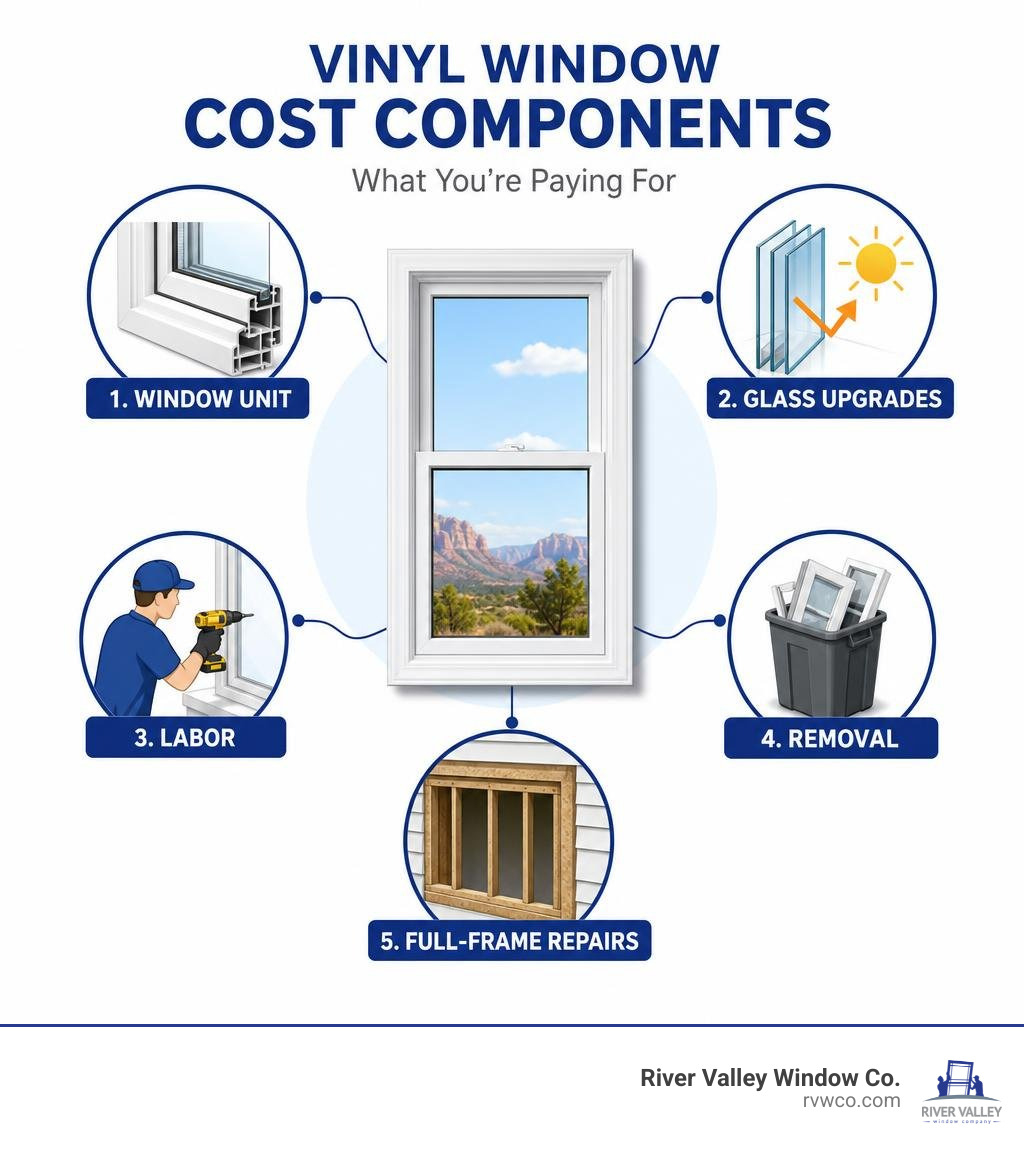
Important cost of vinyl windows terms:
Factors That Drive the Total Cost of Vinyl Windows
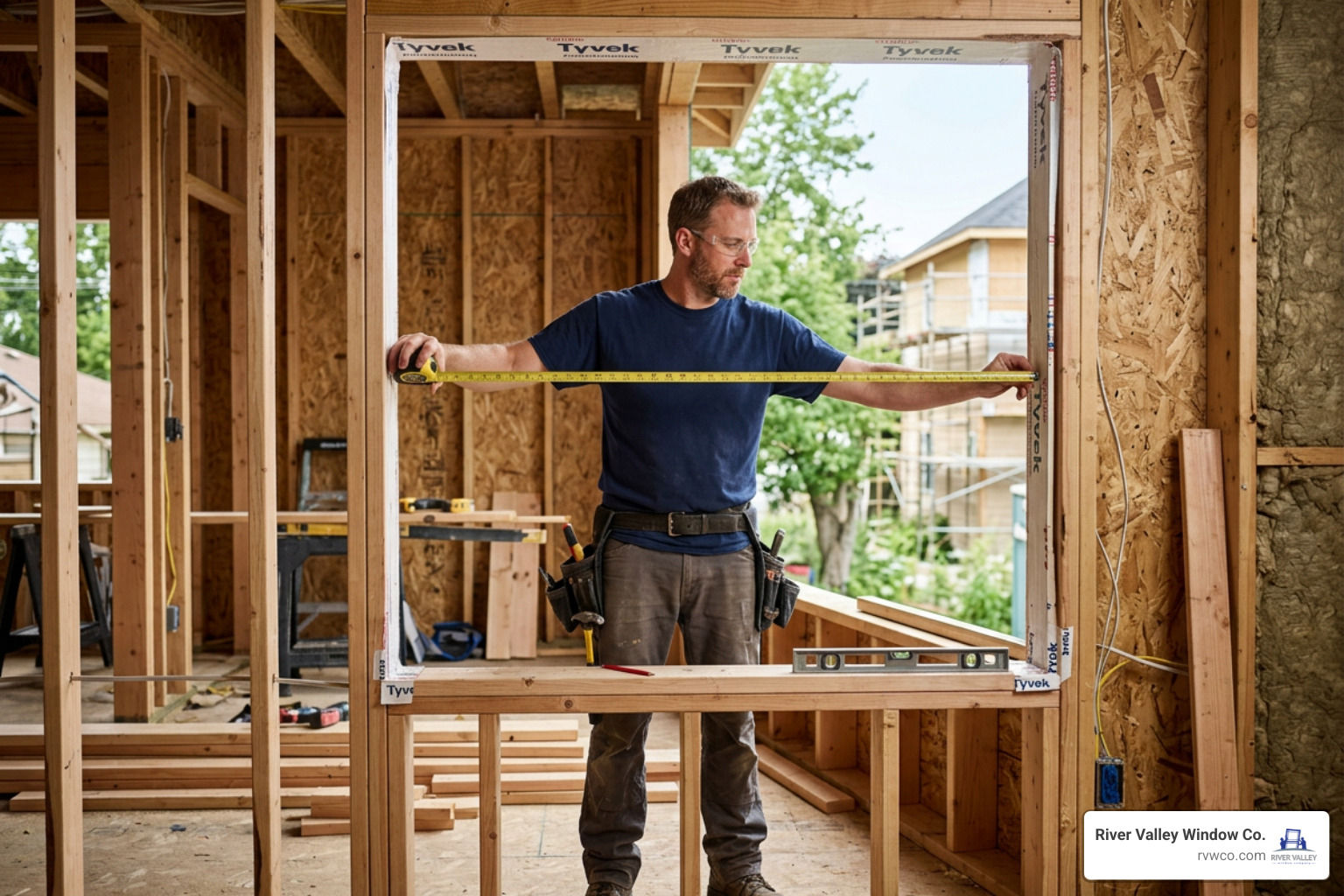
When calculating the total investment for new windows, material pricing is only one part of the equation. Multiple design, manufacturing, and structural variables shape contractor estimates. Understanding how these factors interact helps prevent surprise expenses and ensures you invest in options that deliver long-term value.
At its core, a complete window replacement quote balances three main pillars:
- The window unit: The physical frame extrusion, sash construction, and hardware components.
- The glass package: The number of panes, specialized thermal coatings, spacer systems, and insulating gas fills.
- Labor and job logistics: Removal of existing sashes, rough opening preparation, exterior flashing, perimeter sealing, interior trim work, and old unit disposal.
Exploring how vinyl windows enhance energy efficiency in your home shows that high-performance glass packages and precision frame engineering yield measurable dividends on monthly cooling bills, especially in desert climates like Lake Havasu City.
Average Installed Cost of Vinyl Windows by Window Style
Operating style plays a major role in overall pricing. Simpler mechanical systems with fewer moving parts cost less to manufacture and install, whereas complex projecting or hinged assemblies require robust hardware and additional framing support.
Here is what homeowners can expect across common operational styles:
- Single-Hung Windows ($150 – $450 installed): Featuring a fixed top sash and an operable bottom sash moving vertically, single-hung units represent the most budget-friendly starting point for straightforward renovations.
- Double-Hung Windows ($300 – $850 installed): Both upper and lower sashes operate vertically and tilt inward for convenient cleaning, making double-hung units the national standard for versatile residential ventilation.
- Sliding Windows ($250 – $800 installed): Sashes slide horizontally along integrated tracks. With minimal mechanical gears to service, sliders offer an economical, modern solution for wide wall openings.
- Casement Windows ($300 – $1,000 installed): Operating on side hinges via a hand crank, casement windows swing outward. Their multi-point compression locks pull the sash tightly against the weatherstripping for exceptional airtightness.
- Awning Windows ($300 – $900 installed): Hinged at the top and swinging outward from the bottom, awning windows protect living spaces from outdoor elements while encouraging natural airflow.
- Picture Windows ($300 – $900 installed): Because they are permanently sealed and have no operating sashes or mechanical hardware, large picture windows maximize natural daylight and scenic desert views at a relatively accessible square-foot cost.
- Specialty Bay and Bow Configurations ($1,500 – $6,000+ installed): Projecting outward from the exterior wall structure, multi-panel bay and bow assemblies require specialized structural support, custom head and seat boards, and comprehensive exterior roofing or flashing.
For an extensive look at profiles and design aesthetics, consult our comprehensive guide to vinyl window options.
Glass Packages, Energy Ratings, and Climate Performance
Upgrading the insulated glass unit (IGU) is one of the most effective ways to customize performance. The glass package constitutes the largest surface area of the opening and dictates how much outdoor heat passes into your living spaces.
Standard clear glass provides minimal thermal resistance. Upgrading to a double-pane Low-E configuration with argon gas typically adds $30 to $80 per window to the base material price. In hot Southwestern zones, a low Solar Heat Gain Coefficient (SHGC ≤ 0.23) is critical to keeping interior cooling loads manageable under intense sun.
Triple-pane units—featuring three sheets of glass separated by two gas-filled chambers—add $75 to $200 per window over standard double-pane glass. While triple glazing delivers outstanding sound dampening and thermal insulation, double-pane Low-E units engineered for warm climates often represent the ideal balance of performance and return on investment.
Review our quick start guide to comparing window energy savings to evaluate seasonal heating and cooling calculations.
Project Pricing Breakdown: Whole-House Cost of Vinyl Windows
Replacing windows throughout an entire property is significantly more cost-effective per opening than replacing units one at a time. Window replacement specialists benefit from single-trip mobilization, streamlined job setups, and manufacturer volume discounts when ordering multiple units at once.
| Total Window Count | Budget / Starter Tier | Mid-Range Quality | Premium Engineered Tier |
|---|---|---|---|
| 5 Windows | $1,500 – $3,000 | $3,250 – $5,000 | $5,000 – $8,000 |
| 10 Windows | $3,000 – $6,000 | $6,500 – $10,000 | $10,000 – $16,000 |
| 15 Windows | $4,500 – $9,000 | $9,750 – $15,000 | $15,000 – $24,000 |
| 20 Windows | $6,000 – $12,000 | $13,000 – $20,000 | $20,000 – $32,000 |
Incidental expenses also factor into whole-home estimates:
- Disposal and Haul-Away Fees: Expect $15 to $75 per opening to remove, transport, and properly recycle old aluminum or wood assemblies.
- Permitting Fees: Municipal building permits generally run $50 to $200, depending on local jurisdictional fee structures.
- Structural Repairs: If an existing opening exhibits underlying dry rot or framing damage, localized carpentry repairs can add $150 to $600 per opening before the new window can be set square and plumb.
Planning a full upgrade? Our guide on how to budget for window replacement for your home outlines phased project management strategies.
Frame Material Comparison: Vinyl vs. Fiberglass vs. Aluminum
Selecting the right frame material requires balancing upfront expenditure against long-term maintenance, thermal behavior, and durability. Vinyl, fiberglass, and aluminum each serve specific structural purposes and architectural styles.
| Performance Attribute | Vinyl Windows | Fiberglass Windows | Thermally Broken Aluminum |
|---|---|---|---|
| Average Installed Cost | $450 – $1,000 | $800 – $1,800 | $600 – $1,200 |
| Expected Lifespan | 20 – 40 Years | 30 – 50 Years | 20 – 35 Years |
| Maintenance Demands | Very Low (Soap & Water) | Low (Optional Repainting) | Very Low (Clean Tracks) |
| Thermal Efficiency | Excellent (Multi-chamber) | Superior (Low expansion) | Moderate (Requires break) |
| Structural Profile | Wider Vinyl Extrusion | Ultra-Slim, Rigid Profile | Ultra-Slim, Narrow Sightline |
| Average Resale ROI | ~68% – 74% | ~65% – 70% | ~60% – 65% |
Understanding these structural distinctions helps homeowners determine how to choose the right window material for their specific home design and budget goals.

Pros and Cons of Selecting Vinyl Frames
Vinyl accounts for over half of all residential replacement windows sold nationwide. Extruded from high-grade polyvinyl chloride (PVC) with internal chambers designed to trap dead air, vinyl frames provide strong thermal resistance at an accessible price point.
Key Advantages:
- Exceptional Value: Lower manufacturing costs translate to lower purchase prices compared to fiberglass or wood alternatives.
- Low Maintenance: Factory-extruded color permeates the entire frame, meaning vinyl never requires scraping, sanding, or repainting.
- Moisture Resistance: Impervious to water infiltration, vinyl will not rust, rot, pit, or corrode over decades of service.
- Energy Performance: Fusion-welded corner joints and internal air chambers help minimize drafts and thermal bridging.
Potential Limitations:
- Thermal Expansion: In areas subject to intense solar exposure, lower-grade vinyl can expand and contract under severe heat cycles if not properly engineered with UV stabilizers.
- Frame Thickness: Vinyl extrusions require thicker profiles than aluminum or fiberglass to maintain structural rigidity, which slightly reduces overall daylight glass area.
Homeowners can read further about why vinyl windows are the top choice for low-maintenance homes to explore these architectural dynamics.
Lifespan, Care, and Warranty Considerations
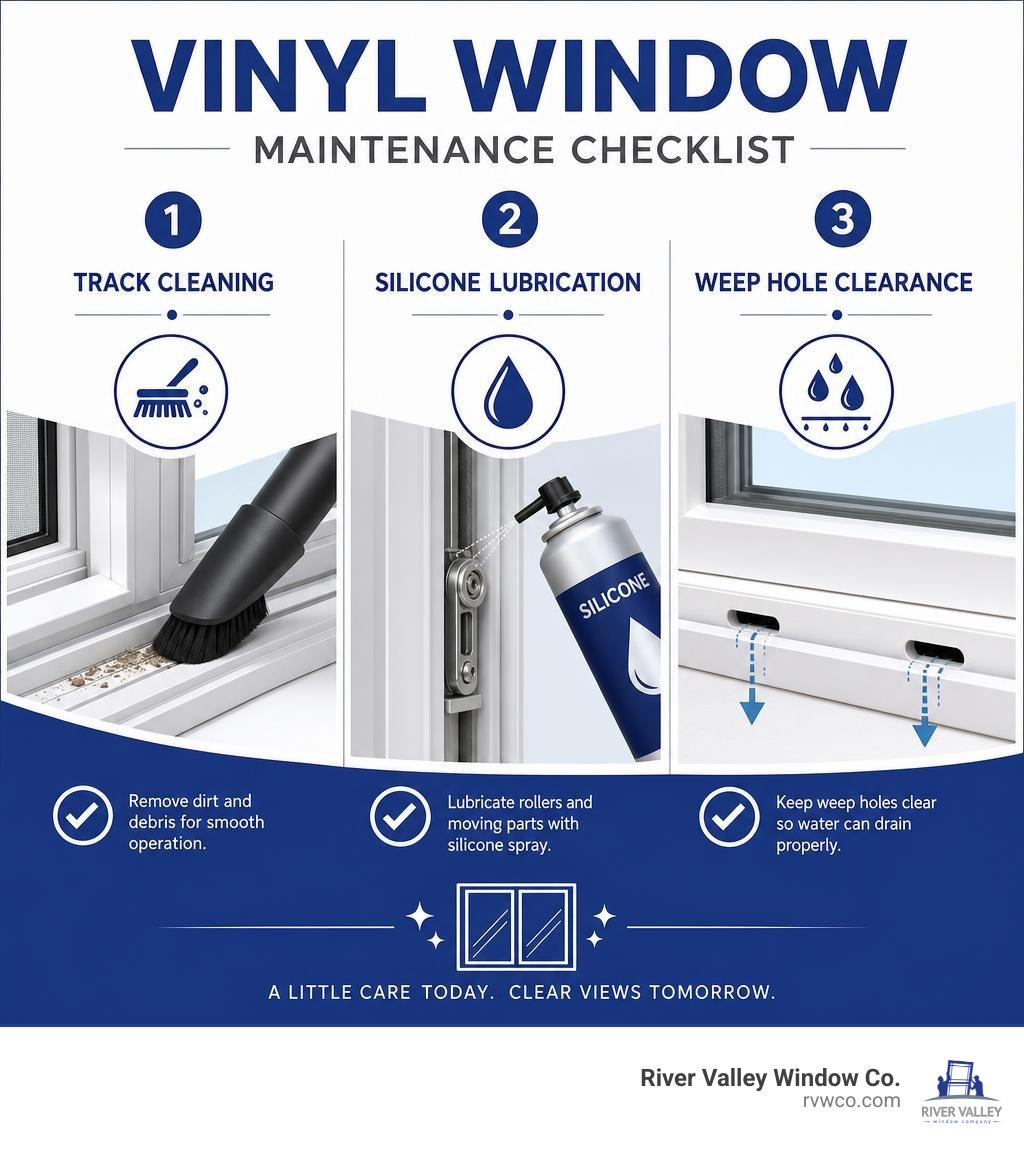
High-quality vinyl windows regularly provide 20 to 40 years of reliable performance. Simple maintenance preserves smooth operation:
- Wash frames two to four times per year using mild dish soap and warm water—never apply harsh chemical solvents or abrasive pads.
- Vacuum dirt, sand, and debris out of the lower tracks annually to keep drainage weep holes clear.
- Lubricate mechanical rollers and locking gear with a dry silicone spray, avoiding petroleum-based lubricants that attract dust.
- Inspect perimeter silicone caulk and interior weatherstripping every two years to maintain an airtight perimeter.
When selecting products, understanding manufacturer warranty terms protects your investment over time. For example, Milgard products feature a clear, tiered warranty framework:
- Standard Limited Lifetime Warranty: Covers parts and manufacturing defects for residential applications. If the property transfers ownership after sale, coverage becomes a 10-year parts-only limited warranty calculated from the original manufacture date, complete with 10-year hardware protection.
- Specific Time Limitations: Certain components carry defined warranty limits, including a 10-year limit for insulated glass unit delamination, internal blind defects, and exterior finish peeling or fading. A 1-year limit applies to operational weatherstripping, window insect screens, and surface corrosion on stainless steel hardware components.
- Paid Full Lifetime Warranty Upgrade: Available to the original consumer owner, this non-transferable upgrade provides comprehensive coverage for both parts and factory-certified labor.
- Accidental Glass Breakage Terms: Full Lifetime Warranty coverage includes accidental glass breakage on Tuscany® V400 and V450 series products, while remaining available as an optional add-on upgrade on sleek Trinsic™ V300 contemporary vinyl units.
Installation Method Breakdown: Retrofit Insert vs. Full-Frame Replacement
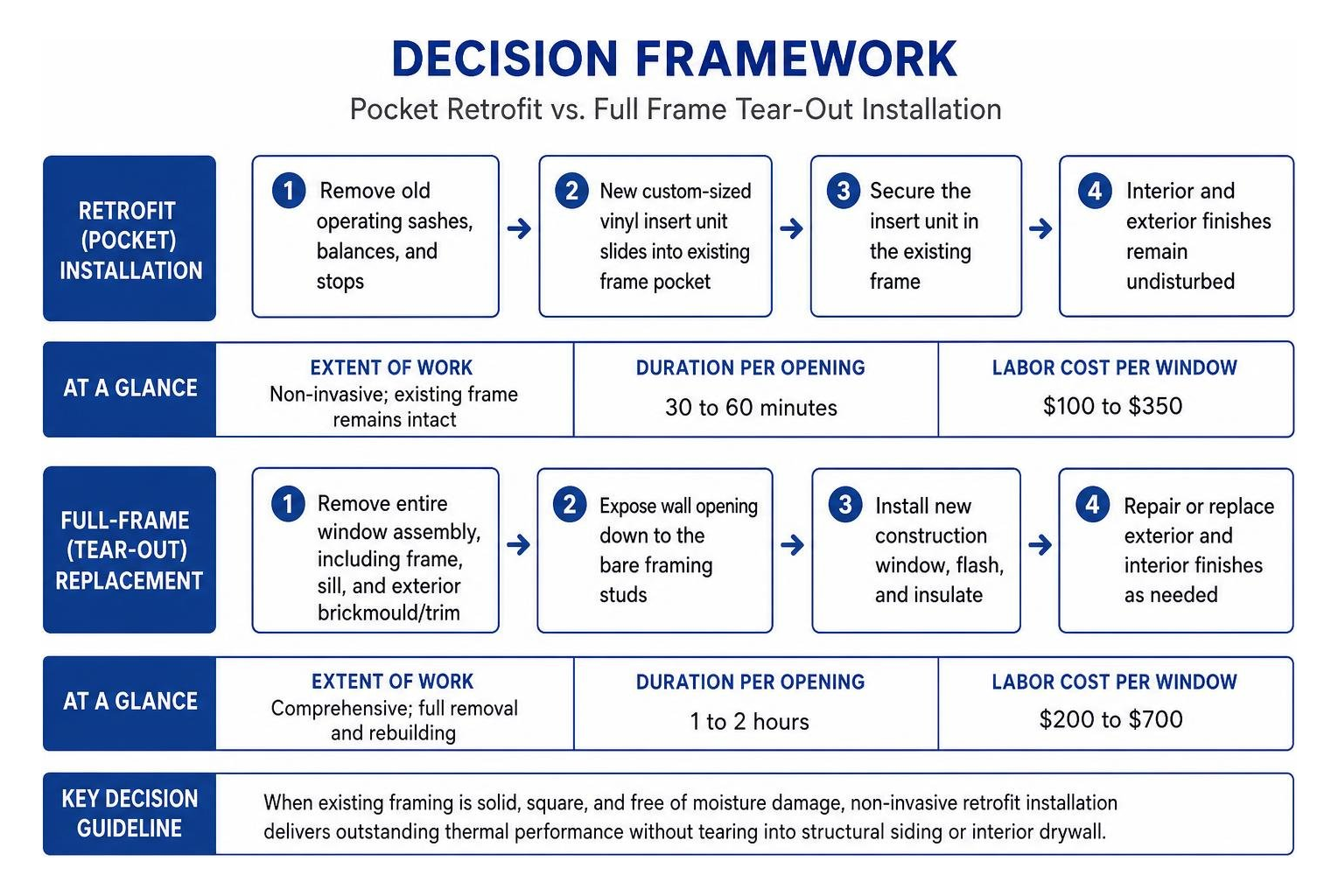
The installation method chosen directly influences total labor costs, project duration, and the extent of interior and exterior construction required.
When existing framing is solid, square, and free of moisture damage, non-invasive retrofit installation delivers outstanding thermal performance without tearing into structural siding or interior drywall. Deciding which approach fits your home helps determine what kind of window offers the best ROI.
Labor Costs and Seasonal Savings Opportunities
Professional installation labor generally accounts for 25% to 45% of a window replacement invoice. Standard hourly glazier rates, job difficulty, second-story exterior scaffolding, and structural repairs all contribute to the final quote.
Homeowners looking for how to find affordable windows without sacrificing quality can leverage key seasonal scheduling strategies:
- Target Off-Peak Scheduling: Summer and early fall represent peak seasons for window replacements. Scheduling installations during late fall or winter often unlocks contractor labor discounts of 5% to 15% alongside shorter factory lead times.
- Bundle Multiple Openings: Replacing an entire elevation or whole home at once allows contractors to work systematically through setup, tear-out, and weatherproofing steps.
- Stick to Standard Sizing: Aligning custom orders with standard manufacturer dimension increments avoids custom engineering upcharges.
Frequently Asked Questions About Vinyl Window Pricing
How much does it cost to replace windows in an average 2,000 sq ft home?
A typical 2,000-square-foot single-family home generally contains between 12 and 18 window openings. Using standard double-pane Low-E vinyl insert units, a whole-house replacement project usually costs between $7,800 and $14,400 installed. Choosing premium frame lines, specialty architectural shapes, or triple-pane glass packages can raise project totals between $15,000 and $22,000.
Are federal tax credits available for vinyl window replacement in 2026?
The federal Energy Efficient Home Improvement Credit (Section 25C), which previously provided tax credits for qualifying window upgrades, expired for products placed in service after December 31, 2025. In 2026, homeowners should look to local electric utilities and regional energy-efficiency programs that offer mail-in rebates for installing ENERGY STAR certified windows with qualifying U-factor and SHGC performance ratings.
What is the most cost-effective time of year to replace residential windows?
Late fall through winter (November through February) is generally the most economical window replacement window. Lower seasonal contractor demand, faster factory production turnaround times, and winter scheduling promotions help lower out-of-pocket costs while keeping your home comfortable ahead of hot summer weather.
Conclusion
Upgrading to energy-efficient vinyl windows is one of the most reliable ways to increase indoor comfort, lower cooling costs, and refresh your home’s exterior curb appeal. By balancing window frame styles, selecting low-SHGC glass packages designed for desert environments, and choosing the right installation method, homeowners can secure lasting value for decades to come.
At River Valley Window Co., we specialize in helping Northwestern Arizona homeowners throughout Lake Havasu City and surrounding communities choose durable, high-performance Milgard vinyl products engineered for extreme sun and heat. Our fast, non-invasive installation approach ensures your existing interior drywall and exterior stucco remain protected throughout the project, all backed by an industry-leading lifetime warranty.
Ready to improve your home’s energy performance? Explore our complete line of products or contact our team today to schedule an estimate with our professional window replacement services.