

Why Vinyl Windows Dominate the Residential Market
Vinyl windows are the most popular window choice in the United States — and for good reason. They combine energy savings, low upkeep, and affordable pricing in a way no other window material quite matches.
Quick answers about vinyl windows:
- What are they? Window frames made from PVC (polyvinyl chloride), a durable plastic material
- Why are they popular? They hold roughly 70% of the U.S. residential window market
- Are they energy efficient? Yes — with Low-E glass and argon gas fill, they can cut energy costs by up to 25-30% vs. older single-pane windows
- Do they need a lot of maintenance? No — they never need painting, sealing, or sanding
- How long do they last? Quality vinyl windows are built to last decades with minimal upkeep
- What styles are available? Double-hung, single-hung, sliding, casement, awning, picture, and more
For homeowners in Northwestern Arizona dealing with hot summers, cold desert nights, and dusty conditions, the right windows make a real difference in comfort and monthly energy bills. This guide covers everything you need to know — from styles and energy ratings to installation methods and what to look for in a warranty.
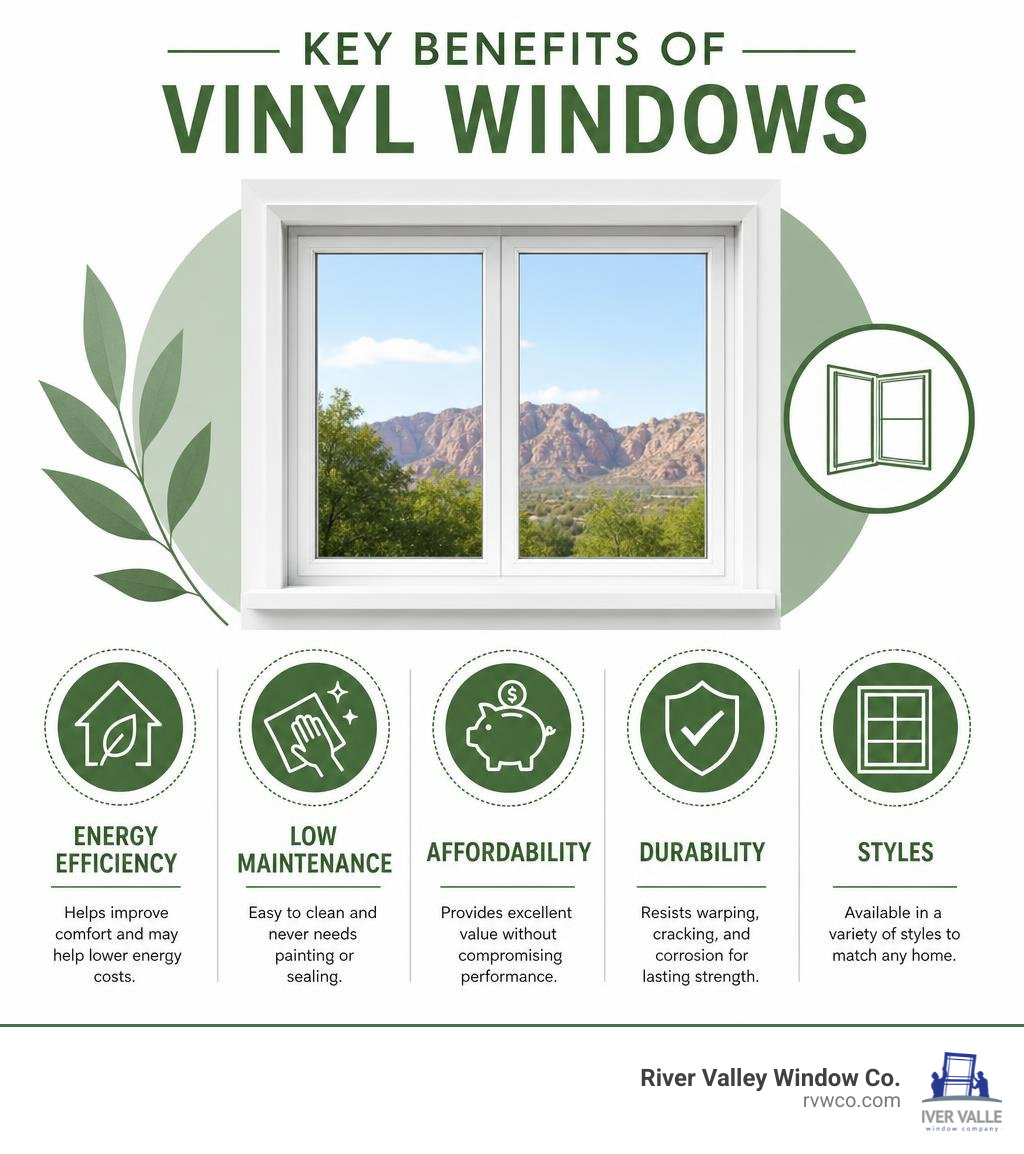
Key Advantages of Vinyl Windows
When evaluating window frame materials, the comparison usually comes down to wood, aluminum, fiberglass, and vinyl. While wood offers classic beauty, it requires constant painting and is highly susceptible to rot. Aluminum is strong but conducts heat rapidly, making it a poor choice for the scorching Arizona heat.
This is where polyvinyl chloride (vinyl) excels. Because vinyl is naturally non-corroding and moisture-resistant, it handles extreme weather without warping, cracking, or peeling. To explore this further, you can read about the 3 Benefits of Installing Vinyl Windows.
One of the greatest benefits of choosing vinyl is its incredibly low maintenance requirement. Unlike wood, which demands scraping, staining, and painting every few years, vinyl frames only need a quick wipe-down with mild soap and water to look brand new. We dive deeper into why these materials save you time and money in our article on Why Vinyl Windows Are the Top Choice for Low Maintenance Homes.
Popular Styles and Customization Options
Modern manufacturing has advanced significantly, allowing vinyl window frames to match virtually any architectural style. Homeowners are no longer limited to standard white boxes. Today, you can customize everything from the frame depth (typically ranging from 3-1/4 inches to 3-1/2 inches for superior stability) to the glass packages and grid patterns.
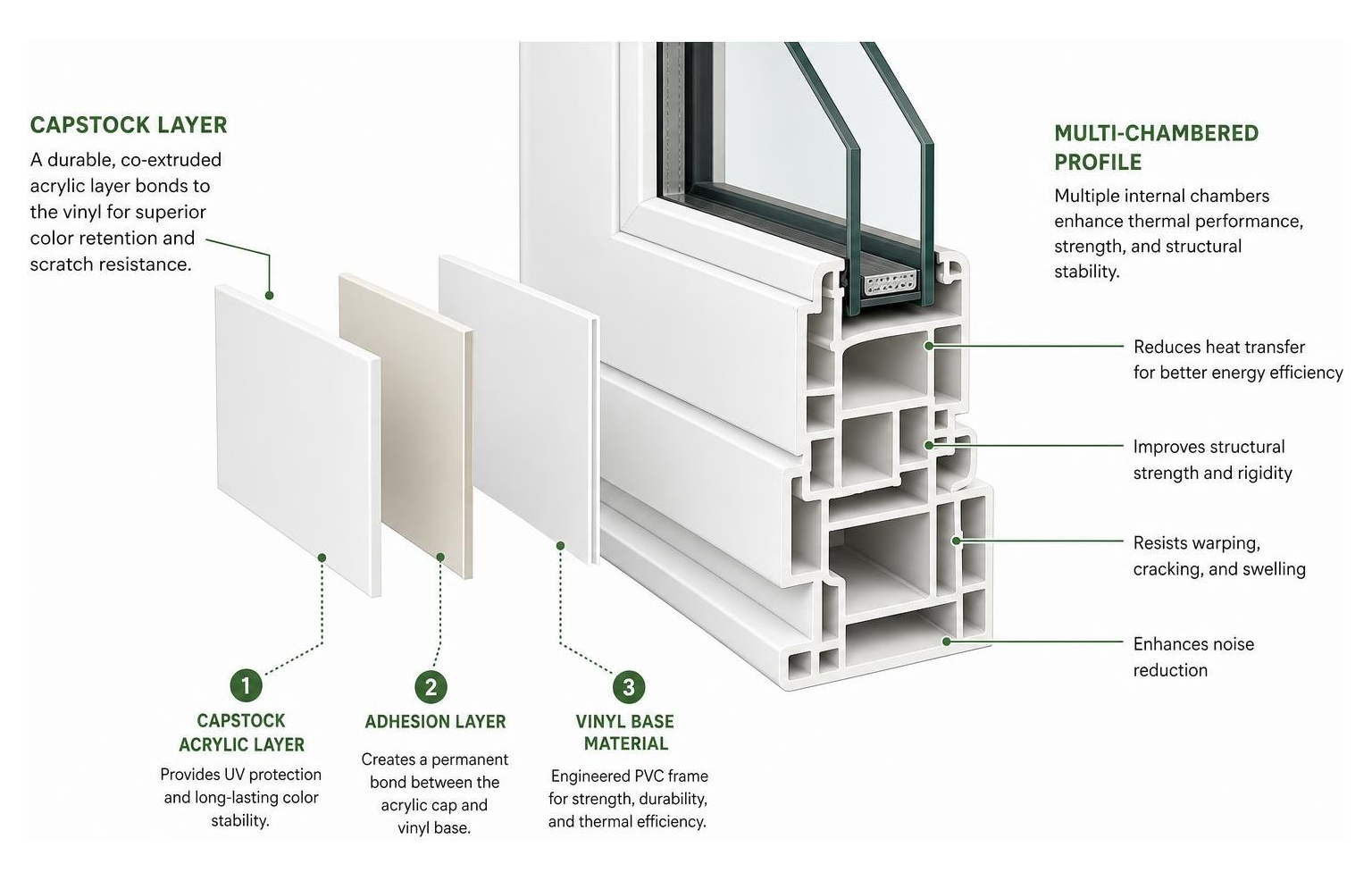
Color customization is another area where modern vinyl has evolved. While classic white and tan remain popular, advanced finish technologies have introduced gorgeous dark exterior colors, including deep bronze and black. For instance, technologies like FiniShield™ and capstock finishes apply an acrylic layer extruded directly over the vinyl profile. This creates an incredibly durable bond that reflects heat and resists scratching or peeling under the intense desert sun.
Inside the home, you can select hardware finishes ranging from standard white and tan to oil-rubbed bronze, brushed chrome, or matte black to match your interior decor.
Double-Hung and Single-Hung Vinyl Windows
Hung windows are the most traditional style found in American homes.
- Single-Hung Windows: In a single-hung configuration, the top sash is fixed in place, while the bottom sash slides vertically to let in fresh air.
- Double-Hung Windows: In a double-hung configuration, both the top and bottom sashes operate independently. This allows for superior ventilation control, as you can lower the top sash to let warm air escape while raising the bottom sash to draw cooler air in.
One major benefit of modern hung vinyl windows is the tilt-in cleaning feature. By releasing simple finger-latches, you can tilt the sashes inward to clean the exterior glass from the comfort of your living room—no ladders required. If you have heard rumors that vinyl frames are flimsy or difficult to operate over time, check out our guide on Common Myths About Vinyl Windows Debunked to see how modern engineering has solved these old issues.
Sliding and Casement Vinyl Windows
For contemporary homes or wider openings, sliding and casement styles are exceptional choices.
- Sliding Windows (Horizontal Sliders): These windows feature sashes that glide horizontally along a track. They are perfect for areas where vertical space is limited or where a swinging window would obstruct patios, walkways, or decks. High-quality sliders utilize durable rollers (such as Delrin rollers on a monorail track) to ensure smooth, quiet operation for years.
- Casement Windows: Casement windows are hinged on the side and swing outward like a door using a crank handle. Because the sash presses tightly against the frame when closed, casements offer some of the tightest seals against air infiltration. They also provide unobstructed views and catch passing breezes to funnel fresh air directly into your home.
If you are looking for premium options, exploring advanced glazing systems like the GoldenVinyl® Triple Glaze configuration can show you how multi-pane sliding and casement designs achieve maximum energy performance.
Energy Efficiency and Weather Resistance
In Northwestern Arizona, energy efficiency isn’t just about saving a few dollars; it’s about staying comfortable when outdoor temperatures exceed 110°F. Vinyl is an excellent natural insulator because it has very low thermal conductivity, meaning it does not easily transfer heat from the outside of your home to the inside.
To maximize this natural resistance, high-quality vinyl windows are designed with multi-chambered frames. These internal air pockets trap air to create additional insulating barriers. For example, some premium vinyl frames contain up to 18 insulating chambers, making them up to 52% stronger and significantly more thermally efficient than basic hollow vinyl frames.
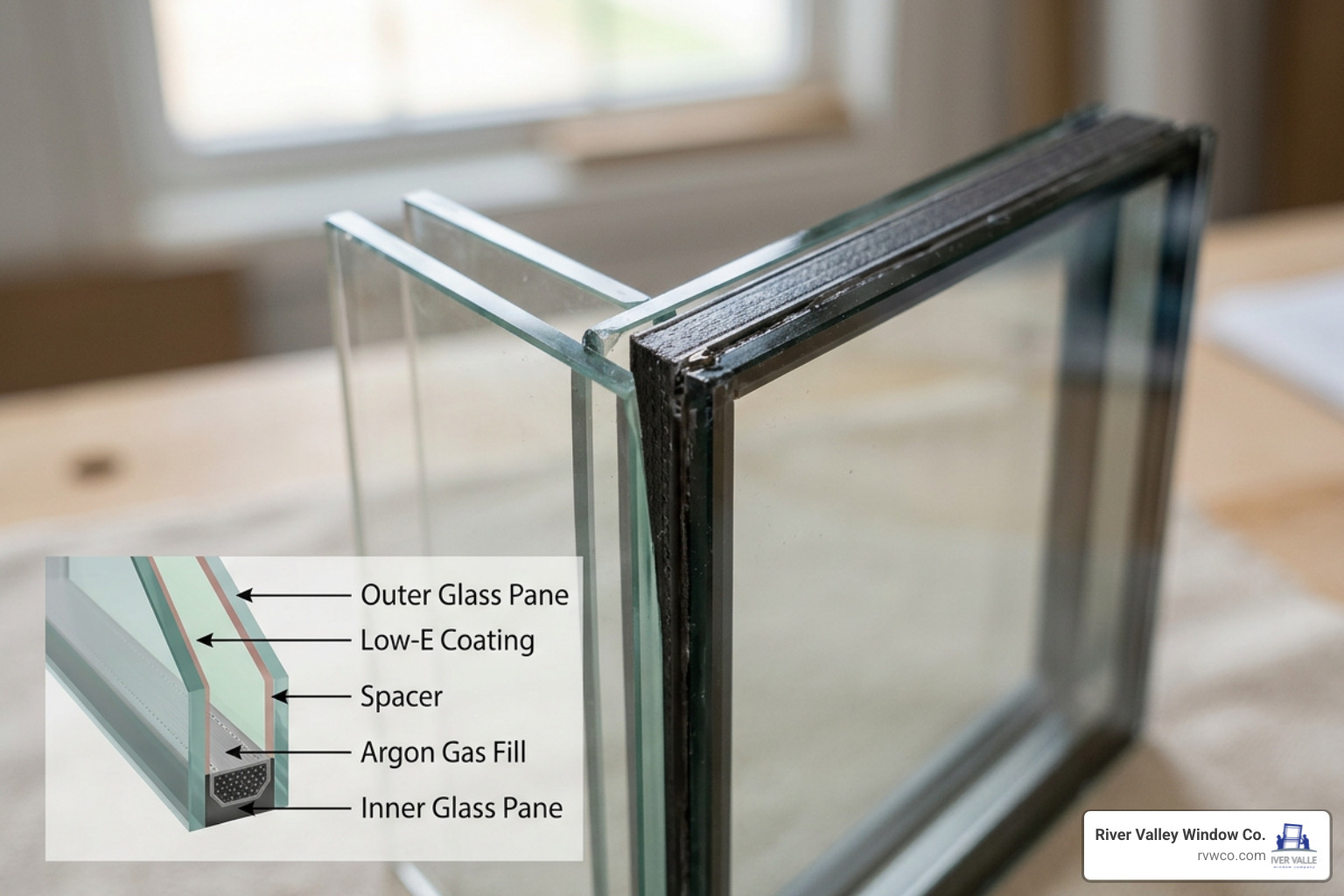
The glass package is the most critical component of your window’s energy performance. To keep your home cool, look for these features:
- Low-E Glass: A microscopically thin, metallic coating applied to the glass that reflects infrared heat while letting visible light pass through.
- Argon Gas Fill: A dense, non-toxic gas inserted between the glass panes that slows down heat transfer much better than regular air.
- Warm-Edge Spacers: Non-metal structural foam spacers (like Super Spacer) that hold the glass panes apart while reducing condensation and heat transfer along the glass edges.
To understand how these components work together, read our detailed breakdown on How Vinyl Windows Enhance Energy Efficiency in Your Home.
Here is a quick comparison of how different glass configurations perform:
| Glazing Type | Relative Energy Efficiency | Heat Blockage (UV/Infrared) | Best Suited For |
|---|---|---|---|
| Single-Pane | Baseline (Poor) | Minimal | Outdated homes; not recommended for AZ |
| Double-Pane with Low-E & Argon | Up to 30% more efficient | High (blocks up to 85% of UV) | Standard residential replacements |
| Triple-Pane with Low-E & Argon | Up to 62% more efficient | Maximum (blocks up to 95% of UV) | Extreme climates & high noise areas |
Installation Methods and Home Value Impact
When it comes to replacing your windows, you have two primary installation routes:
- Pocket Installation (Retrofit): This method is used when your existing window frames are structurally sound, square, and free of rot. The installer removes only the old sashes and inserts the new vinyl window directly into the existing frame. This preserves your interior trim and exterior siding, making the process fast and non-invasive.
- Full-Frame Installation: If the old frame is damaged, or if you want to change the size or shape of your window, a full-frame installation is required. The entire window, including the frame, casing, and trim, is removed down to the rough opening. While more labor-intensive, it ensures the best possible weatherproofing and insulation around the window opening.
Investing in high-quality vinyl replacement windows provides a fantastic return on investment (ROI). In Western and Pacific regions, homeowners typically recoup over 74% of their window replacement costs in added home equity, alongside immediate monthly utility savings. To learn more about maximizing your home improvement budget, check out our analysis on What Kind of Window Offers the Best ROI?.
If you are planning a project in the desert region, working with a local specialist ensures your new windows are tailored to withstand the intense heat and unique climate conditions of Northwestern Arizona. Choosing the right installation method and high-performance glass packages will ensure your home remains comfortable and energy-efficient all year round.
Understanding Milgard Quality and Warranties
As a premier option in the vinyl window market, Milgard offers specialized product lines designed to handle harsh climates without breaking a sweat. Their primary vinyl series include:
- Tuscany® V400: Milgard’s premium vinyl line, featuring elegant sightlines, traditional frame profiles, and the SmartTouch® locking system for ultimate security and ease of use.
- Trinsic™ V300: A sleek, modern series with a narrow frame profile that maximizes the glass area, perfect for contemporary homes seeking unobstructed views.
- Style Line® V250: A clean, cost-effective option that delivers exceptional durability and energy efficiency without a premium price tag.
(Note: The old Ultra Series has been discontinued, so we focus on these current, high-performing vinyl lines.)
When purchasing Milgard products, it is essential to understand their tiered warranty options:
Standard Limited Lifetime Warranty
This is the standard warranty included with your purchase. It varies depending on whether your project is a new construction or replacement scope, as well as the occupancy of the building. If you sell your home, the warranty can be transferred. Once transferred, it becomes a 10-year parts-only limited warranty calculated from the original manufacture date. This includes 10-year coverage on hardware, alongside product-specific limitations on finishes and weatherstripping.
Full Lifetime Warranty Upgrade
For ultimate peace of mind, homeowners can opt for the paid Full Lifetime Warranty upgrade. Here is what this premium coverage entails:
- Duration: Valid for the natural lifetime of the original consumer owner.
- Transferability: This upgraded warranty is strictly non-transferable.
- Coverage: Covers both parts and labor for covered defects.
- Glass Breakage: Glass breakage coverage is automatically included for Tuscany® V400 and V450 models. For the contemporary Trinsic™ V300 line, glass breakage coverage must be selected as an added upgrade.
- 10-Year Limits: A 10-year limit applies to insulated glass unit (IGU) delamination, internal blind defects, and peeling or fading on exterior finishes.
- 1-Year Limits: A 1-year limit applies to components like weatherstripping, screens, and any corrosion on stainless steel hardware.
Frequently Asked Questions
How long do vinyl windows typically last?
On average, high-quality vinyl windows last between 20 and 40 years. Their lifespan depends heavily on the quality of the raw vinyl compound used during manufacturing. Premium windows incorporate pure virgin vinyl mixed with stabilizers like titanium dioxide, which prevents the material from breaking down, yellowing, or becoming brittle under intense UV radiation.
How do vinyl windows compare to aluminum frames?
Aluminum is highly conductive, meaning it acts like a highway for heat, warming up your home during hot summer days and causing condensation issues in the winter. Vinyl, by contrast, has incredibly low thermal conductivity, keeping your indoor spaces insulated. While aluminum is structurally stronger for massive, commercial-scale glass walls, modern vinyl with composite reinforcements easily provides all the strength needed for residential properties. To compare these options further, read our guide on Choosing Between Vinyl and Aluminum Windows for Longevity and Style.
What maintenance do vinyl windows require?
Vinyl windows require almost zero maintenance. To keep them performing beautifully:
- Clean the frames with mild soap, warm water, and a soft cloth (avoid abrasive cleaners or pads).
- Keep the sash tracks clear of dirt, dust, and desert sand.
- Lubricate the tracks and rollers annually with a dry silicone spray (avoid oil-based lubricants like WD-40, which attract dust).
Conclusion
Upgrading to high-quality Vinyl Windows is one of the smartest investments you can make for your home. By choosing the right operating styles, prioritizing multi-chambered frames with Low-E glass, and selecting a manufacturer with a rock-solid warranty, you will enjoy a more comfortable, beautiful, and energy-efficient home for decades to come.
As we head through July 2026, we at River Valley Window Co. remain dedicated to helping homeowners throughout Lake Havasu City and Northwestern Arizona find the perfect window solutions. Our team specializes in fast, non-invasive installations of energy-efficient Milgard products, backed by industry-leading warranties. Contact us today to schedule your free consultation and take the first step toward a cooler, more comfortable home!