
The Best Balcony Glass Door Options: A Quick Answer
A balcony glass door is one of the most impactful upgrades you can make to your home. It brings in natural light, opens up your living space, and connects your interior to the outdoors — all while adding real value to your property.
Here are the most common balcony glass door types to consider:
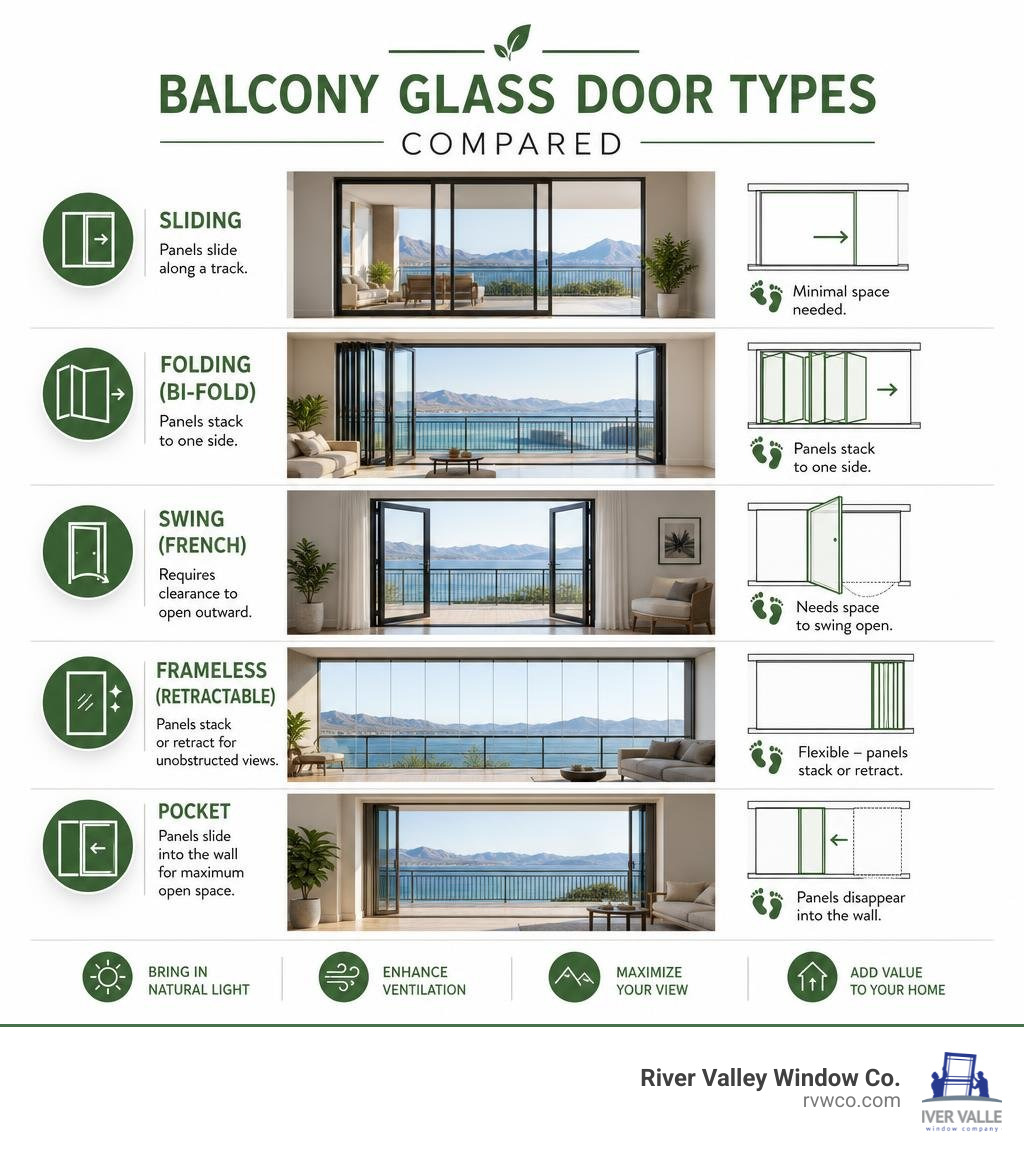
| Door Type | Best For | Space Needed |
|---|---|---|
| Sliding | Small to mid-size balconies | Minimal — panels slide along a track |
| Folding/Bi-fold | Wide openings, open-plan living | Panels stack to one side |
| Swing/French | Traditional homes, single access | Requires clearance to open |
| Frameless/Retractable | Panoramic views, enclosures | Flexible — panels stack or retract |
| Maximum open space | Panels disappear into the wall |
Prices typically range from $1,500 to $5,000 for standard sliding glass doors, with folding and frameless systems often costing more depending on size and materials.
In Northwestern Arizona’s extreme heat, the right door also needs to handle intense sun, high temperatures, and energy efficiency demands — not just look great.
This guide breaks down every major option so you can find the best fit for your home and budget.
Key Types and Configurations of Balcony Doors
Choosing the perfect balcony glass door starts with understanding how you use your balcony, your budget, and how much interior space you have available. The right configuration balances space efficiency, ventilation, and access to breathtaking desert views here in Lake Havasu City.

When selecting a configuration, the choice usually comes down to how much physical swing space you have. If you are working with a compact layout, comparing the footprint of different door styles is crucial. For an in-depth breakdown of how these choices impact tight layouts, take a look at our guide on Comparing Sliding vs Swing Doors for Small Spaces.
Let’s explore the most popular configurations for modern homes.
Sliding Balcony Glass Door Configurations
Sliding glass doors are the classic, go-to option for balconies of all sizes. They glide horizontally along a track, meaning they require zero floor space to open or close. This makes them exceptionally space-efficient, allowing you to place furniture right next to the glass inside or outside on your balcony.
Standard sliding configurations include:
- Two-Panel (Bypass) Systems: One fixed panel and one sliding panel. This is the most common and cost-effective option.
- Three- and Four-Panel Systems: These allow for wider openings. In a four-panel system, the two middle panels typically slide outward over the fixed outer panels, creating a grand, centered entrance.
- Pocket Doors: For the ultimate luxury experience, pocket doors slide completely into a recessed pocket within the adjoining wall. When fully opened, the door entirely disappears from view, leaving a completely unobstructed transition.
If you want to explore how these different configurations elevate the look of your home, check out our article on 3 Stylish Patio Door Designs for Modern Homes. You can also read more about premium multi-slide and pocket systems by visiting Glass Entry & Patio Doors | Multi-Slide & Pocket Doors to see how these high-end options function in desert environments.
Folding and Accordion Systems
If you want to maximize the physical opening of your balcony, folding (or bi-fold) doors are an incredible choice. These systems feature multiple panels that fold and stack neatly against one or both sides of the frame like an accordion.
Unlike sliding doors, which always leave at least one panel’s width of glass in the opening, folding doors can open up to 90% of the entire aperture. This makes them perfect for entertaining, allowing your living room and balcony to merge into one continuous space.
While folding doors are highly desirable, they do require space for the folded panels to stack, and they have more moving parts and seals, which can impact your budget. To find out if this setup is right for your home, read our detailed analysis: Are Milgard Accordion Doors Worth It? Everything You Need to Know.
Frameless and Minimalist Balcony Glass Door Systems
For homeowners seeking uninterrupted panoramic views of Arizona’s mountain ranges and sunsets, frameless and minimalist glass door systems are the gold standard. These systems minimize or entirely eliminate vertical frame profiles, using heavy-duty tempered safety glass that locks together with subtle transparent seals.
Frameless balcony glass systems, such as the Balcony Enclosures | Frameless Glass Doors | StackPro – CLEAR EDGE GLASS, allow you to slide, pivot, and stack individual glass panels around corners and curves. This level of flexibility is perfect for enclosing a balcony to protect it from dust, wind, and occasional rain without sacrificing the open-air feel when the weather is nice. These systems act as a passive thermal buffer, creating a comfortable micro-climate that reduces heating and cooling demands on your home’s main envelope.
Choosing the Right Balcony Glass Door for Your Home
Finding the ideal balcony glass door requires balancing aesthetic desires with practical budget constraints. Because replacing a patio door is a long-term investment, you want to ensure you get the best value for your money.
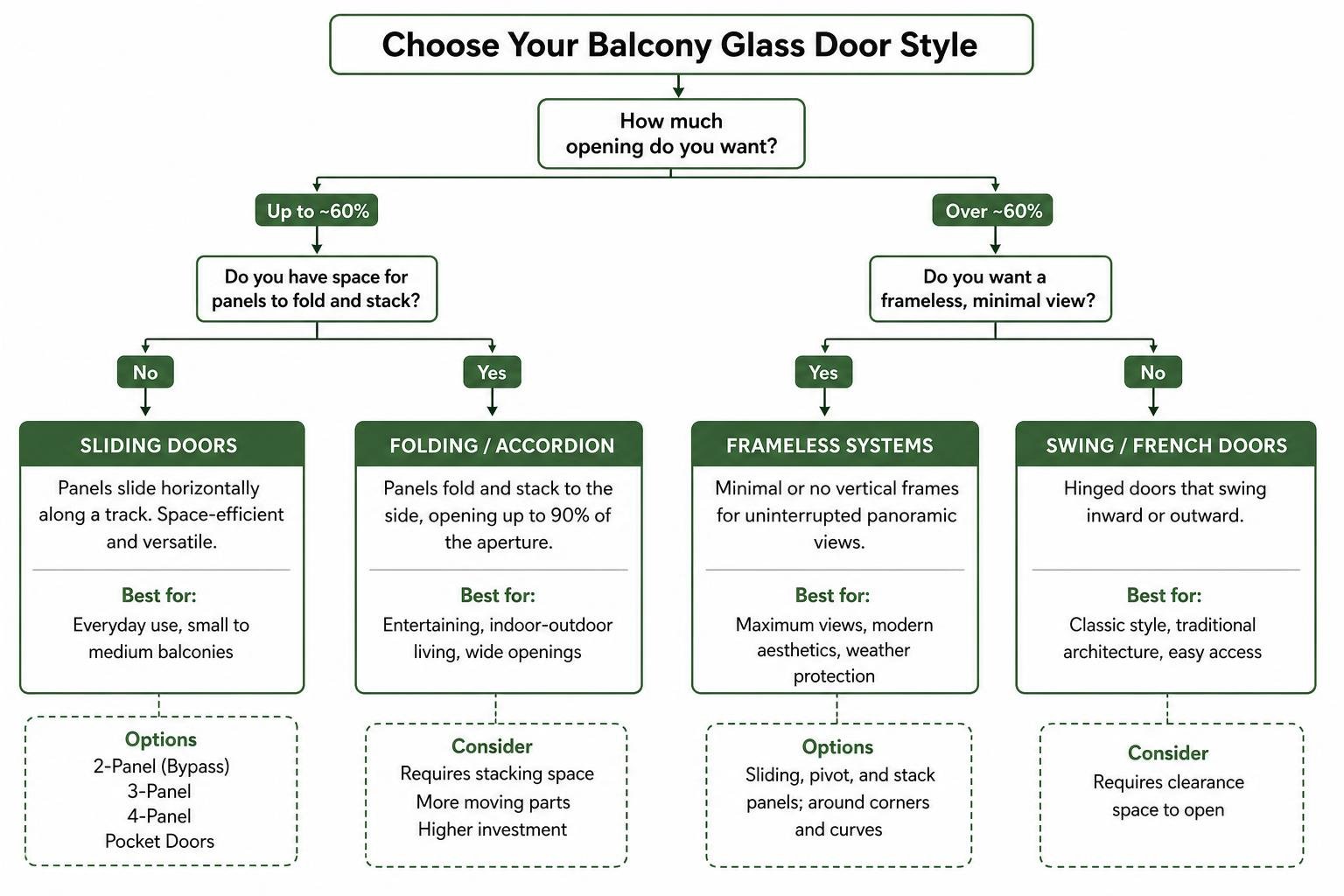
To help you compare the primary options, let’s look at how they stack up across key decision factors:
| Feature | Sliding Doors | Folding / Accordion | Swing / French | Frameless Systems |
|---|---|---|---|---|
| Aesthetic Appeal | Modern, clean lines | Grand, luxury feel | Classic, elegant | Ultra-modern, invisible |
| Space Efficiency | High (no swing space) | Medium (requires stacking space) | Low (requires swing clearance) | High (flexible stacking) |
| Max Opening Width | Up to 50% of frame | Up to 90% of frame | Up to 100% of frame (limited width) | Up to 95% of frame |
| Relative Cost | $ – $$ | $$$ – $$$$ | $$ – $$$ | $$$$ |
| Maintenance Needs | Low (keep tracks clean) | Medium (multiple hinges/seals) | Low (hinge lubrication) | Medium (glass cleaning) |
When planning your project, consider how the door will function in your daily life. Will it block a high-traffic walkway when open? Does it face the harsh afternoon sun? For a structured approach to making this decision, check out Our Top Tips for Choosing a New Patio Door.
Material Selection and Thermal Performance
In Northwestern Arizona, the material of your balcony glass door frame is just as important as the glass itself. With summer temperatures regularly climbing past 110°F in Lake Havasu City, selecting a material that resists warping, peeling, and thermal transfer is essential to keeping your utility bills under control.
Frame Materials: Pros and Cons
- Vinyl: Modern vinyl profiles are highly durable, low-maintenance, and cost-effective. High-quality vinyl formulas are specifically engineered to resist UV degradation, meaning they won’t crack, peel, or fade under the intense Arizona sun. Vinyl also offers excellent thermal insulation because it does not conduct heat.
- Aluminum: Highly popular for its strength-to-weight ratio and ultra-slim profiles, aluminum allows for massive panes of glass. However, standard aluminum is a natural conductor of heat. To solve this, high-performance systems like the GL-77 | Glasscor Project utilize a “thermally broken” design. This means an insulating polyamide barrier is placed inside the frame to block heat transfer, keeping the interior frame cool to the touch.
- Fiberglass: Extremely strong, durable, and stable. Fiberglass frames mimic the look of painted wood but expand and contract at nearly the same rate as the glass they hold, creating an incredibly tight, long-lasting seal that won’t warp in extreme desert heat.
Thermal Efficiency and Glass Packages
The glass itself makes up over 80% of your door’s surface area, making high-performance glazing a necessity. Modern energy-efficient balcony doors utilize:
- Double or Triple Glazing: Multiple panes of glass separated by a sealed space filled with insulating argon gas.
- Low-E (Low-Emissivity) Coatings: Microscopically thin metal oxide layers applied to the glass that reflect infrared heat while letting natural light pass through. This keeps hot desert air outside in the summer and traps cool air inside.
Upgrading to an energy-efficient door is one of the fastest ways to lower your monthly cooling costs. To learn more about how advanced glass packages protect your home and wallet, read our guide on How New Windows and Doors Can Help You Save on Your Energy Bills. For additional savings tips, you can also explore How Energy Efficient Windows Can Save You Substantial Money and How Replacing Windows and Doors Can Save You Money.
As an added benefit, these insulated glass units do more than just block heat — they are also highly effective at blocking outdoor noise. If you live near a busy street or active neighborhood, you can find out more about acoustic benefits in our article on How New Windows and Doors Can Help with Noise Reduction.
Safety, Building Codes, and Customization Options
Because a balcony glass door serves as an entry point and a physical barrier on upper floors, safety and building code compliance are absolute priorities.
Safety Glass Requirements
By law, all glass patio and balcony doors must use safety glass. The two primary types are:
- Tempered Glass: Processed through rapid heating and cooling to increase its strength. If it does break, it crumbles into small, dull granular chunks rather than sharp, dangerous shards.
- Laminated Glass: Features a tough plastic interlayer sandwiched between two sheets of glass. If broken, the glass fragments stick to the interlayer, preventing falls and delaying forced entry.
Wind Loads and Design Pressure (DP)
Your door must be engineered to withstand local wind forces, especially during Arizona’s monsoon season. High-performance sliding doors are rated by Design Pressure (DP) — for example, some architectural sliding doors can achieve design pressures up to 75 PSF, meaning they will remain completely structural and watertight even in extreme storm conditions.
Juliet Balconies and Integrated Systems

If you have an upper-floor bedroom or loft with no physical outdoor projection, you can still experience the benefits of a balcony door using a Juliet balcony or an integrated system.
According to safety regulations, a Juliet balcony must have a top safety rail at least 110 cm above the indoor floor level, with any vertical gaps in the railing restricted to 10 cm or less to prevent child or pet falls.
For a modern, seamless look, you can pair your sliding doors with frameless structural glass balustrades. Modern systems like Integrated Balconies – Seamless Design & Unobstructed Views – Glideline allow a 21.5mm toughened laminated glass barrier to integrate directly into the sliding door’s base track. This eliminates the need for bulky external metal brackets, giving you a completely unobstructed view of the outdoors while maintaining maximum safety.
Customization Options
Your balcony door should match your home’s unique architectural style. Standard customization choices include:
- Frame Colors: From classic white and tan vinyl to sleek matte black, dark bronze, and clear anodized aluminum.
- Glass Finishes: Clear glass maximizes light transmission (up to 85%), while frosted, tinted, or patterned glass provides privacy for bedrooms or master baths.
- Hardware: Select from durable handle styles in oil-rubbed bronze, brushed chrome, satin nickel, or matte black to tie your design together.
Frequently Asked Questions about Balcony Doors
What is the average cost of a balcony glass door?
On average, a standard sliding glass balcony door costs between $1,500 and $5,000 including professional installation. The final price depends on the frame material (vinyl is generally the most affordable, followed by aluminum and fiberglass), the size of the opening, and the energy-efficient glass packages selected. High-end configurations like pocket doors, multi-slide moving glass walls, and folding systems can range from $6,000 to $15,000+ due to structural framing requirements and specialized hardware.
How do I maintain my balcony door tracks?
To keep your sliding balcony door operating smoothly and silently, perform these quick maintenance steps every few months:
- Vacuum the bottom track to remove desert dust, sand, and debris.
- Wipe down the tracks with a damp cloth and mild soapy water.
- Apply a dry silicone spray lubricant to the tracks (avoid oil-based lubricants like WD-40, which attract dust and clog the rollers).
- Inspect the weatherstripping for signs of wear or peeling, replacing it if you feel drafts.
Are frameless glass balcony doors energy efficient?
Frameless glass doors are highly effective when used as an outer balcony enclosure, acting as a “thermal buffer” or sunroom that shields your main interior doors from wind, dust, and direct heat. However, because they lack thick insulated frames and airtight gaskets, single-glazed frameless systems do not offer the same high level of direct thermal insulation as a double-glazed, thermally broken framed sliding door. For maximum efficiency in Northwestern Arizona, we recommend using a high-performance, double-glazed framed sliding or pocket door as your primary thermal barrier.
Conclusion
Upgrading your balcony glass door is an investment that completely transforms your living space, improves your home’s comfort, and enhances its security. Whether you prefer the space-saving convenience of a classic sliding door, the dramatic opening of a folding wall, or the sleek look of a pocket door, choosing the right system ensures years of reliable performance.
At River Valley Window Co., we specialize in helping Northwestern Arizona homeowners find the perfect fit for their homes and budgets. We proudly offer industry-leading Milgard energy-efficient products, including the modern, thin-profile Trinsic™ V300 vinyl series and the elegant, traditional Tuscany® V400 and V450 vinyl series.
Our team is dedicated to providing fast, non-invasive installations backed by Milgard’s outstanding warranty protections:
- Standard Limited Lifetime Warranty: Varies depending on whether your project is new construction or replacement. If you sell your home, the warranty transfers to the next owner as a 10-year parts-only limited warranty (calculated from the manufacture date), including 10-year hardware coverage and specific limitations on finishes and weatherstripping.
- Paid Full Lifetime Warranty Upgrade: Valid for the natural lifetime of the original consumer owner (non-transferable). This premium upgrade covers both parts and labor, and it includes glass breakage coverage automatically for the Tuscany V400 and V450 series, or as an added upgrade option for the Trinsic V300 series.
- Note: Certain components carry shorter limits, such as a 10-year limit on insulated glass unit delamination, blind defects, and peeling or fading finishes, and a 1-year limit on weatherstripping, screens, and stainless steel hardware corrosion.
Ready to take the next step toward a more beautiful, energy-efficient home? Read through our Step-by-Step Guide to Milgard Patio Doors to learn more about your options, or explore how to create Patio Doors: A Fluid Transition Between Your Home and Outside.
Contact us today to schedule your free consultation and find the perfect balcony door for your Lake Havasu City home!