

What Does a Milgard Sliding Door Cost in 2026?
A standard 6-foot Milgard Tuscany sliding door typically costs $2,500 to $4,800 installed in 2026. The door unit alone may cost $600 to $1,600, but your final quote also depends on glass, labor, and the condition of the opening.
For a fair comparison, ask each installer to price the same door size, glass package, removal work, and flashing. In Northwestern Arizona, a Low-E glass option may be worth comparing for comfort in the sun, but it will add to the upfront cost.
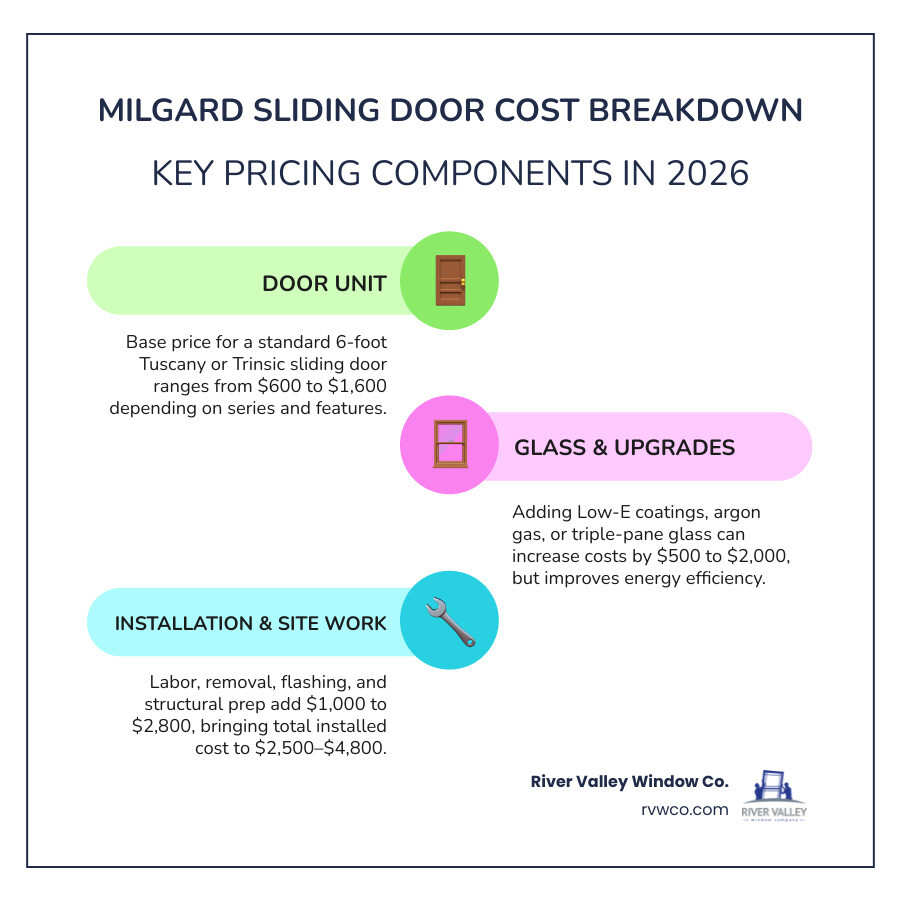
Quick milgard sliding door cost definitions:
Understanding Milgard Sliding Door Cost Factors in 2026
When planning an exterior renovation, understanding the individual line items of your quote helps you balance quality, thermal performance, and budget. The total expense is never just the price tag on the factory door slab; it is a blend of product engineering, site logistics, specialized glazing, and professional trade labor. Navigating budget-friendly sliding and French door pricing requires examining every moving piece in the estimate.
Key factors that directly shape your overall investment include:
- Base Door Sizing: Moving from a standard 6-foot width to an 8-foot or multi-panel build increases both raw material use and freight handling requirements.
- Glass Packages: Advanced coatings, insulating spacers, and laminated security glass deliver better efficiency but alter the base door quote.
- Labor Rates and Trade Expertise: Certified door installers guarantee weather-tight seals, plumb alignments, and smooth operation, which costs more than unlicensed handymen.
- Permitting and Code Compliance: Depending on local municipal requirements across Arizona, permitting fees ensure installations meet regional energy efficiency codes and structural egress standards.
- Site Prep and Disposal: Hauling away heavy existing units, disposing of tempered glass, and prepping aged rough openings introduce variable labor charges.
Analyzing Average Milgard Sliding Door Cost by Product Series
Milgard engineers distinct product series tailored to varying architectural profiles, aesthetic tastes, and price points. The Tuscany® Series (V400) remains an industry benchmark for classic vinyl design, featuring thick, sculpted sightlines and integrated SmartTouch® locking hardware. For modern architectural designs, the Trinsic™ Series (V300) offers an ultra-narrow frame that maximizes glass area and natural light.
Uninstalled vinyl sliding patio doors typically run between $900 and $2,400 across standard residential dimensions. When you factor in professional fitting, waterproofing, hardware calibration, and perimeter insulation, the fully installed investment ranges from $1,800 to $4,500 for most standard two-panel systems.
| Milgard Series | Frame Profile & Material | Base Unit Cost (Uninstalled) | Typical Installed Cost (Standard 6-ft) | Best Suited For |
|---|---|---|---|---|
| Tuscany® Series (V400) | Traditional Sculpted Vinyl | $600 – $1,600 | $2,500 – $4,800 | Classic residential architecture, maximum durability |
| Trinsic™ Series (V300) | Contemporary Narrow Vinyl | $750 – $1,800 | $2,400 – $4,600 | Modern homes, expansive daylight, slim sightlines |
| Thermally Improved Aluminum | Sleek Structural Aluminum | $1,725 – $2,329 | $3,200 – $5,400 | Modern aesthetics, narrow profiles, structural strength |
| Moving Glass Wall Systems | Multi-Slide / Bi-Fold Aluminum | $4,800 – $25,000+ | $8,500 – $40,000+ | Indoor-outdoor living, panoramic views, luxury builds |
Frame Materials: Vinyl, Aluminum, and Moving Glass Walls
Choosing the correct framing material impacts long-term thermal conductance, frame maintenance, and structural strength. Vinyl patio doors are popular because high-grade vinyl does not corrode, rot, or require recurring paint maintenance, making it dependable in extreme climates like Lake Havasu City where summer sun degrades lesser materials.
Homeowners seeking modern, industrial profiles often select thermally improved aluminum sliding doors. These feature an extruded thermal barrier separating the interior and exterior aluminum sections, preventing heat from transferring directly into your air-conditioned living space while maintaining narrow structural sightlines.
For homeowners exploring different materials, comparing vinyl and fiberglass patio door options or multi-panel moving glass walls creates clear expectations around aesthetic profiles and structural performance. Moving glass wall systems transform an entire exterior wall into an open indoor-outdoor entertainment space, using heavy-duty tandem rollers and precision-engineered tracks.
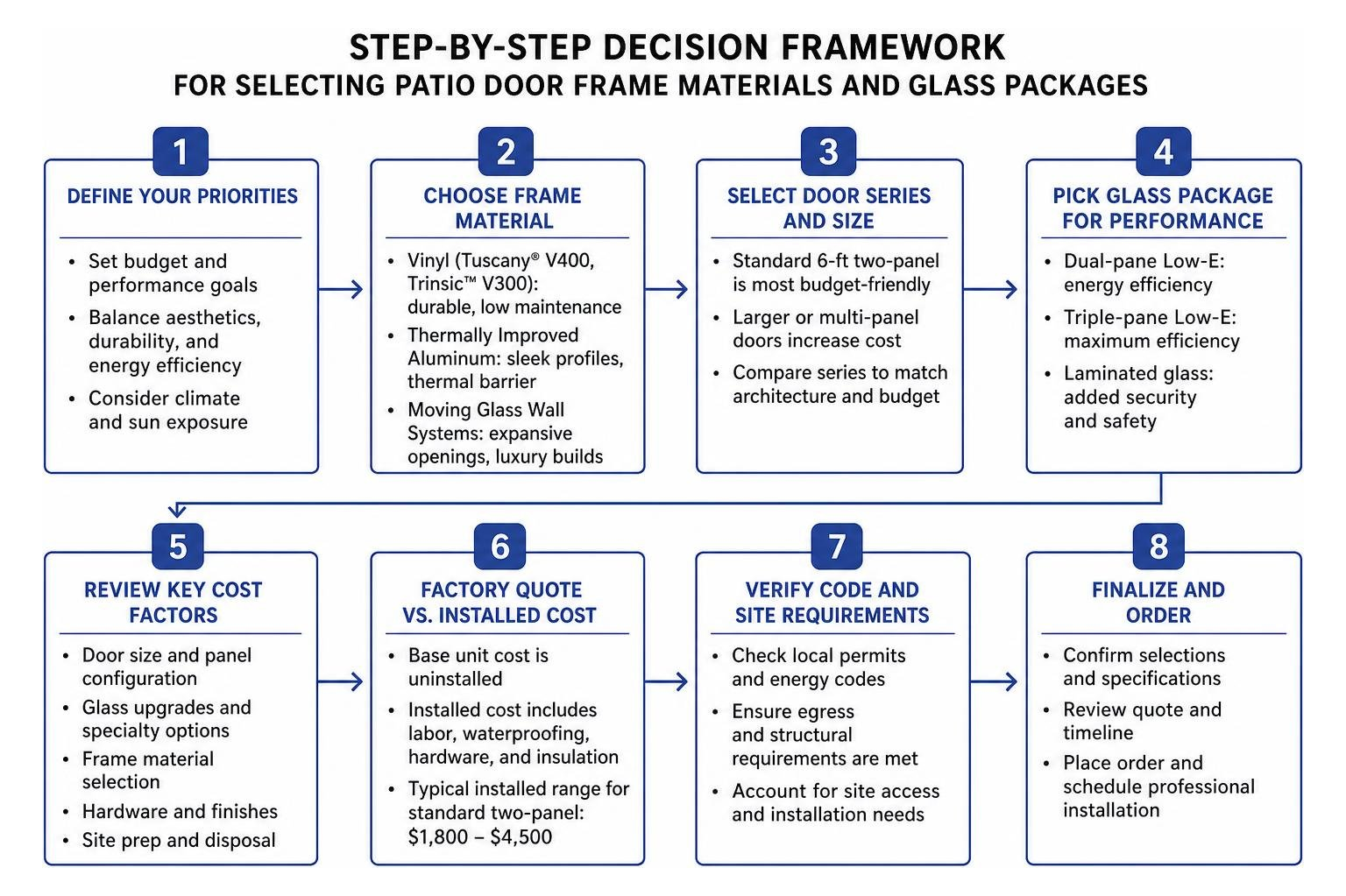
How Glass Upgrades and Custom Options Shape Your Investment
A sliding glass door functions essentially as a transparent exterior wall. Glass selection directly determines comfort, solar radiation mitigation, and interior utility expenses. Spotting the signs of energy inefficient patio doors—such as radiant heat bleed, drafts, or failing pane seals—often motivates homeowners to upgrade to high-performance glazing.
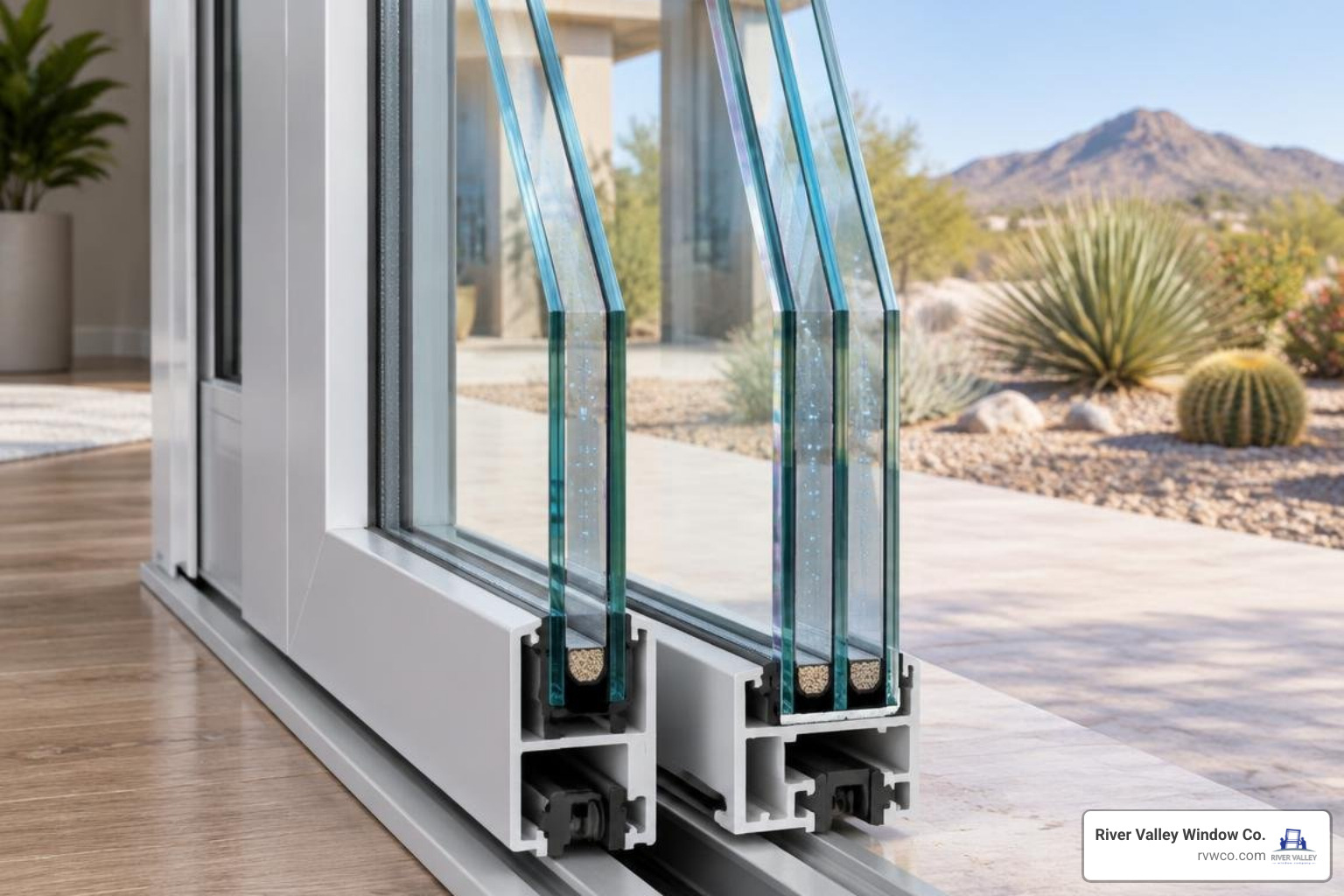
Impact of Low-E and Triple-Pane Glass on Milgard Sliding Door Cost
Milgard applies advanced microscopic Low-E (low-emissivity) metallic coatings onto interior glass surfaces. These coatings reflect infrared and ultraviolet light while allowing visible light through, keeping intense desert heat outside during summer and interior warmth inside during winter.
Standard configurations utilize dual-pane insulated glass units (IGUs) filled with argon gas. Upgrading to advanced Low-E formulas (such as SunCoat® or SunCoatMAX®) adds approximately $100 to $700 depending on door size. In colder climates, upgrading from standard double-pane to Low-E triple-pane glass adds roughly $525 to the unit price. While triple-pane glass saves $50 to $100 annually in severe cold climates with a 5-to-10-year payback period, high-efficiency dual-pane Low-E assemblies are often the most cost-effective match for desert sun and heat mitigation.
Door Sizing, Multi-Panel Configurations, and Custom Hardware
Standard two-panel sliding doors generally come in 5-foot, 6-foot, and 8-foot widths with heights of 6 feet 8 inches or 8 feet. Expanding past standard configurations into wider architectural openings alters both materials and project complexity. Reviewing four-panel sliding door configurations and pricing highlights how multi-slide setups expand living spaces while requiring specialized header support.
Custom sizing incurs a 15% to 30% surcharge over standardized assembly dimensions. Upgrades like integrated blinds between the glass, custom exterior frame colors, decorative grid profiles, and heavy-duty premium handle finishes add $150 to $800 to your product package.
Replacement vs. New-Construction Installation Expenses
Installation scope significantly influences your bottom-line project quote. Swapping an existing unit of the exact same size into an intact structural opening is faster and more cost-effective than framing a brand-new architectural opening. Understanding overall door replacement expenses helps you budget for your specific structural conditions.
| Installation Element | Replacement (Retrofit) Scope | New-Construction / Structural Modification |
|---|---|---|
| Framing Requirements | Existing rough framing & header preserved | New structural framing, King/Jack studs, LVL header |
| Exterior Finishes | Exterior stucco/siding largely undisturbed | Stucco cutback, patching, siding repair, new trim |
| Waterproofing | Direct frame sealing, perimeter foam, sill bead | Sill pan flashing, self-adhering membrane, house wrap integration |
| Typical Labor Duration | 4 – 8 Hours (Two-person crew) | 1.5 – 3 Days (Multi-trade crew) |
| Labor Cost Range | $400 – $850 | $1,100 – $2,100+ |
Labor Hours, Regional Rates, and Structural Prep Work
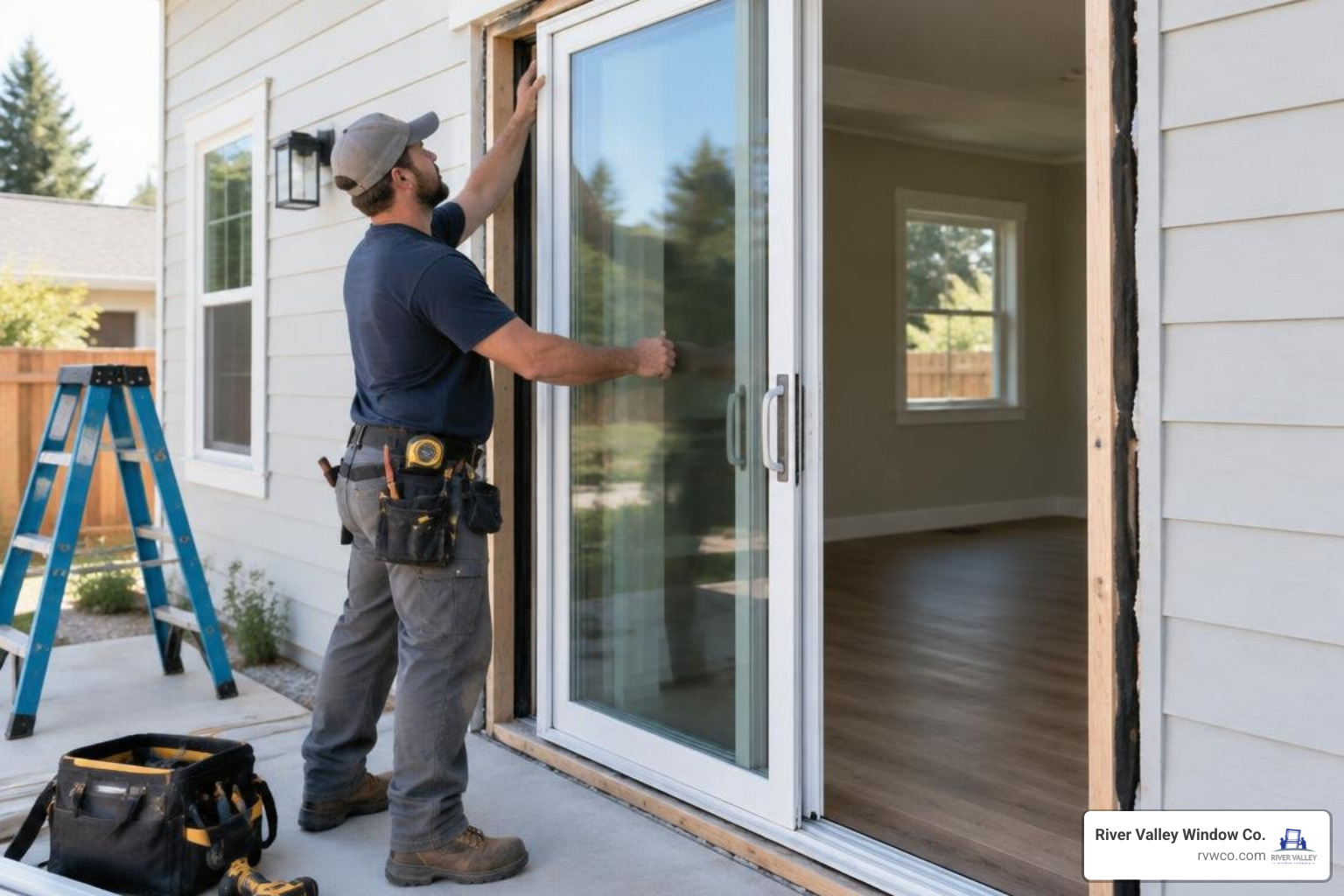
Professional sliding door installations require experienced crews to ensure the door glides smoothly and maintains an airtight seal. Standard replacement projects typically take a qualified two-person crew between 4 and 8 hours. When estimating project schedules, estimating door installation costs helps clarify how crew size, structural complexity, and site access influence your labor estimate.
Certified trade labor ranges between $60 and $125 per hour. In complex installations involving structural changes, new construction, or second-story staging, total labor expenses run from $800 to $2,200 per door.
Hidden Project Costs: Rot Repair, Sill Pans, and Permits
When comparing quotes, watch for exclusions that can create surprise expenses later. Reliable installers evaluate site risks during the initial consultation:
- Subfloor and Framing Rot Repair: Undetected moisture beneath an old door sill can damage subflooring. Rebuilding rotted framing adds $200 to $800 in structural repair materials and carpenter labor.
- Sill Pan Flashing Integration: Quality installations use an integrated, sloped sill pan beneath the door frame to direct any intruding moisture outside, protecting interior floors.
- Municipal Building Permits: Depending on local Arizona jurisdiction requirements, residential permits typically add $75 to $250.
- Hauling and Disposal Charges: Properly disposing of heavy tempered glass and old metal or vinyl frames costs $50 to $150 if not bundled into your quote.
Milgard Warranty Tiers and Real-World Project Scenarios
Long-term value depends on the backing behind your purchase. Reviewing comprehensive Milgard door warranty coverage helps you assess lifetime value beyond the initial purchase price.
Standard Limited vs. Full Lifetime Warranty Coverage
Milgard provides a tiered warranty structure that balances base coverage with optional full-coverage protection:
- Standard Limited Lifetime Warranty: Varies by new-construction versus replacement scope and property occupancy. If the original purchaser sells the home, this coverage transfers to a 10-year parts-only limited warranty calculated from the original manufacture date, including 10-year hardware coverage and product-specific finish and weatherstripping limitations.
- Paid Full Lifetime Warranty Upgrade: Extends complete coverage for parts and factory labor for the natural lifetime of the original consumer owner. This upgrade is non-transferable.
- Glass Breakage Specifics: The Full Lifetime Warranty upgrade includes accidental glass breakage coverage for Tuscany® Series V400 and V450 models, while Trinsic™ Series V300 requires glass breakage to be added as a separate upgrade.
- Specific Component Limits: Both tiers carry shorter limits on high-wear components:
- 10-year limits apply to insulated glass unit delamination, internal blind mechanism defects, and exterior finish peeling or fading.
- 1-year limits apply to weatherstripping integrity, insect screens, and surface corrosion on stainless steel hardware components in challenging environments.
Budget, Mid-Range, and Premium Cost Scenarios
To help you budget accurately, here are three realistic project profiles:
| Project Scope | Product Selection & Glazing Package | Installation Type & Scope | Total Estimated Installed Cost |
|---|---|---|---|
| Basic Replacement | 6-ft Milgard Tuscany® V400 Vinyl Slider, Standard Clear Dual-Pane Glass | Direct replacement in sound opening, standard disposal | $2,050 – $2,800 |
| Mid-Range Upgrade | 8-ft Milgard Trinsic™ V300 Narrow Vinyl Slider, SunCoatMAX® Low-E Glass, Upgraded Hardware | Retrofit install, new sill pan flashing, old unit hauling | $3,600 – $5,200 |
| Premium Custom Living | 12-ft 3-Panel Moving Glass Wall System or Thermally Improved Aluminum Slider | Structural header resizing, custom drywall/stucco integration | $9,500 – $22,000+ |
Frequently Asked Questions About Milgard Sliding Glass Doors
What is the typical installed cost for a standard 6-foot Milgard sliding door?
For an uninstalled 6-foot Milgard Tuscany® vinyl door, expect base unit costs between $600 and $1,600. A standard replacement with dual-pane glass, professional fitting, insulation, and old door hauling typically totals between $2,500 and $4,800 fully installed.
How much do moving glass walls cost?
Milgard moving glass wall systems typically range from $4,800 to $40,000 or more, depending on opening width, number of panels, and structural engineering needs. Pricing generally runs between $300 and $1,500+ per square foot, with labor representing a significant portion of the total due to specialized track alignments and header support requirements.
Is upgrading to triple-pane glass worth the extra cost?
In extreme cold-climate zones (IECC zones 5 through 7), triple-pane glass reduces annual heating bills by $50 to $100, providing an energy payback within 5 to 10 years. In warmer regions like Northwestern Arizona, high-performance dual-pane glass with advanced Low-E coatings like SunCoatMAX® delivers the best balance of solar heat control and cost efficiency.
Conclusion
Upgrading your home with a new sliding patio door enhances energy efficiency, everyday convenience, and property value. Knowing how frame designs, specialized Low-E glass, installation methods, and warranty tiers affect pricing ensures you get clear value from your investment.
At River Valley Window Co., we specialize in fast, clean, and non-invasive installations across Northwestern Arizona, including Lake Havasu City. We pair industry-leading warranties with precision craftsmanship so your doors slide effortlessly and seal tight through every season. Ready to transform your space? Contact our team today to explore our complete selection of Milgard patio doors and request your custom in-home estimate.