
Choose Replacement Windows for Comfort, Savings, and Lasting Value
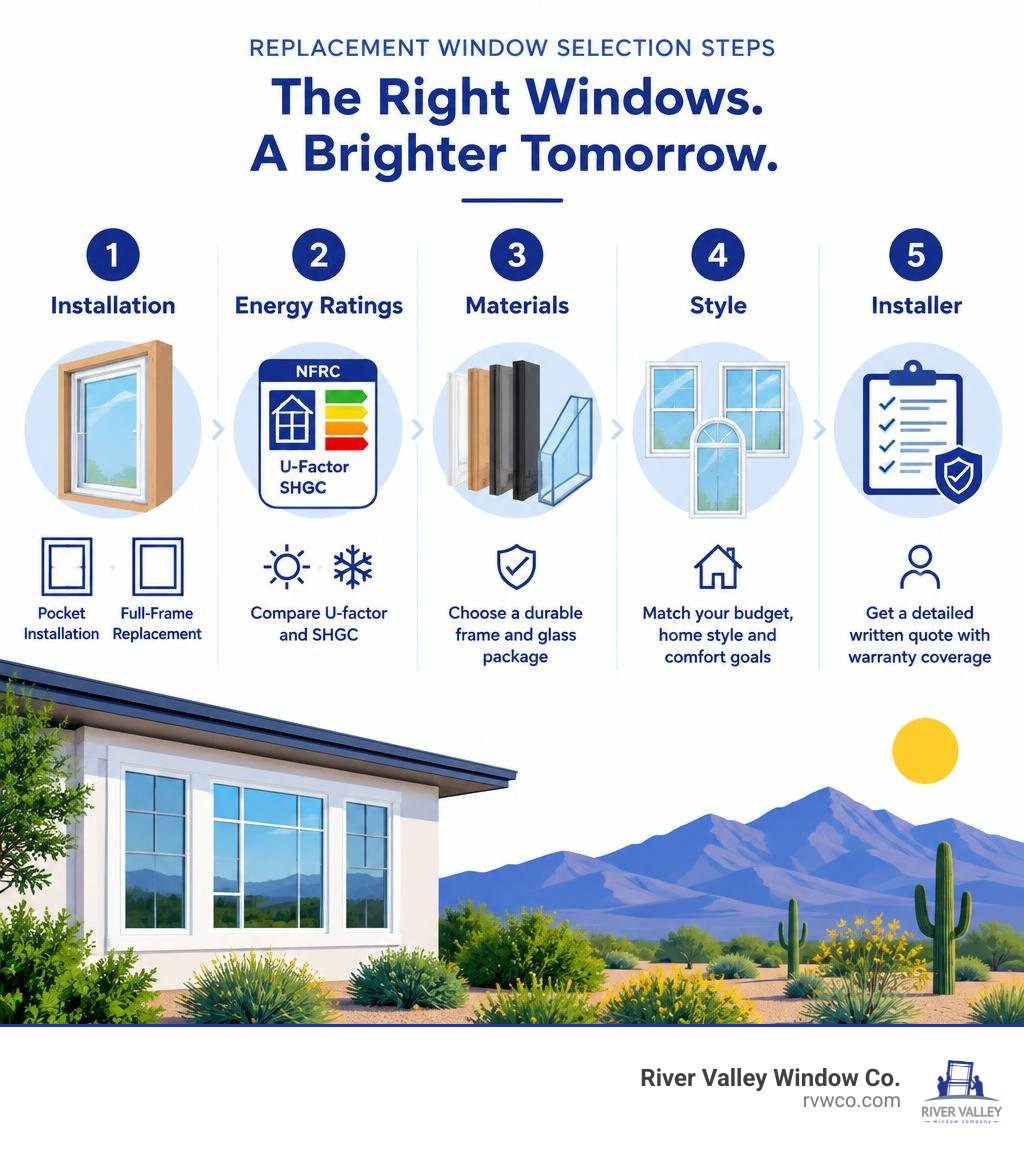
The right replacement windows can make a Northwestern Arizona home less drafty, quieter, and easier to cool. Start by choosing the installation method that fits your existing frames, then compare energy ratings, frame materials, glass packages, and installer warranties.
For most homes, the smartest path is:
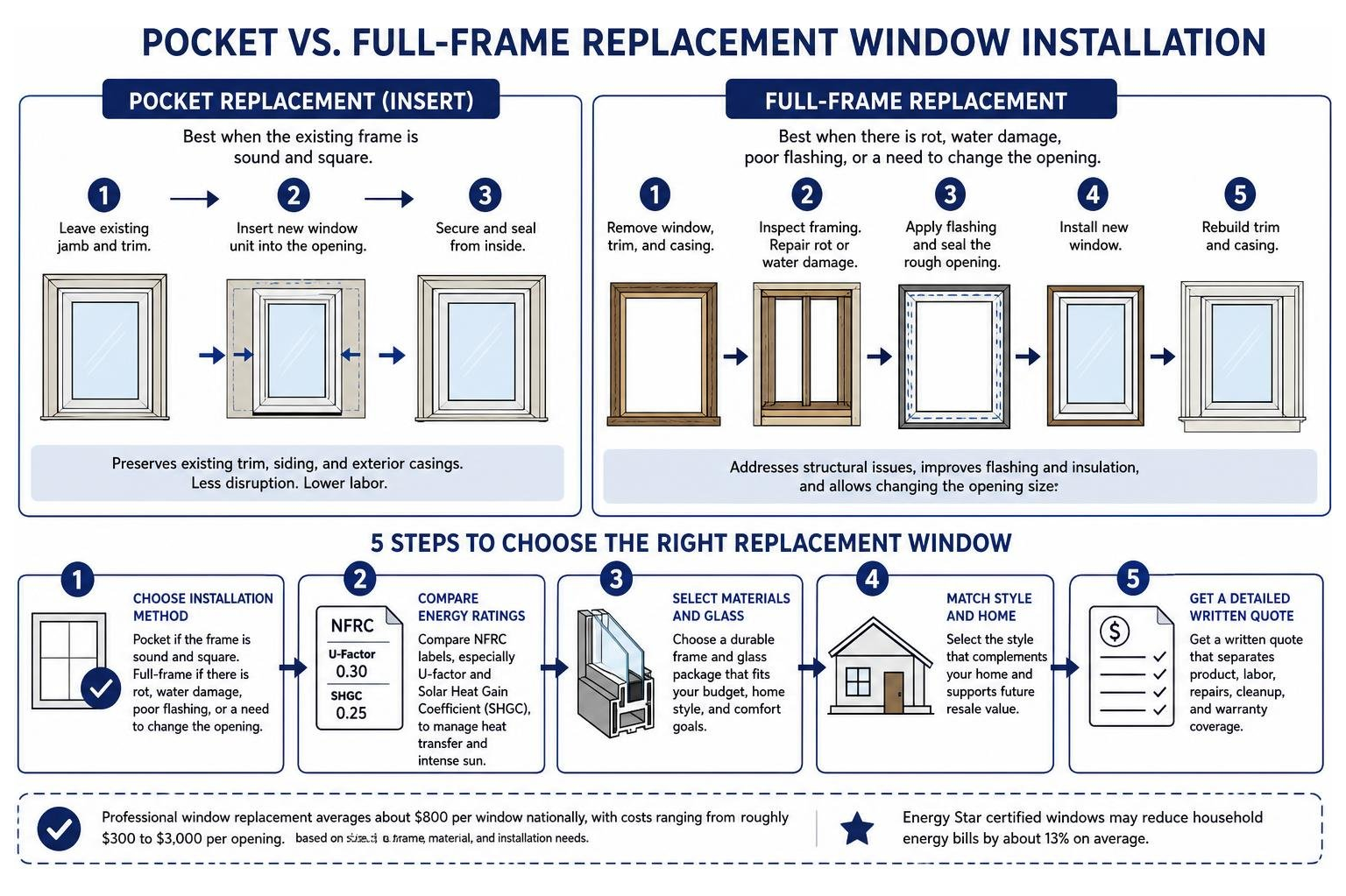
- Choose pocket installation when the existing frame is sound and square.
- Choose full-frame replacement when there is rot, water damage, poor flashing, or a need to change the opening.
- Compare NFRC labels, especially U-factor and Solar Heat Gain Coefficient (SHGC), to manage heat transfer and intense sun.
- Select a durable frame and glass package that fits your budget, home style, and comfort goals.
- Get a detailed written quote that separates product, labor, repairs, cleanup, and warranty coverage.
Professional window replacement averages about $800 per window nationally, though size, style, glass, frame material, and installation needs can push costs from roughly $300 to $3,000 per opening. Energy Star certified windows may also reduce household energy bills by about 13% on average, making efficient glass and proper installation important long-term decisions.
This guide explains how to compare the options without getting lost in sales language, so you can invest in windows that suit Arizona heat, improve curb appeal, and support future resale value.
Understanding Pocket vs. Full-Frame Replacement Windows
When planning a home upgrade, deciding on the proper installation technique is just as crucial as selecting the style of the window. Homeowners often wonder how to know when you need a window replacement and which method suits their property best. The two primary approaches are pocket replacements and full-frame installations, each addressing different structural conditions.
Evaluating your current frames helps prevent costly mistakes down the road. If you are noticing persistent drafts, seal failure, or sticky operation, checking for these 3 signs it’s time for window replacement will clarify your next steps. Understanding what are the benefits of replacement windows—from lower utility bills to superior sound reduction—allows you to match the right technique to your home’s structural requirements.
Pocket Replacement Windows for Existing Openings
Pocket installation, often referred to as insert window installation, involves placing a fully assembled unit directly inside your existing window jambs. This technique leaves the interior trim, exterior siding, and exterior casings completely intact.
Because we do not need to tear out the perimeter framework, pocket installs offer minimal disruption to your daily routine, preserve existing architectural woodwork, and keep labor costs manageable. Reviewing a painless guide to the best way to replace windows shows why this method is ideal when existing jambs and sills are structurally sound, square, and free from moisture degradation.
Full-Frame Window Installation
Full-frame installation requires stripping the entire opening down to the rough framing studs. We remove all existing sills, jambs, interior trim, and exterior brickmould to expose the framing structure underneath.
This method is necessary whenever water penetration, structural rot, or out-of-square framing compromise the opening. It allows our technicians to apply modern perimeter flashing membranes, replace damaged framing, and insulate the rough opening completely. Learning how to replace your house windows like a pro highlights how full-frame replacements maximize glass sightlines and allow you to reconfigure the overall opening size.
Comparing Window Frame Materials and Durability
Window frame materials determine the structural lifespan, thermal efficiency, and exterior maintenance schedule of your home. Selecting what materials are best for replacement windows requires balancing local climate conditions, aesthetic goals, and long-term upkeep.
| Material | Thermal Performance | Maintenance Needs | Moisture & Rot Resistance | Relative Cost |
|---|---|---|---|---|
| Vinyl | Excellent (Multi-chambered) | Very Low (No painting required) | Impermeable to moisture | Budget-Friendly to Mid-Range |
| Composite | Superior (Low thermal expansion) | Very Low (Factory finishes) | Highly resistant to rot | Mid-Range to Premium |
| Wood | Good (Natural insulator) | High (Periodic staining/painting) | Susceptible without cladding | Premium |
Vinyl and Composite Frame Options
Modern vinyl frames made from high-grade polyvinyl chloride (PVC) feature interior multi-chambered extrusions that trap dead air to slow thermal conduction. To explore frame profiles and styles, read a comprehensive guide to vinyl window options. Vinyl will not rot, rust, or corrode, making it an exceptional performer in extreme desert environments.
For homeowners wanting even greater structural rigidity and narrower sightlines, composite and fiberglass alternatives offer unmatched strength. When comparing materials, the definitive guide to fiberglass vs vinyl windows provides helpful context regarding thermal expansion rates, ensuring your sills and sashes never warp or bind under blistering afternoon heat.
Wood and Clad-Wood Frames
Solid wood frames offer classic architectural warmth and provide natural thermal insulation. They are frequently chosen for historic properties where strict exterior covenants mandate authentic timber profiles.
However, exposed wood requires consistent scraping, sealing, and repainting to guard against dry rot, pests, and sun-induced splitting. Clad-wood windows solve this maintenance challenge by pairing a solid interior timber structure with a heavy-gauge extruded aluminum or vinyl exterior shell, shielding the natural wood from weather elements.
Evaluating Energy Efficiency and NFRC Ratings
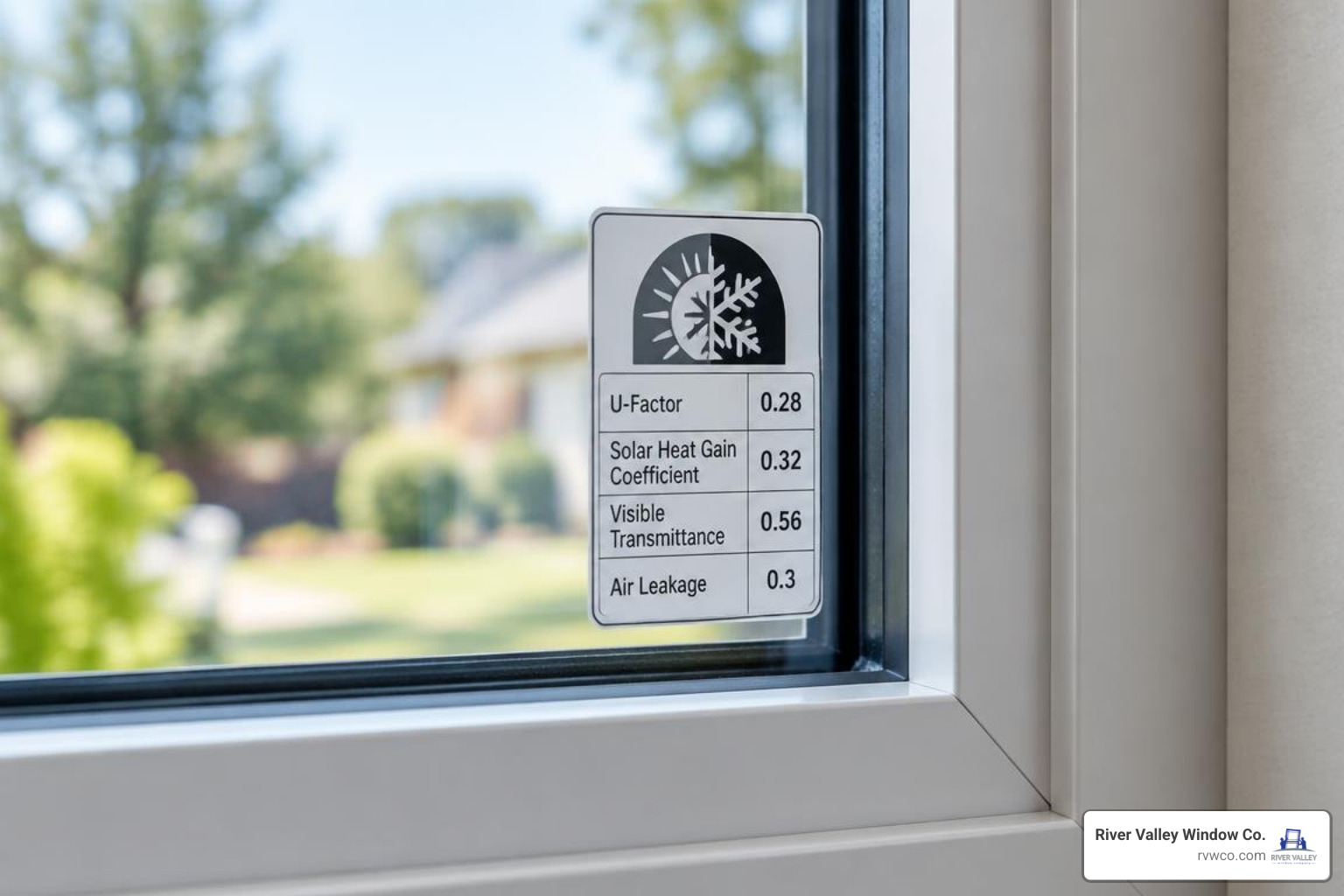
High summer temperatures place heavy demands on residential cooling systems. Exploring what are energy star windows helps clarify how modern fenestration standards reduce indoor heat gain. The National Fenestration Rating Council (NFRC) provides standardized testing data displayed on an independent label affixed to every certified window.
Investing in these products pays real dividends. Learning how energy efficient windows can save you substantial money makes the upgrade straightforward: high-efficiency glazing cuts HVAC runtimes, lowers peak electric demand, and qualifies homeowners for valuable federal energy efficiency tax credits on qualifying products.
Understanding NFRC Ratings and U-Factor
When reviewing an NFRC performance label, focus on four key performance metrics:
- U-Factor: Measures the rate of heat loss (typically ranging from 0.20 to 1.20). Lower numbers indicate better insulating properties.
- Solar Heat Gain Coefficient (SHGC): Measures how much solar radiation passes through the glass (ranging from 0 to 1). In warm, sun-drenched climates, a lower SHGC (under 0.25) blocks radiant heat from baking your living spaces.
- Visible Transmittance (VT): Quantifies the amount of natural daylight entering the room (measured between 0 and 1). Higher ratings provide brighter interiors without unwanted thermal gain.
- Air Leakage (AL): Indicates the cubic feet of air passing through a square foot of window area. Lower values denote tighter, draft-free perimeter seals.
Double vs. Triple Glazing and Low-E Coatings
The glass package is the largest surface area of any window. Reviewing understanding single vs double pane windows for your home shows that single-pane glass provides virtually no barrier against outdoor heat.
Dual-pane configurations separate two lites of glass with an insulating spacer bar, filling the hermetically sealed cavity with non-toxic argon gas to suppress conductive and convective heat transfer. Triple-pane packages add a third pane and an extra gas cavity for enhanced thermal barriers and acoustic dampening. Microscopically thin Low-Emissivity (Low-E) metallic coatings reflect infrared heat and ultraviolet rays back outside while allowing natural visible daylight to brighten your rooms.
Popular Window Styles and Architectural Features
Selecting window operating types influences natural room ventilation, safety egress, and overall curb appeal. Understanding how window placement can change the mood of a room and how new windows can transform the look of your home allows you to craft comfortable living spaces tailored to your daily lifestyle.
Operating Styles: Double-Hung, Casement, and Awning
Different architectural styles serve specific functional purposes:
- Double-Hung Windows: Feature two vertically sliding sashes. Opening the top sash lets warm indoor air escape while opening the bottom sash pulls cool evening breezes inside.
- Casement Windows: Hinged at the side and cranked outward, these units utilize compression seals around the frame to deliver outstanding airtightness against prevailing winds.
- Awning Windows: Hinged along the top rail to open outward, allowing fresh air into the home even during summer showers.
- Picture Windows: Non-operable fixed glass units that maximize natural light, expansive views, and airtight energy efficiency.
For an in-depth breakdown of styles for every room, read our guide on how to choose the right replacement windows for your needs.
Convenience Features: Tilt-In Sashes and Hardware
Modern replacement units incorporate convenience and safety features:
- Tilt-In Sashes: Double-hung and single-hung sashes tilt inward, letting you wash outside glass surfaces safely from inside your home.
- Multi-Point Locking Systems: Single-lever systems engage multiple heavy-duty steel latches along the jamb for security and a weather-tight compression seal.
- Durable Hardware: Corrosion-resistant stainless steel and reinforced nylon rollers ensure smooth operation over decades of use.
- Integrated Insect Screens and Egress Hardware: Low-profile mesh screens optimize airflow while push-button sash limiters prevent accidental window opening by small children.
Cost Breakdown, Resale ROI, and Installation Logistics
Planning your replacement project requires looking at both initial equipment costs and long-term financial returns. Reviewing which of your home windows should you replace helps prioritize damaged openings or sun-exposed elevations.
Professional installation typically accounts for $100 to $300 per window within the national average replacement cost of around $800 per opening (with full custom setups spanning from $300 to $3,000 depending on dimensions and structural work). Replacing all windows on an average one-story home typically totals approximately $8,000.
Upgrading your windows also boosts property value. Resale data shows that homeowners recover roughly 67 percent of vinyl window replacement costs and 63 percent of wood window replacement costs at home sale, making it one of the most reliable home improvement investments.
Budgeting for High-Performance Replacement Windows
Establishing an accurate project budget means accounting for custom sizing, glass enhancements, and labor logistics. To refine your financial plan, consult:
- How to budget for window replacement for your home
- Our cheat sheet to estimate total replacement cost for windows in house
- Don’t get pane-fully ripped off: the real cost of changing house windows
Custom architectural shapes, tempered safety glass, and second-story installations naturally require additional labor and specialized staging.
Warranties and Contractor Selection
Your window investment is only as good as the installation behind it. When selecting a contractor, verify certifications, liability insurance, and written workmanship guarantees. Resources like what to look for in your window and doors company and what you need to know before getting new windows outline essential questions to ask your installation team.
At River Valley Window Co., we specialize in Milgard energy-efficient window systems. When evaluating Milgard warranty structures, it is important to understand the tiered options available:
- Standard Limited Lifetime Warranty: Coverage varies based on new construction versus replacement scope and property occupancy. If the home is sold, this standard warranty transfers to the subsequent homeowner as a 10-year parts-only limited warranty calculated from the original manufacture date, including 10-year hardware coverage and product-specific finish and weatherstripping limitations.
- Full Lifetime Warranty Upgrade: Available as a paid upgrade valid for the natural lifetime of the original consumer owner (non-transferable). This covers both parts and labor. It includes accidental glass breakage protection for Tuscany® V400 and V450 series products, while requiring glass breakage to be added as a specific upgrade on Trinsic™ V300 series products.
- Specific Component Limitations: Under warranty terms, a 10-year limit applies to insulated glass unit delamination, internal blind defects, and exterior peeling or fading finishes. A 1-year limit applies to insect screens, perimeter weatherstripping, and surface corrosion on stainless steel hardware.
Frequently Asked Questions about Window Upgrades
How much can Energy Star certified windows save on heating and cooling bills?
Installing new Energy Star certified windows saves the average homeowner approximately 13 percent on annual household energy costs. In colder heating climates, replacing single-pane glass with modern Energy Star units saves an average of $568 per year (about 12 percent), while replacing older double-pane units saves roughly $282 annually (about 6 percent). In hot climates, low-SHGC glass packages significantly reduce summer cooling bills by minimizing heat gain.
What is the difference between pocket installation and full-frame installation?
Pocket installation fits an insert window into your existing, structurally sound window frame, preserving surrounding interior and exterior trim. Full-frame installation strips the entire window opening down to the rough studs, allowing technicians to replace rotted framing, install fresh perimeter water flashing, and maximize clear glass space. Pocket installations are generally faster and more budget-friendly, while full-frame replacements are necessary when existing frames show rot or water damage.
What percentage of window replacement costs is recovered at home resale?
Homeowners recoup an average of 67 percent of their investment on vinyl window replacements at resale. Wood window replacements return approximately 63 percent of project costs. Beyond direct financial payback, modern replacement windows enhance curb appeal, eliminate home inspection repair flags, and improve overall interior comfort for prospective buyers.
Conclusion
Choosing the right replacement windows transforms your home’s energy performance, indoor comfort, and architectural beauty. By selecting the right installation method, reviewing verified NFRC ratings, choosing durable frame materials, and partnering with certified professionals, you ensure decades of reliable, draft-free performance.
Our experienced team at River Valley Window Co. specializes in high-performance Milgard products built to withstand harsh desert conditions. We deliver fast, non-invasive installations backed by comprehensive warranty coverage. When you are ready to upgrade your home, schedule an in-home window consultation with River Valley Window Co. to get an honest, expert assessment for your living spaces.