
Fiberglass Windows vs Vinyl: The Quick Answer
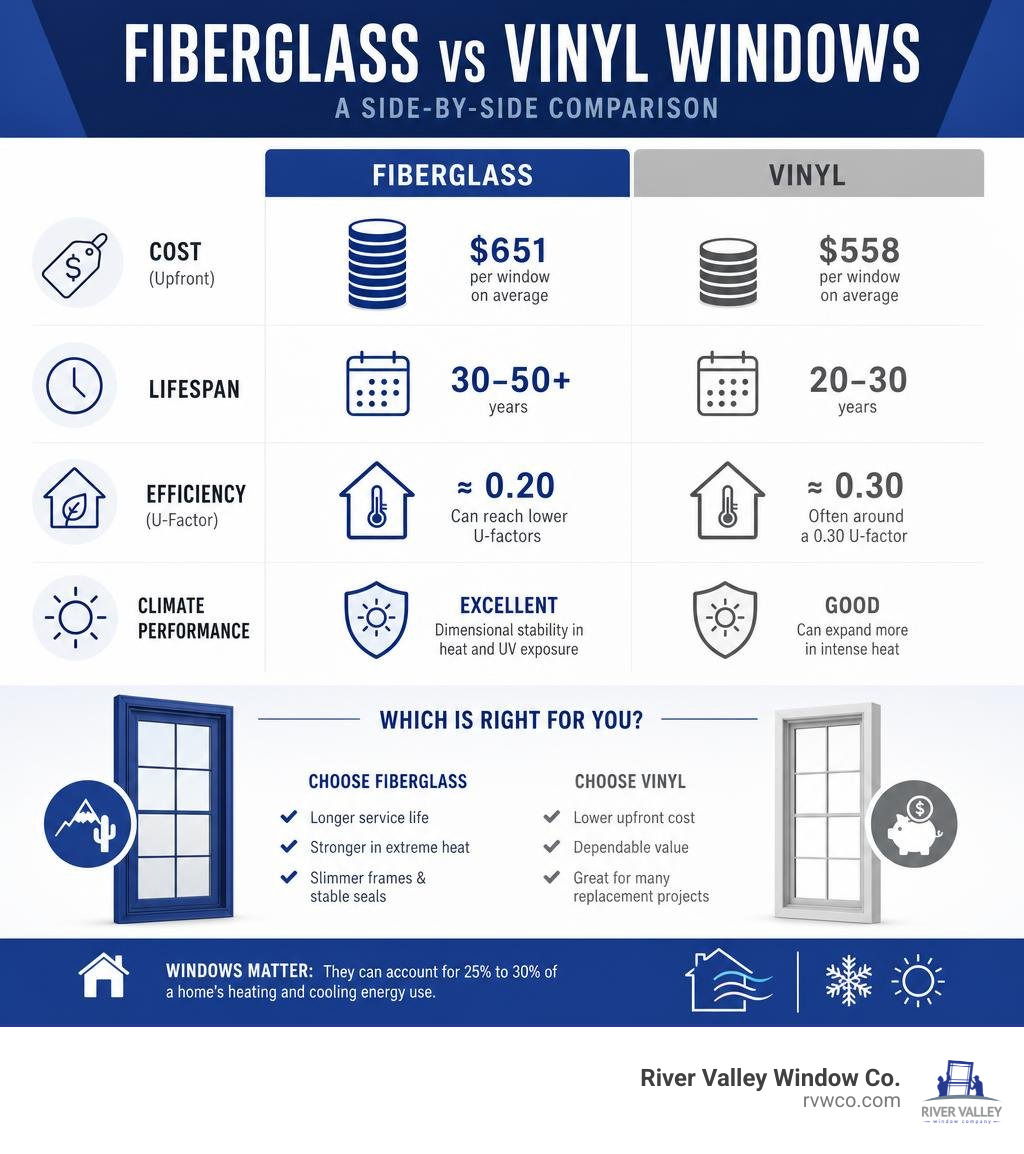
Fiberglass windows vs vinyl comes down to budget, climate, and how long you plan to stay in your home. Vinyl costs less upfront and works well for many replacements. Fiberglass costs more, but it is stronger, more stable in Northwestern Arizona heat, and usually lasts longer.
| Factor | Fiberglass Windows | Vinyl Windows |
|---|---|---|
| Upfront cost | Higher, about $651 per window on average | Lower, about $558 per window on average |
| Energy performance | Can reach lower U-factors, around 0.20 | Often around a 0.30 U-factor |
| Lifespan | About 30-50 years or more | Usually 20-30 years |
| Heat and UV exposure | Excellent dimensional stability | Can expand more in intense heat |
| Appearance | Slimmer frames and paintable finishes | Thicker frames; limited paint options |
| Best fit | Long-term homes and harsh climates | Budget-focused projects and milder exposure |
Windows can account for 25% to 30% of a home’s heating and cooling energy use. That makes the frame material more than a design choice, especially for homeowners replacing drafty windows in hot, sunny climates.
In short: choose vinyl for dependable value and a lower initial price. Choose fiberglass when long service life, stable seals, slimmer sightlines, and stronger performance through extreme temperature swings matter most.
Material Comparison: Fiberglass Windows vs Vinyl
When evaluating fiberglass windows vs vinyl, understanding how each material is constructed gives context to how they hold up over decades. Both options have captured massive residential market share, but their physical compositions behave very differently once installed on your home.
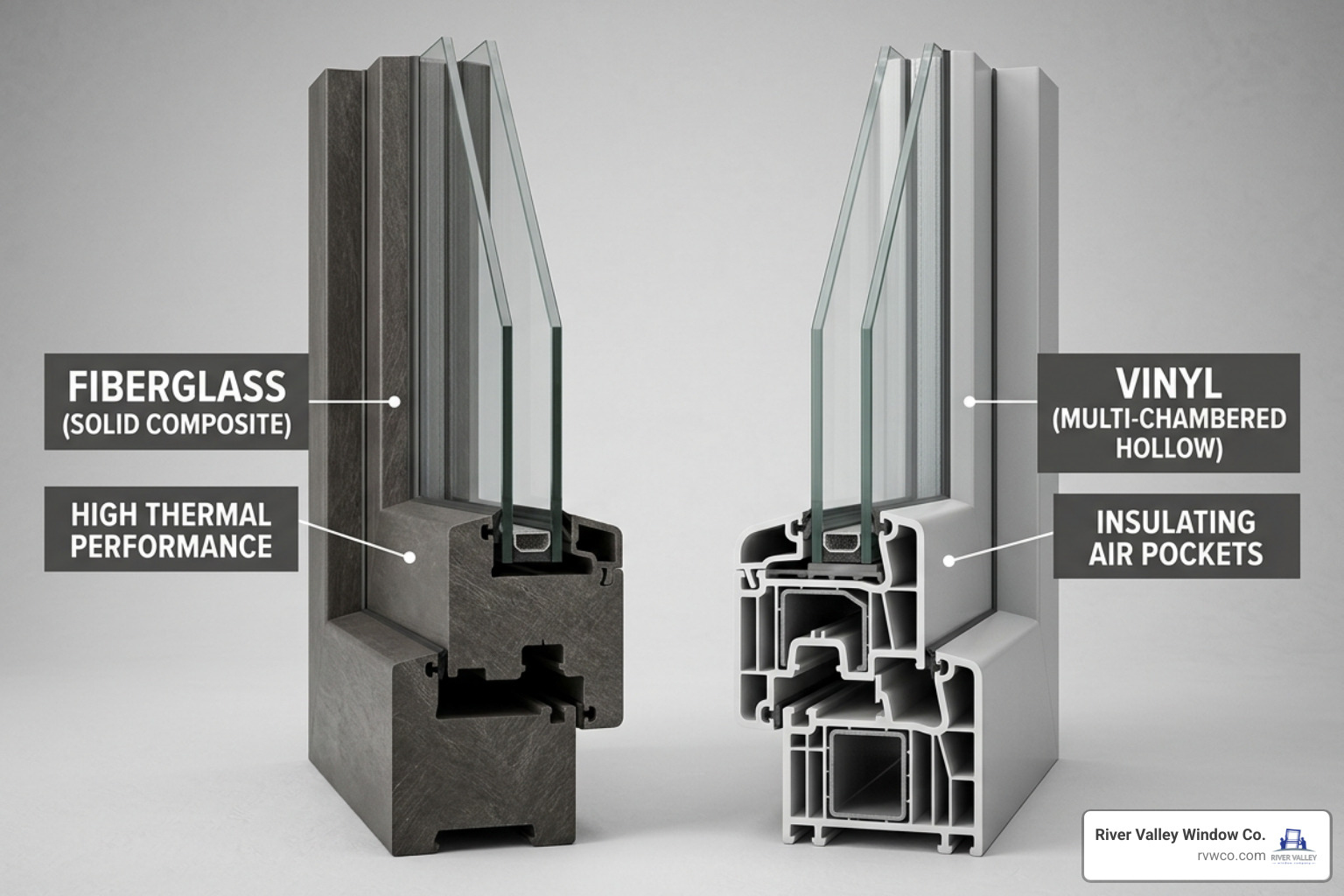
Vinyl window frames are made from Polyvinyl Chloride (PVC), a thermoplastic polymer. During manufacturing, PVC is heated and extruded into multi-chambered hollow profiles. Because vinyl is flexible, manufacturers rely on these internal air chambers—and sometimes internal steel or aluminum reinforcements—to give the sash and frame structural stability.
In contrast, fiberglass frames are produced through a pultrusion process. Continuous strands of glass fibers are saturated with liquid polymer resin and pulled through a heated steel die. Because glass fibers make up a massive portion of the finished material, fiberglass is a thermoset composite that will not melt or soften under extreme heat. If you are comparing 3 materials to consider for your replacement windows, fiberglass stands out as a material originally engineered for heavy-duty marine and industrial environments.
Structural Strength and Thermal Expansion Rates
The most dramatic physical difference between the two materials is structural strength. High-quality fiberglass windows are up to eight times stronger than vinyl. In practical terms, fiberglass frames feature a tensile strength ranging between 25,000 and 40,000 PSI, compared to vinyl’s 3,000 to 5,000 PSI. Because fiberglass is inherently rigid, frame profiles can be manufactured much thinner while safely supporting heavy double- or triple-pane glass packages.
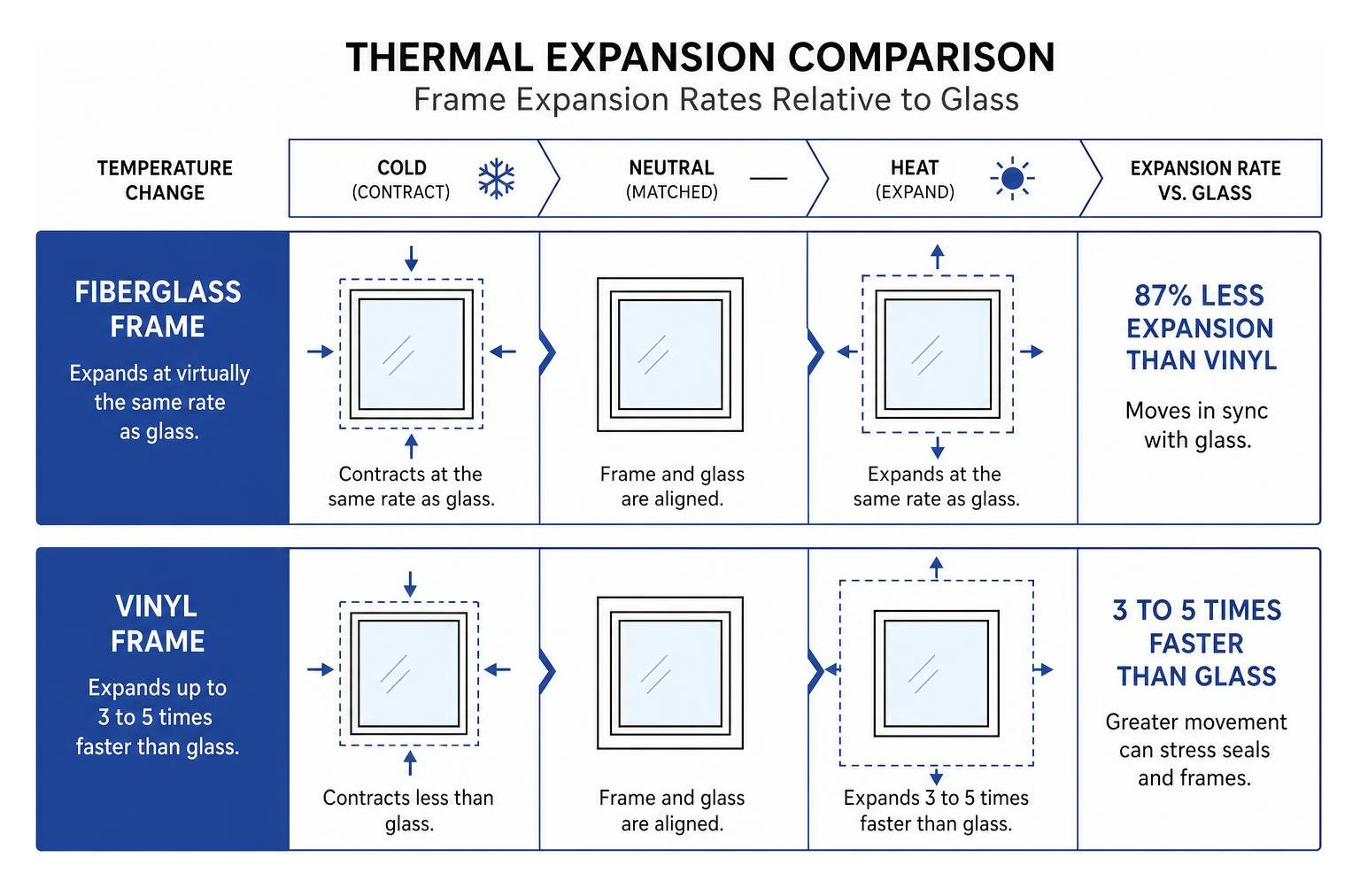
Another critical mechanical distinction is the rate of thermal expansion:
- Fiberglass frames: Composed of silica sand and glass fibers, fiberglass expands and contracts at virtually the exact same rate as window glass itself. It expands 87% less than vinyl when temperatures shift.
- Vinyl frames: Vinyl is a thermoplastic material that expands up to 3 to 5 times faster than glass when heated by intense sunlight.
In regions like Lake Havasu City and across Northwestern Arizona, exterior surface temperatures on dark window frames exposed to direct summer sun can easily exceed 160°F. When a vinyl frame expands rapidly while the glass inside it stays relatively stationary, continuous push-and-pull mechanical stress is exerted directly on the perimeter seal. Over time, this differential expansion can weaken glass seals and cause premature seal failure.
Lifespan and Extreme Climate Performance
Because of these core material differences, vinyl windows carry an average lifespan of 20 to 30 years. In milder regions with modest solar radiation, vinyl performs admirably for decades. However, intense, uninterrupted desert sun can cause vinyl to degrade faster—often bringing its functional service life down to 15 to 20 years if unshaded.
Fiberglass windows, by comparison, regularly last 30 to 50+ years without warping, cracking, or losing structural rigidity. When evaluating how long can you expect windows to last in arizona, fiberglass provides superior resistance to intense UV rays and extreme heat cycles. While vinyl can begin to soften at high surface temperatures, fiberglass maintains total dimensional stability from -40°F up to 200°F.
Energy Efficiency, U-Factor Ratings, and Thermal Performance
Heat gain and loss through inefficient residential windows accounts for 25% to 30% of home heating and cooling energy consumption. Choosing an energy-efficient frame material directly impacts how hard your air conditioner works during hot Arizona summers.

When reviewing performance metrics, two primary values dictate efficiency:
- U-Factor: Measures how well a window prevents heat from escaping or entering. Lower numbers mean better insulation.
- Solar Heat Gain Coefficient (SHGC): Measures how much solar radiation enters through the window glass. Lower numbers mean less heat gain from direct sunlight.
Learn more about how energy efficient windows can save you substantial money over time.
| Metric | Fiberglass Windows | Vinyl Windows |
|---|---|---|
| Average U-Factor | 0.20 to 0.28 | 0.27 to 0.32 |
| Thermal Expansion Coefficient | Nearly equal to glass | 3x to 5x higher than glass |
| Frame Strength (Tensile PSI) | 25,000 – 40,000 PSI | 3,000 – 5,000 PSI |
| Resistance to Direct Sun Softening | Unmatched (thermoset profile) | Softening can begin around 165°F surface temp |
| Estimated Lifespan | 30 – 50+ years | 20 – 30 years |
Energy Savings in Extreme Heat and Cold
Understanding what are energy star windows requires looking closely at frame insulating capabilities alongside the glass package. Both vinyl and fiberglass are excellent natural insulators compared to aluminum frames, which readily conduct heat.
However, fiberglass frames edge out vinyl in thermal performance. Standard high-performance fiberglass windows achieve an average U-factor of roughly 0.20, whereas quality insulated vinyl windows typically sit around 0.30. Because fiberglass frames are far stronger, manufacturers can inject foam insulation into the frame cavities or rely on narrower frames that maximize the insulating glass area.
Over a full year of heating and cooling, upgrading old single-pane glass to modern energy-efficient frames can save homeowners hundreds of dollars annually on utility bills, while making interior rooms noticeably more comfortable during peak summer heat waves.
Fiberglass Windows vs Vinyl: Glass Seals and Thermal Expansion
Window energy efficiency isn’t just about day-one performance—it’s about how long that performance lasts. Double-pane and triple-pane windows rely on non-reactive insulating gases (typically argon or krypton) sealed tightly between the glass panes.
When comparing fiberglass windows vs vinyl, seal protection is where fiberglass delivers a major technical advantage:
- Because fiberglass frames expand and contract at the same rate as the glass panes, the flexible seals around the perimeter experience minimal stress during high-temperature daily cycles.
- Because vinyl expands at a much higher rate than glass, the sealant holding the insulated glass unit (IGU) together undergoes continuous tension and compression every single day.
When those seals eventually fail on older or lower-grade vinyl units, the insulating gas escapes and moist air enters, creating permanent fogging between the panes and reducing the window’s insulating value.
Cost, ROI, and Aesthetic Differences
Budget planning plays a crucial role in deciding which window material to purchase. A smart approach requires balancing initial sticker price against total ownership costs over your expected tenure in the home. Exploring how to budget for window replacement for your home starts with comparing upfront material price points.
Reviewing the key 3 benefits of having fiberglass windows installed—unmatched strength, long lifespan, and low thermal expansion—helps explain why fiberglass commands a premium price. At the same time, exploring the top 3 benefits of installing vinyl windows highlights why vinyl remains the most popular choice for budget-conscious homeowners across North America.
Initial Upfront Price vs Long-Term Value and Resale ROI
Nationwide industry statistics show that single fiberglass replacement windows cost an average of $651 per window for materials, whereas vinyl windows average approximately $558 per window.
When factoring in professional installation labor across complete residential projects:
- Typical 8-Window Project: Vinyl installed costs range from $8,000 to $12,000, while fiberglass installed costs range from $11,500 to $17,000.
- Typical 14-Window Project: Vinyl installed costs range from $13,000 to $19,000, while fiberglass installed costs range from $19,500 to $28,000.
From a return-on-investment (ROI) perspective, vinyl window replacements historically recoup roughly 67% to 70% of their cost at home resale. Fiberglass window replacements yield even higher financial returns—often 75% to 85%—because homebuyers recognize their premium construction, dark finish options, and extended 50-year service life.
Maintenance Requirements and Frame Painting Options
Both materials are exceptionally low-maintenance compared to traditional wood frames that require routine sanding, scraping, and repainting every few years. Discover why vinyl windows are the top choice for low maintenance homes: vinyl frames never rot, rust, or corrode, needing only occasional cleaning with mild soap and water.
However, aesthetics and paintability mark a major difference:
- Vinyl Windows: The color of a vinyl frame is integrated throughout the PVC material during extrusion. While this means minor scratches won’t show a different underlying color, vinyl cannot be repainted after installation. Attempting to paint vinyl frames causes paint peeling due to thermal movement and almost always voids the manufacturer warranty.
- Fiberglass Windows: Fiberglass frames feature factory powder-coated or acrylic finishes that can be repainted if you decide to change your exterior home color palette a decade later. Furthermore, because fiberglass is so rigid, frames can be painted dark colors without risk of heat warping.
If you care deeply about curb appeal and modern architecture, slim fiberglass profiles allow for maximum glass sightlines, bringing more natural light into your home. See how window frames impact your curb appeal when designing your exterior transformation.
Installation Realities and Choosing the Right Material
Replacing windows is a precise craft where proper installation determines whether a high-performance window actually performs as advertised.
Fiberglass Windows vs Vinyl: Ease of Installation
When comparing fiberglass windows vs vinyl on the job site:
- Vinyl Flexibility: Vinyl’s flexibility allows experienced installers to handle minor out-of-square framing adjustments slightly easier during non-invasive retrofits. However, if vinyl frames are not shimmed and leveled properly, excessive frame flex can lead to operational binding over time.
- Fiberglass Rigidity: Fiberglass frames are stiff and unforgiving. They require exact, square rough openings and precise shimming because the frame material will not bend or yield.
Because installation labor techniques (flashing, sealing, square alignment) are virtually identical for both frame materials, labor costs quoted by qualified contractors should be comparable.
When Vinyl Windows Are Better Than Fiberglass
While fiberglass outperforms vinyl in technical strength and lifespan, vinyl remains the ideal selection for many homeowners. Understanding what materials are best for replacement windows comes down to individual priorities.
Vinyl is often the superior choice when:
- Budget constraints are paramount: If you need to replace multiple failing windows immediately on a strict budget, vinyl delivers high insulation efficiency at a substantially lower price tag.
- Short-term home tenure (3–7 years): If you plan to move within a few years, you likely won’t stay long enough to benefit from fiberglass’s 50-year longevity or long-term energy savings.
- Standard window openings in mild exposures: For shaded windows or standard-sized openings, quality vinyl windows perform exceptionally well for 20+ years.
If you are weighing your project scope, reviewing how to choose the right window material will keep your renovation on schedule and on budget.
Frequently Asked Questions About Window Frame Materials
Are fiberglass windows worth the higher upfront cost?
Yes, fiberglass windows are generally worth the higher upfront investment if you plan to live in your home for 10 years or more, or if your home faces extreme direct sun and severe temperature shifts. The combination of lower thermal expansion, longer service life (30–50+ years), superior glass seal protection, and higher resale ROI offsets the initial price premium over time.
Can vinyl windows be painted if I change home colors?
No, painting vinyl windows is strongly discouraged. Because vinyl expands and contracts significantly under temperature changes, exterior paint will quickly crack, blister, and peel off. Additionally, painting vinyl dark colors absorbs excess solar heat, which can soften or permanently warp the frame and void your manufacturer warranty. If customizable paint finish options matter for your design, fiberglass is the clear choice.
How do fiberglass and vinyl windows perform in extreme heat?
In extreme heat—such as Southwestern desert climates where exterior surface temperatures on dark frames reach over 160°F—fiberglass offers far superior structural integrity. As a thermoset composite material made with over 50% silica sand, fiberglass remains completely rigid and dimensionally stable. Vinyl is a thermoplastic that expands 3 to 5 times more than glass and can soften under extreme localized solar heat, potentially putting stress on hardware and window seals over time.
Conclusion
When weighing fiberglass windows vs vinyl, both materials offer significant upgrades over outdated single-pane or aluminum frames. Vinyl delivers outstanding insulated performance and low-maintenance convenience at a budget-friendly price point. Fiberglass provides maximum structural strength, slim design sightlines, superior resistance to severe heat expansion, and an extended service life exceeding 50 years.
At River Valley Window Co., we specialize in fast, non-invasive window replacements tailored to the climate demands of Lake Havasu City and Northwestern Arizona. We proudly feature premium Milgard energy-efficient window products designed to keep your home cool, comfortable, and beautiful year-round.
When investing in new windows, warranty protection gives peace of mind. Milgard offers a tiered warranty structure consisting of a standard Limited Lifetime Warranty alongside an upgraded paid Full Lifetime Warranty option:
- Standard Limited Lifetime Warranty: Coverage varies depending on new construction versus replacement scope and property occupancy. If transferred after the home sale, it becomes a 10-year parts-only limited warranty calculated from the original manufacture date, including 10-year hardware coverage alongside product-specific finish and weatherstripping limitations.
- Paid Full Lifetime Warranty Upgrade: Valid for the natural lifetime of the original consumer owner, this non-transferable upgrade covers both parts and installation labor. It automatically includes glass breakage coverage for Tuscany® V400 and V450 series, and allows glass breakage protection to be added as an upgrade for Trinsic™ V300 series.
- Specific Component Coverage Limits: Shorter coverage limits apply under warranty terms, including 10-year limits for insulated glass unit delamination, blind defects, and peeling or fading finishes, as well as 1-year limits for weatherstripping, screens, and corrosion on stainless steel hardware.
Ready to explore durable fiberglass windows or top-tier vinyl replacements for your home? Contact our team at River Valley Window Co. today to schedule your free estimate!