

Sliding Patio Doors: Options and Prices at a Glance
Sliding patio doors open along a track, so they add patio access without taking up floor space. Most have two panels, though wider openings can use three or four. Common sizes are 60, 72, or 96 inches wide and 80 inches tall. Vinyl, fiberglass, and aluminum frames each offer a different balance of price, durability, and appearance.
A sliding glass door typically costs $1,500 to $5,000. Installation, size, and glass upgrades affect the final quote. In Northwestern Arizona, look for energy-efficient glass and a well-sealed frame to help keep indoor spaces comfortable through hot weather.
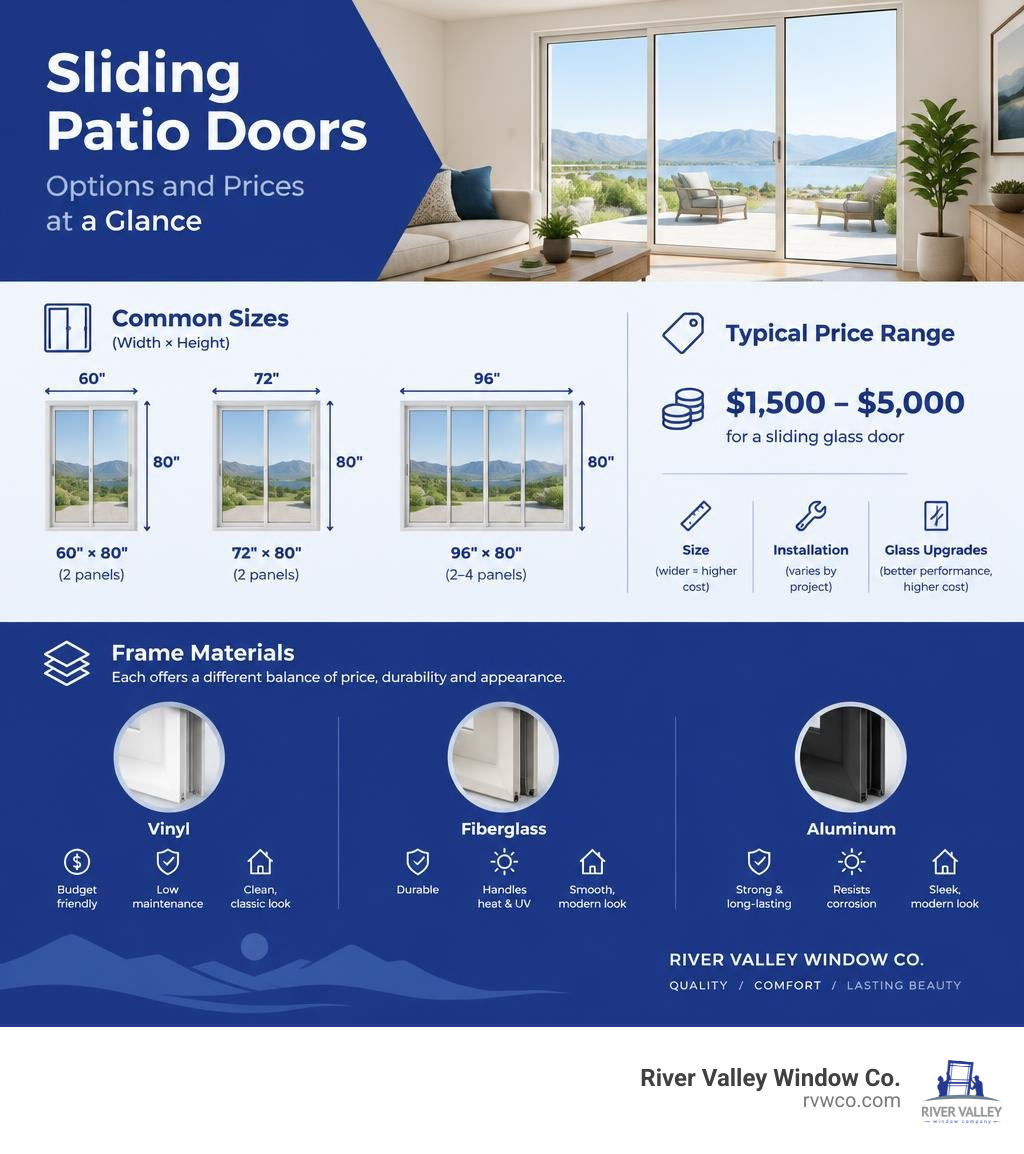
Frame Materials and Durability for Sliding Doors
Choosing the right frame material determines how your patio door handles intense sun, how much maintenance it requires, and how well it insulates your home. In desert climates like Lake Havasu City and across Northwestern Arizona, frame materials must withstand high ultraviolet exposure and large day-to-night temperature swings without warping or cracking.
| Material | Durability | Thermal Performance | Price Range | Best Suited For |
|---|---|---|---|---|
| Vinyl | High (corrosion-proof, no painting needed) | Excellent (multi-chamber insulation) | $ – $$ (Most affordable) | Budget-conscious homeowners wanting low maintenance |
| Fiberglass | Maximum (matches glass expansion rate) | Superior (exceptional resistance to heat transfer) | $$$ (Premium) | Harsh sun exposure, large spans, luxury aesthetics |
| Thermally Improved Aluminum | High (exceptional structural strength) | Moderate to High (with thermal barrier) | $$ – $$$ (Mid to high) | Sleek modern profiles, massive glass expanses |
Vinyl Sliding Door Systems
Vinyl frames are constructed from high-quality polyvinyl chloride (PVC) extrusions designed with multiple internal air chambers. These chambers trap air to act as natural thermal barriers, reducing heat transfer into your living room during hot summer afternoons.
High-grade vinyl units feature fusion-welded corners that create an impermeable, watertight seal, preventing water intrusion during sudden desert downpours. Modern vinyl formulations contain titanium dioxide and specialized UV stabilizers to prevent peeling, cracking, chalking, or fading under direct sunlight. As outlined in the homeowners guide to fiberglass and vinyl patio doors, vinyl remains the most cost-effective solution for homeowners wanting zero-maintenance frames that never require repainting.
Fiberglass Frame Performance
Fiberglass represents the pinnacle of structural integrity and climate resilience. The Milgard C700 Series uses pultruded fiberglass frames that possess unmatched dimensional stability. Because fiberglass is primarily composed of silica glass fibers, it expands and contracts at virtually the same rate as the insulated glass unit inside it.
This matching expansion rate eliminates stress on corner seals, preventing seal failure and air leakage over decades of service. Fiberglass can also support narrower sightlines while holding heavy, oversized double-pane glass packages, making it an ideal choice for expansive views and upscale architectural designs.
Thermally Improved Aluminum Frames
For homeowners seeking ultra-slim sightlines and contemporary aesthetics, thermally improved aluminum frames deliver clean, industrial-inspired geometry. Historically, aluminum conducted heat quickly. Modern designs like the Milgard A250 Series incorporate a high-density polyurethane thermal break that physically separates the interior and exterior aluminum extrusions.
This thermal barrier dramatically slows conductive heat loss and gain. Modern aluminum sliding patio doors with double panels provide the high structural rigidity required for expansive patio wall designs while maintaining reliable energy performance.
Comparing Sliding Patio Doors vs Alternative Patio Door Styles

When upgrading a backyard or patio entryway, selecting the right door operating style dictates interior traffic flow, usable floor area, and how naturally your indoor and outdoor living areas connect. Understanding the sliding vs swing doors breakdown helps determine which mechanism fits your architectural layout best.
Traditional French Doors vs Sliding Systems
Traditional hinged French doors swing inward or outward on perimeter hinges. While they offer a classic architectural look, the swinging panels require a substantial operating radius—often stealing up to 10 to 15 square feet of usable floor or patio space. This swing path can interfere with couch placement, dining chairs, potted plants, or outdoor furniture.
Sliding doors glide parallel along their frame on horizontal tracks, requiring zero floor clearance. For tight layouts, balconies, and cozy living rooms, comparing sliding vs swing doors for small spaces reveals that sliding doors maximize interior usability without sacrificing opening width. Furthermore, sliding units feature expansive, uninterrupted panes of glass, providing wider outdoor views and higher natural daylighting than wide-stile hinged doors.
Multi-Slide, Bifold, and Pocket Door Options
For wide-span openings and seamless entertainment spaces, alternative multi-panel configurations provide dramatic architectural impact:
- Multi-Slide and Moving Glass Walls: These systems utilize multiple interlocking panels that slide along parallel tracks and stack neatly at the edge of the opening, creating openings up to 20 feet wide or more.
- Bifold (Folding) Patio Doors: Bifold systems fold like an accordion against the perimeter wall. Homeowners exploring our folding doors guide will find that these doors can open up nearly 90% of a structural opening. Reviewing bifold door cost considerations is crucial, as the heavy-duty overhead tracks and structural header engineering place them in a higher investment bracket.
- Pocket Sliding Doors: Pocket configurations glide entirely into a concealed wall cavity, completely vanishing from sight when open to create a pure, unobstructed passage between home and patio.
Sizing, Glass Technologies, and Performance Upgrades
Modern patio doors balance expansive views with low utility bills, safety, and security.
Standard Sizes and Configurations for Sliding Patio Doors
Sliding patio doors are engineered to match standard residential framing dimensions:
- Standard Heights: 80 inches (6 feet 8 inches) is standard, with 8-foot (96-inch) heights popular for modern high-ceiling homes.
- Standard Widths: 60 inches (5 feet, 2-panel), 72 inches (6 feet, 2-panel), and 96 inches (8 feet, 2-panel).
- Multi-Panel Configurations: 3-panel configurations typically span 9 to 12 feet, while 4-panel sliding glass door configurations span 12 to 16 feet with two center panels parting toward the sides.
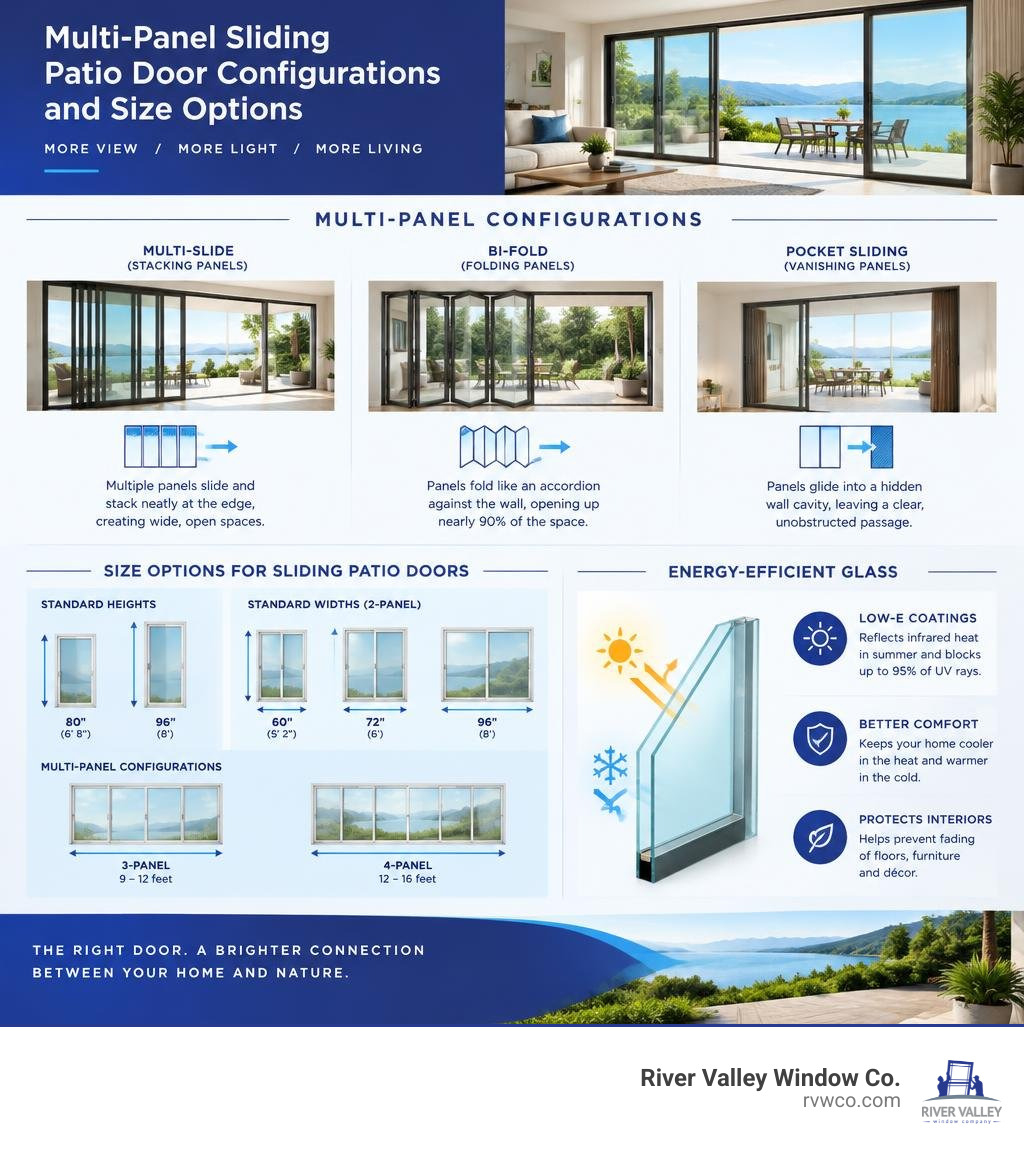
Energy-Efficient Glass Packages and Coatings
Glass makes up over 85% of a patio door’s surface area, making proper glazing selection essential in hot climates. If your current glass radiates intense heat indoors, recognizing the signs of an energy-inefficient patio door will demonstrate how much cooling energy is being lost.
Modern energy packages use advanced components:
- Low-E Glass Coatings: Microscopically thin, transparent layers of silver oxide reflect infrared heat energy away from the home in summer while blocking up to 95% of damaging UV rays that fade hardwood floors and furniture.
- Argon Gas Fills: Denser than standard air, non-toxic argon gas sealed between panes slows conductive heat transfer.
- Warm-Edge Spacers: Advanced structural foam or composite spacers separate the glass panes, reducing edge-of-glass heat conduction and condensation buildup.
- ClimaTech Insulated Glass Packages: Tailored glazing formulas engineered to meet specific regional ENERGY STAR criteria, delivering low Solar Heat Gain Coefficients (SHGC) for desert environments.
Hardware, Security, and Built-In Blinds
Homeowners can personalize doors with hardware and security upgrades:
- Dual Tandem Rollers: Adjustable stainless steel or heavy-duty nylon rollers on stainless steel tracks ensure quiet, smooth gliding.
- Multi-Point Locking Systems: Steel locking hooks engage simultaneously at multiple points along the jamb, resisting forced entry far better than single-latch locks.
- Between-the-Glass Blinds: Hermetically sealed internal blinds remain dust-free, eliminate tangled cords, and offer effortless light and privacy control.
- Custom Aesthetic Upgrades: As highlighted in our custom glass patio doors guide, homeowners can specify custom grid profiles, obscure privacy glass, and contemporary handle finishes like brushed nickel, matte black, or oil-rubbed bronze.
Cost Factors and Replacement vs New Construction
Understanding the pricing breakdown helps homeowners plan a successful door upgrade budget.
| Project Type | Average Door Cost | Labor & Installation | Total Expected Range |
|---|---|---|---|
| Standard 2-Panel Vinyl (60″ – 72″) | $800 – $1,800 | $700 – $1,200 | $1,500 – $3,000 |
| Premium 2-Panel Fiberglass / A250 Aluminum | $2,000 – $3,800 | $800 – $1,500 | $2,800 – $5,300 |
| Multi-Panel (3 or 4 Panel Systems) | $3,500 – $7,500 | $1,200 – $2,500 | $4,700 – $10,000+ |
New Construction vs Replacement Installations
The installation method depends directly on your home’s wall structure and whether the existing siding or stucco will be disturbed:
- New Construction Installations: These doors utilize an integrated exterior nailing fin secured directly to the rough wood framing before exterior stucco or siding is applied. They provide water integration during new builds or full exterior remodels.
- Replacement / Retrofit Installations: Retrofit doors use specialized “flush fin” (Z-bar) or block frames designed to slide directly into the existing opening after the old door frame is removed, without damaging interior drywall or exterior stucco.
Proper perimeter flashing, non-expanding foam insulation, and structural leveling are critical. Following professional standards for installing sliding glass doors the right way ensures the frame remains square and tracks roll smoothly without binding.
Key Cost Factors and Surplus Considerations
Final costs vary based on dimensions, structural modifications (such as widening an existing opening), premium color finishes, and glass packages. Reviewing a detailed French and sliding door pricing guide helps clarify how premium upgrades impact overall costs. In some instances, standard-dimension surplus inventory doors can offer budget-friendly options for standard-sized patio openings.
Warranty Coverage: Standard Limited vs Full Lifetime Upgrade
When investing in high-performance patio doors, understanding manufacturer warranty protections ensures long-term peace of mind. Milgard products feature a clear, tiered warranty structure, detailed in our custom sliding doors and warranty overview:
- Paid Full Lifetime Warranty Upgrade: Valid for the natural lifetime of the original consumer owner, this non-transferable upgrade covers 100% of parts and labor costs. Glass breakage coverage is fully included for Tuscany® V400 and V450 series doors, and can be added as an upgrade option for Trinsic™ V300 series doors.
- Specific Component Limitations Under Full Lifetime Coverage: A 10-year limit applies to insulated glass unit delamination, internal blind defects, and exterior painted finish peeling or fading. A 1-year limit applies to weatherstripping, insect screens, and corrosion on stainless steel hardware components.
- Standard Limited Lifetime Warranty: Coverage varies depending on new construction versus replacement scope and occupancy type. If the original property is sold, the coverage transfers as a 10-year parts-only limited warranty calculated from the original manufacture date, providing 10-year hardware protection and product-specific finish and weatherstripping terms.
Care, Maintenance, and When to Replace
Sliding patio doors contain mechanical moving parts that benefit from basic seasonal upkeep.
Signs It Is Time for a Patio Door Replacement
If your current patio door is difficult to operate or deteriorating, consult our practical guide to compare patio door options and look for these warning signs:
- Binding or Grinding Rollers: The door drags along the bottom track or requires two hands to pull open.
- Visible Drafts and Rattling: Panels shake in windy conditions, allowing dust and hot air inside.
- Foggy Glass Panes: Permanent moisture or a hazy film between the dual panes signals complete seal failure, eliminating the door’s insulating value.
- Faulty Locking Mechanisms: The latch fails to seat properly in the keeper, posing a home security risk.
How to Properly Maintain Sliding Patio Doors
Keeping your doors gliding effortlessly requires only simple seasonal maintenance:
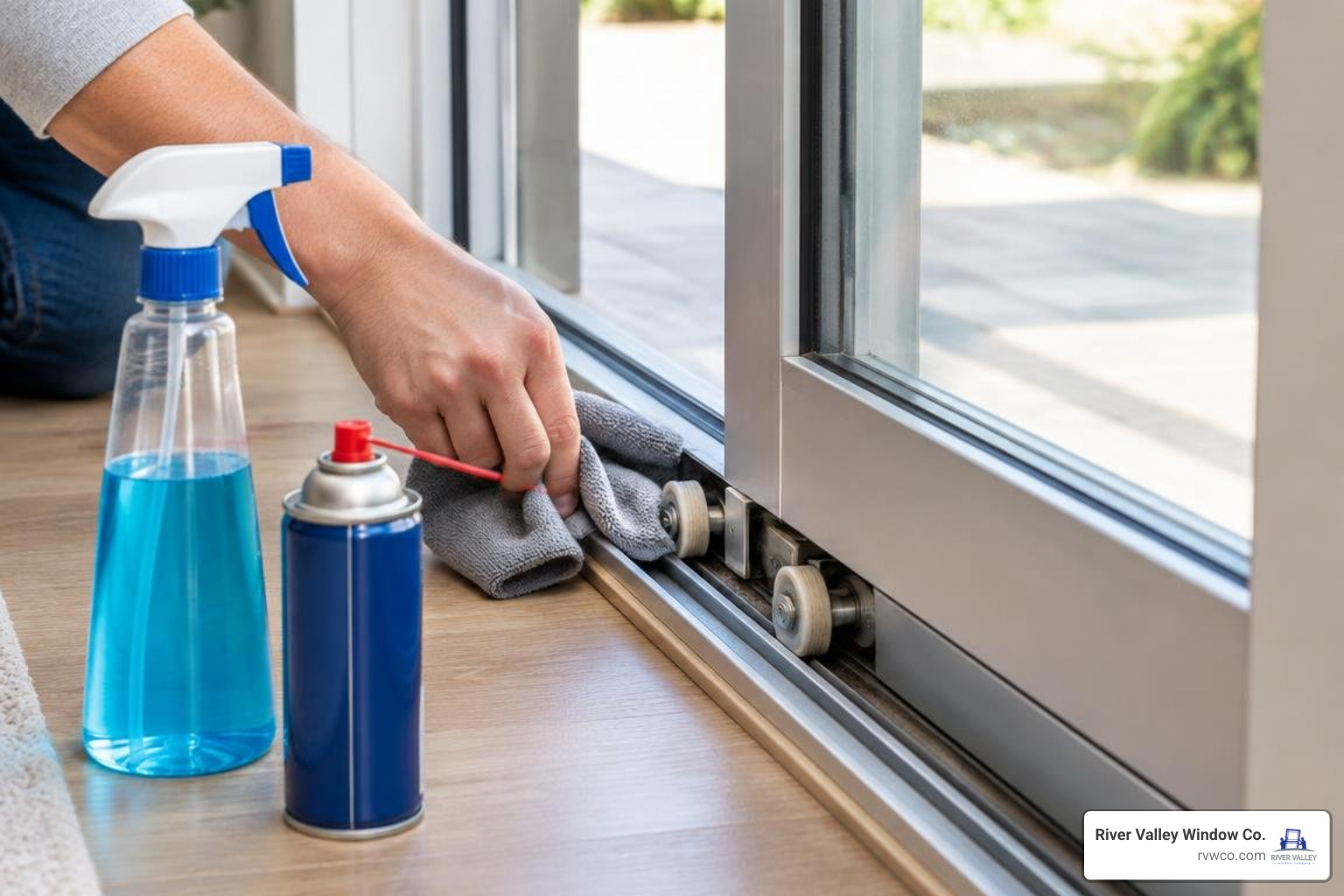
- Clean the Lower Track: Vacuum dirt, sand, and pet hair out of the bottom track channels every few months.
- Lubricate Hardware: Clean the track with a damp cloth and mild soap, then spray the track and rollers with a dry silicone lubricant. Avoid petroleum-based lubricants (like WD-40), which attract abrasive desert dust.
- Inspect Perimeter Weatherstripping: Check for worn pile or brittle rubber seals and replace damaged sections.
- Check Roller Alignment: Adjust the lower tandem roller screws through the bottom access holes on the door panel edges to keep the door square in its frame.
For complete step-by-step guidance, explore our guide on routine maintenance for new patio doors. If you have an older door that needs hardware refurbishment, check our replacement parts guide.
Frequently Asked Questions About Sliding Patio Doors
How much do sliding patio doors cost including installation?
Most complete sliding patio door replacement projects cost between $1,500 and $5,000. Entry-level 2-panel vinyl doors fall on the lower end ($1,500 to $2,800 installed), while premium fiberglass frames, thermally broken aluminum models, or multi-panel glass wall configurations range from $3,000 to over $6,000 depending on sizing and structural modifications.
What are standard dimensions for an exterior sliding patio door?
Standard exterior sliding doors measure 80 inches (6 feet 8 inches) in height. Standard two-panel widths are 60 inches (5 feet), 72 inches (6 feet), and 96 inches (8 feet). Custom dimensions can be ordered to fit unique architectural openings.
Can modern sliding glass patio doors withstand extreme desert heat?
Yes. High-performance sliding doors built with Low-E glass packages, argon gas barriers, and UV-stabilized vinyl or thermally improved aluminum frames are engineered to resist heavy sun exposure. They reflect heat outward, keeping interior spaces cool and reducing air conditioning loads throughout hot desert summers.
Conclusion
Upgrading to modern sliding patio doors improves energy efficiency, brightens your living space with natural light, and connects indoor and outdoor entertainment areas. At River Valley Window Co., our team brings deep expertise in Northwestern Arizona’s climate needs, providing homeowners in Lake Havasu City and surrounding areas with fast, non-invasive installations backed by industry-leading warranties.
Schedule your custom Milgard patio doors consultation with River Valley Window Co. today to find the perfect door system for your home.