

Sliding Door vs Swing Door: Which Is Right for Your Home?
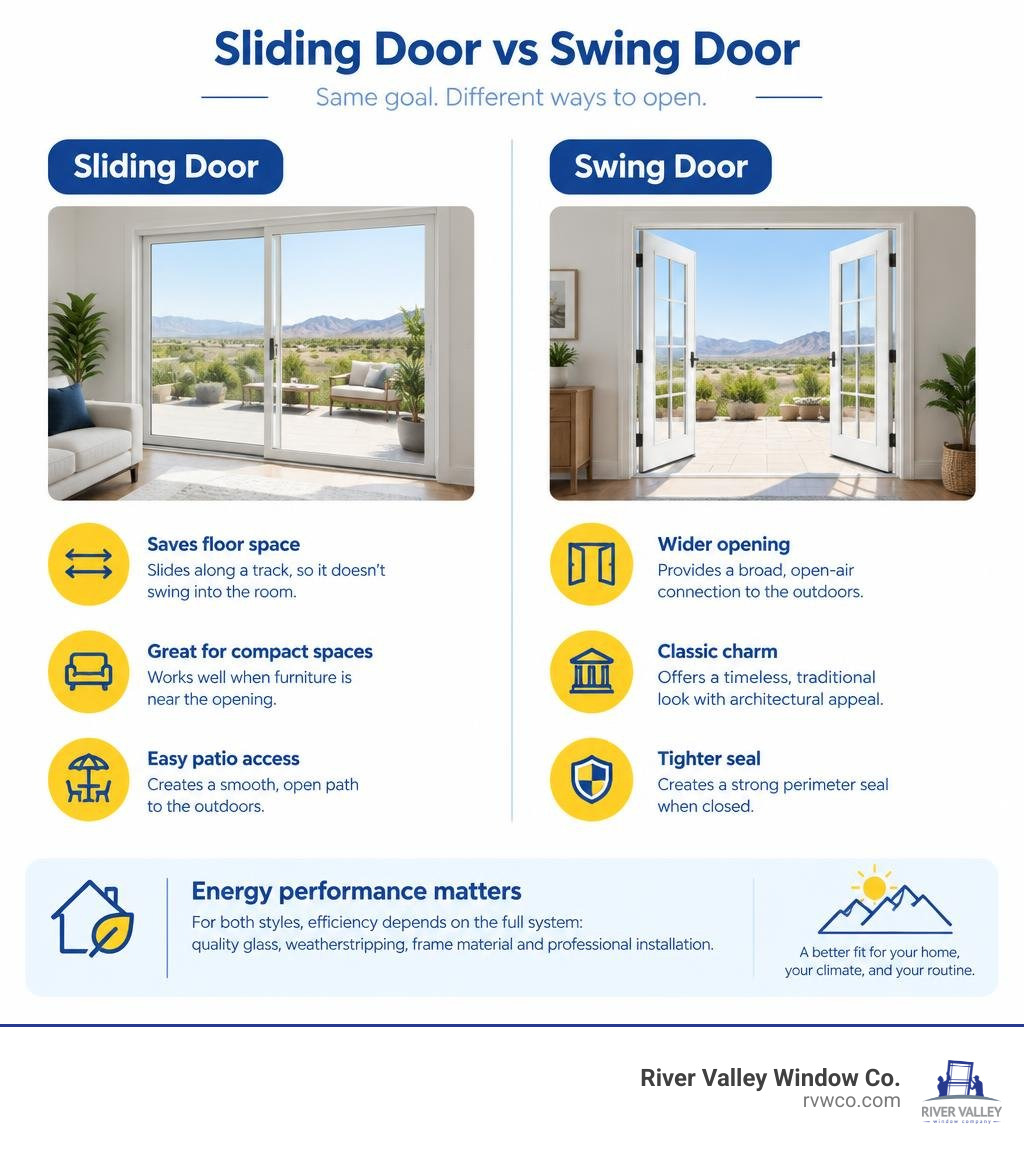
In a sliding door vs swing door choice, sliding doors are usually best when you need to save floor space or create an easy path to a patio. Swing doors are often better when you want a wider opening, a classic French-door look, or a tighter perimeter seal.
- Choose a sliding door for compact rooms, furniture near the opening, and busy patio access.
- Choose a swing door when there is room for the door to open and you value a broad, open-air connection to the outdoors.
- For either style, energy performance depends on the full system: quality glass, weatherstripping, frame material, and professional installation.
For Northwestern Arizona homes, that last point matters. A well-fitted patio door with Low-E glass and strong seals can help manage heat, drafts, and sun exposure. The best choice is not simply the door that looks modern. It is the one that fits your wall space, traffic pattern, climate, and daily routine.
Sliding Door vs Swing Door: Core Differences and Performance
The fundamental difference between these two systems comes down to operational geometry. A sliding door moves laterally along an upper or lower horizontal track, meaning its movement stays within the wall plane. A swing (hinged) door pivots outward or inward on fixed hinges, moving through a dedicated radial arc.
When homeowners decide to explore the perks of having new sliding doors installed, space efficiency and seamless operation are usually at the top of their list. Meanwhile, those who lean toward swinging options often seek traditional architectural charm or maximum unimpeded airflow.
| Feature / Metric | Sliding Door Systems | Swing (Hinged) Door Systems |
|---|---|---|
| Operating Mechanism | Horizontal rollers on structural tracks | Pivoting side hinges (inward or outward) |
| Floor Footprint Required | Zero floor swing area required | Requires roughly 3 feet of radial clearance |
| Clear Opening Size | Typically 50% of overall frame width | Up to 100% of clear frame width (double doors) |
| Wind & Air Infiltration | High lateral stability against desert winds | Requires secure latching to prevent slamming |
| Primary Architectural Look | Clean, minimalist, panoramic glass sightlines | Classic, dimensional framing and French aesthetics |
Evaluating Sliding Door vs Swing Door for Space Requirements
Space utility is often the deciding factor in modern home layouts. A standard hinged door requires an unobstructed sweep area—usually around 10 to 14 square feet of clear floor space—to swing freely without colliding with end tables, sofas, dining chairs, or indoor potted plants.
By contrast, a sliding door operates strictly within its structural track, reclaiming that entire swing zone for usable living area. For compact floor plans, reading through a guide on comparing sliding vs swing doors for small spaces highlights how lateral systems let you place furniture right up against adjacent walls without interfering with door operation. The only requirement for a sliding system is adequate track length or pocket space to receive the sliding sash.

Air Infiltration, Energy Efficiency, and Thermal Seals
Living in regions with intense sun exposure, like Lake Havasu City and across Northwestern Arizona, puts immense thermal pressure on patio doors. An open entrance can raise air infiltration by roughly 21.3 times compared to a closed door, making thermal barrier integrity essential for maintaining stable indoor temperatures and controlling cooling costs.
- Compression Seals vs. Brush Weatherstripping: Swing doors use perimeter compression gaskets that press tightly against the frame when latched, providing an airtight seal. Sliding doors utilize continuous interlocking weatherstripping along the meeting stiles and track channels, engineered to block desert dust and thermal transfer while allowing smooth sliding movement.
- Advanced Glazing Options: Both systems can be fitted with dual-pane or triple-pane insulated glass units (IGUs) filled with argon gas and protected by multi-layer Low-E coatings. Adding argon-filled triple glazing can increase thermal resistance (R-value) by up to 30% over standard dual-pane glass, shielding interiors from scorching summer heat.
To see how advanced vinyl and fiberglass framing materials resist heat transfer and avoid structural warping under intense sun, homeowners can review the homeowners guide to Milgard fiberglass and vinyl patio doors.
Comparing Traffic Flow, Accessibility, and Everyday Safety
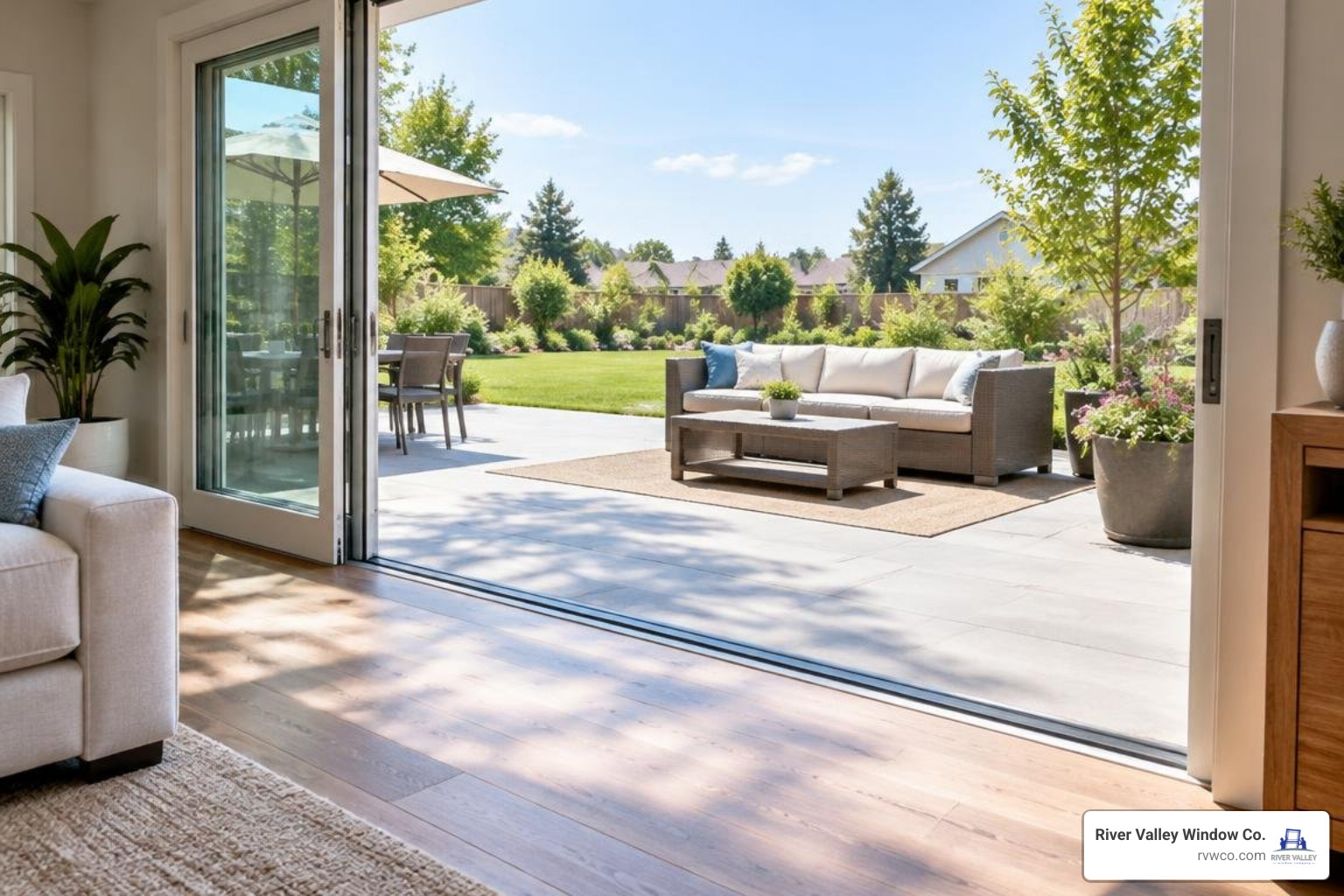
When hosting weekend gatherings or stepping outside for morning coffee, your doorway needs to handle movement gracefully. Evaluating daily foot traffic, accessibility needs, and household safety ensures your investment in energy-efficient replacement doors serves your family well for decades to come.
Doorway Clearance and Accessibility Standards
Accessibility is a major consideration for aging-in-place homeowners and families using mobility devices, strollers, or outdoor service carts.
- Sliding Systems: Modern sliding doors provide wide, level access points with low-profile thresholds that reduce tripping hazards. High-traffic residential layouts benefit from multi-panel stacking or pocket configurations that create broad passageways without obstructing walkways.
- Swing Systems: While a single swing door provides a straightforward doorway, double French doors can be swung fully open to deliver 100% unimpeded clearance. This makes them ideal for moving large furniture, appliances, or entertainment equipment between indoor and outdoor living areas.
Child Safety and Impact Risk Considerations
Household safety goes beyond basic locking hardware. In households with young children, hinged swing doors present pinch points along the jamb that can cause severe finger injuries. In fact, medical data shows that the average emergency department cost for a child catching their fingers in a hinged door exceeds $1,000 per incident.
Sliding systems significantly minimize pinch-point risks because the panels glide within a fixed channel away from the operator. When selecting systems, avoiding common mistakes homeowners make when choosing a new door means prioritizing safety-tempered glass, smooth-glide rollers, and robust latching systems that protect against accidental slams caused by sudden desert wind gusts.
Choosing the Right Door for Interior vs. Exterior Spaces
Every opening in a home serves a different purpose. Interior doors prioritize acoustic privacy, ease of transit, and spatial efficiency, while exterior doors must withstand weather exposure, high winds, and outdoor thermal loads. Consulting a practical guide to compare patio door options will help you align structural engineering with everyday functionality.

Sliding Door vs Swing Door Considerations for Exterior Patios
Exterior patio transitions must bridge indoor comfort with outdoor entertaining. Whether you are searching for patio doors creating a fluid transition outside or upgrading an existing entry, both styles offer distinct exterior benefits:
- Exterior Sliding Glass Doors: These maximize glass area, providing expansive outdoor views and floods of natural light. Because sliding panels stay locked in tracks, they do not catch high winds or violently blow open during monsoonal gusts. Selecting premium Milgard patio doors like the Trinsic™ V300 or Tuscany® V400 delivers sleek sightlines and dependable thermal performance.
- Exterior Swinging French Doors: Hinged exterior doors lend architectural depth and traditional character. When combined with multi-point stainless steel locking hardware, modern swing doors offer exceptional perimeter security and weather resistance. Exploring stylish patio door designs for modern homes provides inspiration for pairing classic French aesthetics with contemporary architecture.
Interior Layouts, Closets, and Room Partitions
Inside the home, the debate shifts toward noise dampening, room division, and storage access:
- Interior Swing Doors: Best for bedrooms, private home offices, and primary bathrooms where full perimeter sound insulation and traditional privacy latching are essential.
- Interior Sliding & Pocket Doors: Excellent for laundry rooms, pantries, walk-in closets, and tight hallways where a swinging slab would hit cabinetry or block walkways. Modern bypass systems and concealed-track “magic” doors also make stylish room dividers in open-concept spaces. While reviewing contemporary architecture, evaluating timeless patio door trends shows that clean-lined sliding partitions continue to grow in popularity across open-concept layouts.
Long-Term Maintenance, Hardware Durability, and Installation Costs
Both sliding and swing doors require routine care to maintain smooth operation and protect your home’s thermal envelope over the long haul. Understanding these maintenance needs helps homeowners weigh lifetime operating value against upfront installation costs.
A complete routine maintenance schedule includes:
- Track Debris Removal: Vacuum sand, dust, and pet hair out of sliding tracks every few months to prevent premature roller wear.
- Roller Height Calibration: Periodically adjust sliding panel set-screws to maintain plumb alignment and avoid drag.
- Hinge and Latch Lubrication: Apply a silicone-based lubricant to swing door hinges and multi-point lock mechanisms annually.
- Weatherstrip Inspection: Check perimeter brush seals and compression gaskets for signs of wear, flattening, or desert sun degradation.
Before finalizing your project, review the key factors to consider before installing new doors and keep a checklist for choosing a patio door installation company on hand to ensure the installation team uses proper flashing, leveling, and structural anchoring methods.
Frequently Asked Questions About Patio and Interior Doors
Which door style provides better energy efficiency in hot climates?
Both sliding and swing doors can achieve outstanding energy efficiency when built with multi-chambered vinyl or fiberglass frames, Low-E glass, and argon gas fills. Swing doors offer tight perimeter compression seals when latched, while modern sliding patio doors feature interlock systems that prevent thermal bridging and air infiltration during high-wind desert conditions.
Are swinging French doors more secure than glass sliding doors?
When properly equipped, both styles provide high levels of security. Premium swing doors feature multi-point locking systems that secure the slab into the head, sill, and jamb simultaneously. Modern sliding doors utilize heavy-duty dual-point mortise latches, anti-lift frame blocks, and tempered glass, making them just as resilient against forced entry.
Can I replace an existing swing door with a sliding patio door?
Yes, provided the rough opening width accommodates a two-panel sliding frame. If the existing opening held a standard single swing door (e.g., 36 inches), converting to a sliding patio door may require expanding the rough opening framing. If you are replacing a double-swing French door set (typically 60 to 72 inches wide), a sliding patio door fits cleanly into the existing structural space.
Conclusion
Choosing between a sliding door and a swing door comes down to your home’s layout, how you use your living space, and your daily lifestyle. If you want to conserve floor space, enjoy panoramic backyard views, and ensure child-safe transit, sliding doors are a dependable choice. If you prefer classic architectural framing, expansive double-door openings, and traditional swing mechanics, hinged French doors remain a timeless upgrade.
At River Valley Window Co., we specialize in fast, non-invasive patio door installations across Lake Havasu City and Northwestern Arizona. We install high-performance Milgard vinyl and fiberglass patio doors designed specifically to withstand harsh desert climates. Every installation is backed by Milgard’s industry-leading warranty coverage:
- Standard Limited Lifetime Warranty: Varies by new construction versus replacement scope and occupancy. If transferred after sale, it converts to a 10-year parts-only warranty calculated from the manufacture date, with 10-year hardware coverage and product-specific finish and weatherstripping limitations.
- Full Lifetime Warranty Upgrade: Valid for the natural lifetime of the original consumer owner (non-transferable), covering parts and labor. It includes glass breakage coverage for Tuscany® V400 and V450 series, and can be added as an optional glass breakage upgrade for Trinsic™ V300. Note applicable shorter limits: 10-year coverage for insulated glass unit delamination, blind defects, and peeling or fading finishes, along with 1-year coverage for weatherstripping, screens, and corrosion on stainless steel hardware.
Ready to find the ideal patio door for your space? Take the next step and explore comparing sliding vs swing doors for small spaces to choose the perfect fit with our team of replacement specialists.