

Why Choosing the Right Patio Door Installation Company Makes All the Difference
Hiring the right patio door installation company is one of the most important decisions you’ll make when upgrading your home — especially in Northwestern Arizona, where brutal summer heat and intense UV exposure put every door to the test.
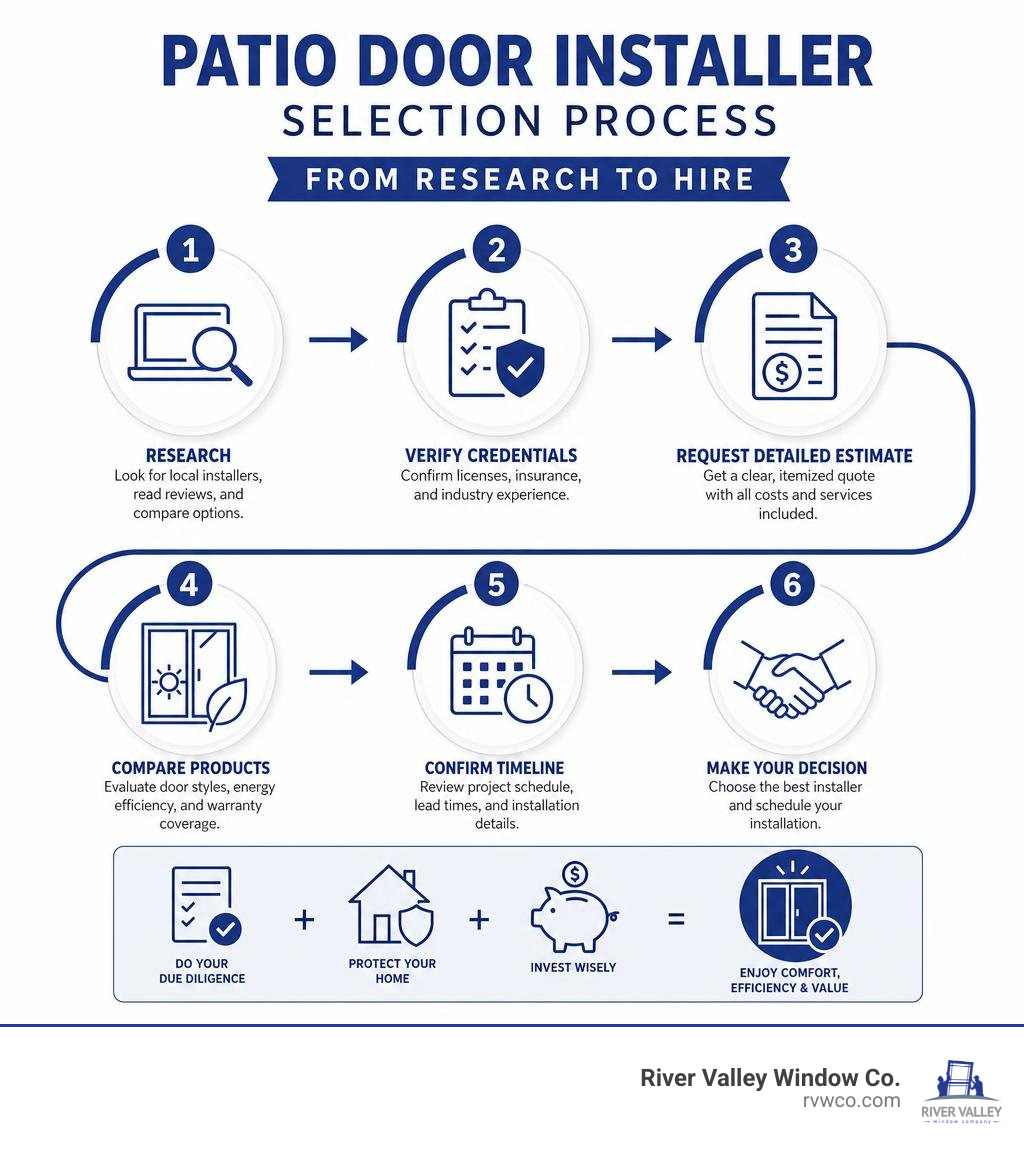
Here’s a quick summary of what to look for when choosing a patio door installer:
- Licensed, bonded, and insured — verify credentials before signing anything
- Proven experience — ask for references and photos of past patio door projects
- Clear, itemized estimates — confirm what’s included (removal, cleanup, permits)
- Energy-efficient door options — look for Energy Star certified products with Low-E glass
- Strong warranties — both on the product and the installation labor
- Transparent timelines — most standard installs finish in one day; custom orders can take 8–12 weeks
A poorly chosen contractor can mean drafts, water leaks, and a door that sticks or drags from day one. In fact, an old or badly sealed door can quietly eat up 15% of your heating and cooling bill. That’s real money — gone through the gaps.
This guide gives you a complete, step-by-step checklist to evaluate installers, compare costs, understand permits, and choose a door that actually performs in the desert climate. Whether you’re replacing a tired sliding glass door or upgrading to a French or bi-fold system, you’ll know exactly what to ask — and what to watch out for.
Step 1: Evaluate Patio Door Styles, Materials, and Energy Performance

Before you start interviewing local contractors, it helps to understand what options are on the market. Selecting the ideal operating design and frame material ensures your replacement patio door fits your lifestyle and architectural preferences. Explore options in our guide on 3 Stylish Patio Door Designs For Modern Homes or discover how spatial limits dictate door style in Comparing Sliding Vs Swing Doors For Small Spaces.
Understanding Patio Door Types and Frame Materials
Patio doors come in several distinct functional styles, each offering unique benefits for access, aesthetics, and indoor-outdoor living flow:
- Sliding Glass Doors: A classic space-saving choice featuring 2, 3, or 4 panels. The door panels glide smoothly along parallel tracks, requiring zero clearance inside or outside your home.
- French / Hinged Doors: Traditional single or double doors that swing open inward or outward. They deliver wide, elegant openings but require unobstructed floor space to swing freely.
- Bi-Fold & Stacking Wall Systems: Multi-panel exterior moving glass wall systems that fold accordion-style or stack tightly away. These designs open entire walls to outdoor living spaces, making them popular for entertaining.

Matching the style to the right material is essential for long-term performance, especially in hot climate zones like Lake Havasu City and across Northwestern Arizona. Review key Factors To Consider Before Installing New Doors in the table below:
| Material | Maintenance Level | Thermal Efficiency | Durability & Desert Resistance | Relative Cost |
|---|---|---|---|---|
| Vinyl | Low (no painting needed) | High | Excellent; modern UV-stable formulas resist warping and fading | Budget-Friendly to Mid-Range |
| Fiberglass | Very Low | Excellent | Outstanding; expansion matches glass to prevent seal failures | Mid-Range to Premium |
| Aluminum | Low | Moderate (requires thermal break) | Highly durable, sleek slim frames; handles structural weight | Mid-Range |
| Wood | High (requires sealing/painting) | Good | Vulnerable to solar drying, cracking, and moisture damage | High Premium |
For most Arizona homeowners, fiberglass and high-grade vinyl present the best combination of thermal insulation, ease of maintenance, and value over a 20 to 30 year lifespan.
Energy Efficiency Ratings and Climate Fit
In our sun-drenched climate zone, a door’s energy performance is just as important as its frame color. An ill-fitted or single-pane sliding door lets solar heat pour right into your living room, forcing your HVAC unit to work overtime.
When reviewing door specifications, pay close attention to NFRC ratings and Energy Star certification labels:
- U-Factor: Measures the rate of heat flow through the unit. Look for lower numbers (ideally 0.27 to 0.32) indicating better thermal insulation.
- Solar Heat Gain Coefficient (SHGC): Measures how much solar heat enters through the glass. In high-sun desert environments, target a low SHGC (0.20 to 0.28) to block scorching radiant heat.
- Low-E Glass Coatings: Specially formulated microscopic metallic layers on double-pane glass reflect infrared light away from your living space without blocking natural sunlight.
- Argon Gas Fills: Inert argon gas sealed between pane layers reduces conductive heat transfer significantly better than air.
- Weatherstripping & Threshold Seals: Heavy-duty, continuous perimeter weatherstripping combined with engineered sloped weeping sills stops drafts and windblown sand in its tracks.
Upgrading an old, drafty slider with a modern Energy Star certified unit can save you up to 15% on monthly utility expenses while significantly improving indoor temperature consistency. Learn more about How Modern Doors Improve Home Security And Comfort through proper glass and frame selection.
Step 2: Vet Every Patio Door Installation Company on Your Shortlist
Even the highest quality patio door will fail prematurely if installed improperly. In fact, improper installation and poor flashing are the leading causes of door seal failure, sticking sashes, and unexpected water infiltration during monsoon storms. That is why vetting your patio door installation company with care is crucial. Read our complete advice on What To Look For In Your Window And Doors Company and incorporate Our Top Tips For Choosing A New Patio Door when comparing service providers.
Essential Licensing, Credentials, and Proof of Insurance
Never allow an unverified contractor to cut into your exterior walls or handle structural glass replacement. Avoid costly mistakes highlighted in Common Mistakes Homeowners Make When Choosing A New Door by verifying these essential credentials:
- Active State Contractor’s License: Confirm the business holds a current license in good standing with state contracting boards.
- Comprehensive Insurance Coverage: Request active certificates for both General Liability insurance (to protect your property) and Workers’ Compensation coverage (to protect workers on site).
- Manufacturer Certification: Select installers certified by leading brands like Milgard. Factory-trained crews install units according to precise technical specifications, ensuring full warranty protection.
- Reputation & BBB Ratings: Check online customer reviews and look for an A+ Better Business Bureau rating to confirm a history of reliable service.
Questions to Ask Every Patio Door Installation Company
When interviewing prospective contractors, ask direct questions to evaluate their professionalism, transparency, and operational protocols:
- Are your installation technicians direct employee specialists or third-party subcontractors? (Dedicated, in-house crews provide more consistent quality control.)
- Does your estimate cover all project line items? Verify that the quote includes exact door measurements, removal and disposal of the old door, threshold waterproofing, exterior trim capping, interior trim, and jobsite cleanup.
- How will you manage site preparation and weather exposure? Installers should protect nearby furniture and seal off surrounding floor space during installation.
- What is the lead time for ordering custom patio doors? Standard units may arrive faster, but custom factory orders generally require 8 to 12 weeks.
- Will you handle local building permits and inspection scheduling? Professional companies manage all code compliance and permit filings on your behalf.
- Can you provide recent client references in Northwestern Arizona? Speaking with past local clients confirms the contractor’s reliability and punctuality.
Step 3: Compare Installation Costs, Timelines, and Permits
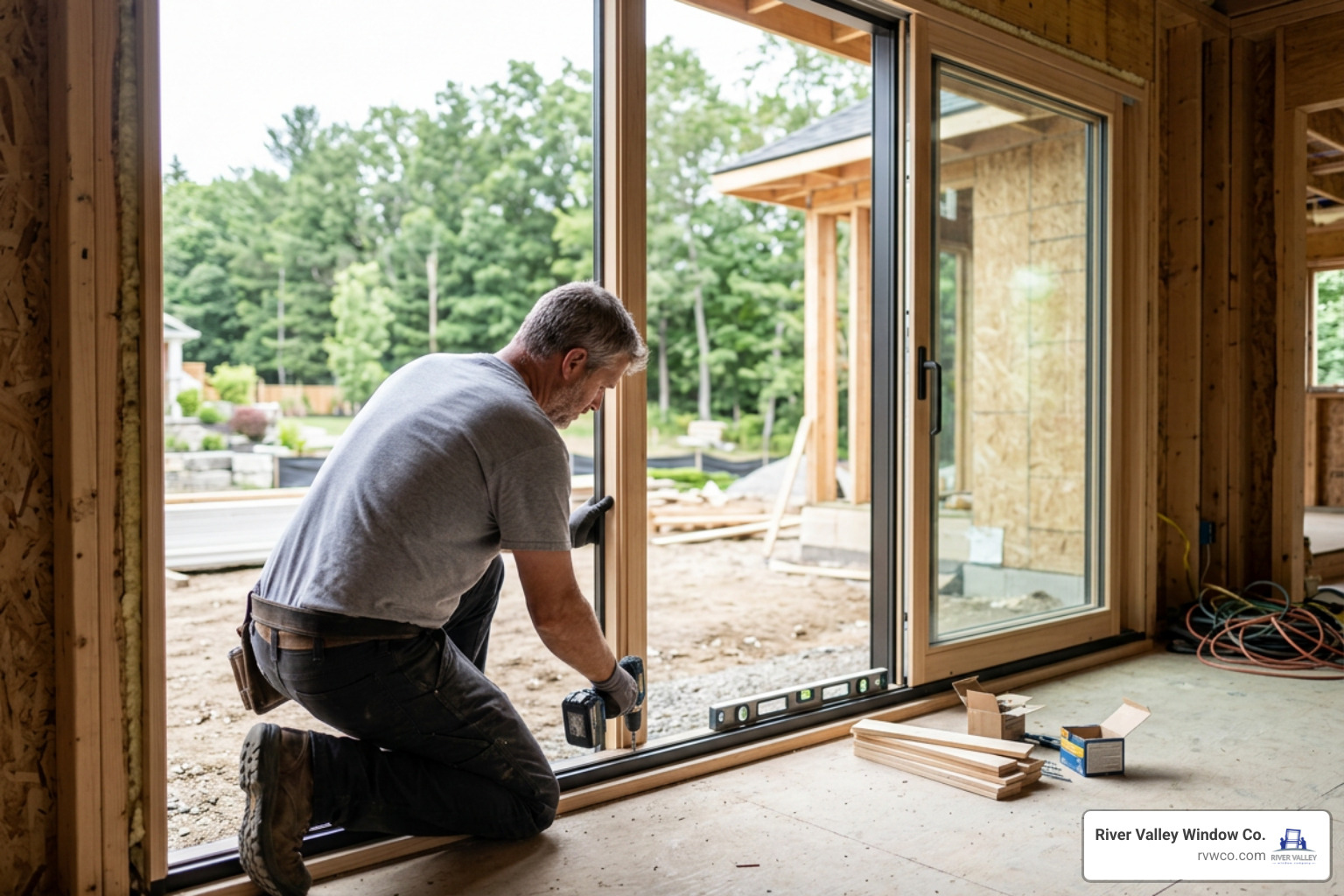
Understanding financial figures and timeline expectations helps you plan your project smoothly without unexpected surprises. Review our comprehensive breakdown on Everything You Need To Know About Door Replacement Cost.
How a Professional Patio Door Installation Company Handles Permits and Codes
A reputable patio door installation company will always ensure your new door meets local building codes and safety regulations:
- Building Permits: Standard like-for-like patio door replacements often bypass structural permit requirements. However, if your project involves expanding the wall opening, modifying headers, or making exterior masonry alterations, municipal permits are legally mandatory.
- Tempered Safety Glass: International Residential Code (IRC) strictly mandates tempered safety glazing on all patio doors and surrounding sidelites located near floor level or entry thresholds to prevent hazardous glass breakage.
- Historic District & HOA Approvals: If your home sits in a restricted HOA community or historic district, frame styles, exterior colors, and grille patterns may require advance board approval.
Estimating Costs and Project Timelines
Patio door replacement pricing varies based on door size, frame material, glass performance options, and labor complexity. Here is what to anticipate:
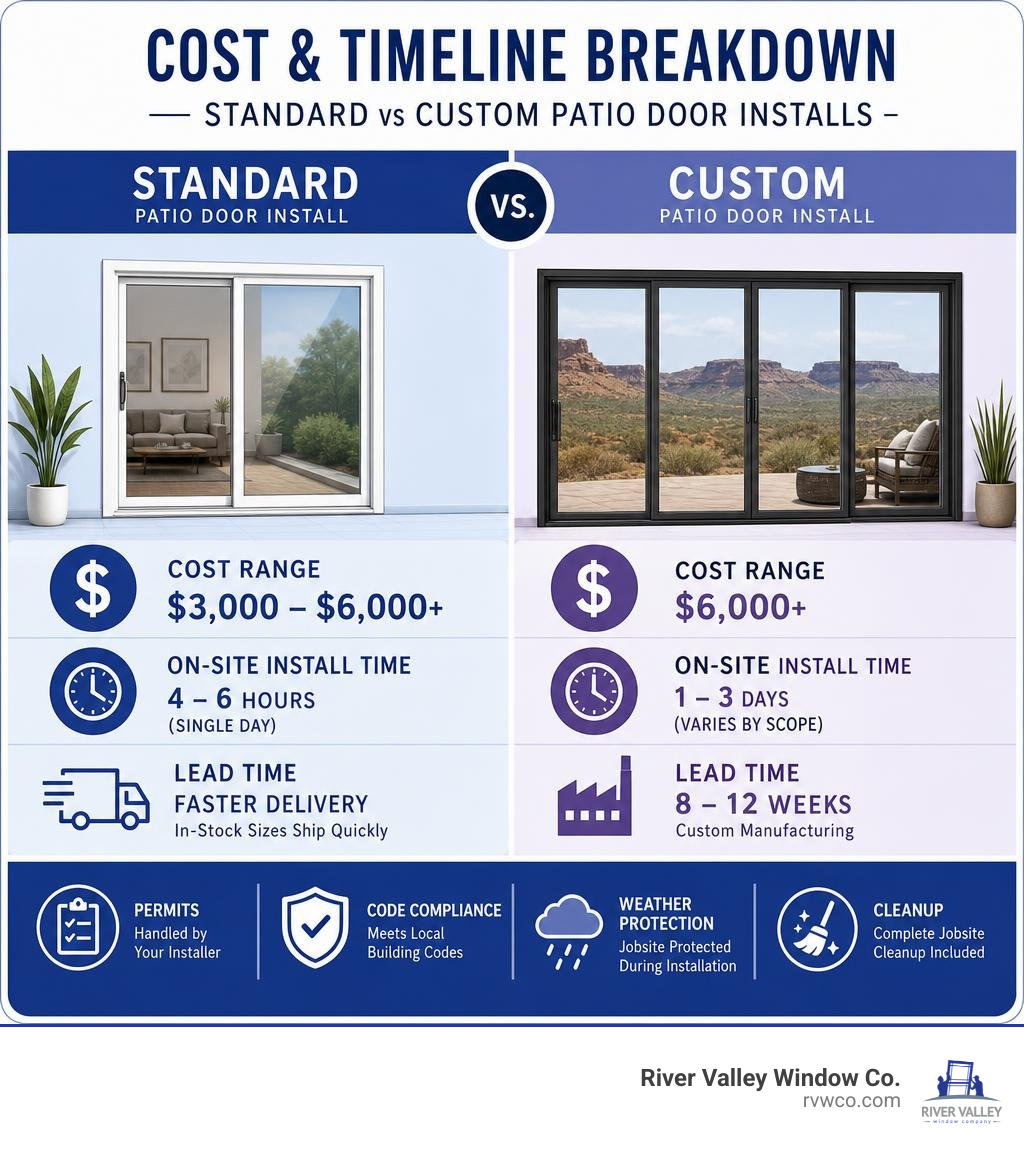
- Total Project Cost: Standard replacement sliding patio doors installed by professionals typically range between $3,000 and $6,000+. Specialty configurations like multi-slide stacking walls or high-end fiberglass systems can run higher depending on structural framing needs.
- On-Site Installation Duration: Replacing a standard sliding glass door in an existing rough opening takes about 4 to 6 hours and is completed in a single day. Single entry doors take about 2 to 4 hours, whereas custom structural wall modifications may span 1 to 3 days.
- Manufacturing Lead Time: While standard vinyl doors in stock sizes ship quickly, custom-manufactured factory orders typically take 8 to 12 weeks from measurement to delivery day.
Step 4: Examine Product and Workmanship Warranties
Warranty coverage is your primary protection against material flaws, glass seal failures, and installation mistakes. Always separate the product warranty (offered by the manufacturer) from the workmanship warranty (offered by your installation contractor).
Comparing Labor Warranties and Manufacturer Coverage
A top-tier installation company backs its craft with a clear labor warranty—ideally 10 years or a limited lifetime craftsmanship guarantee—protecting you against air drafts, water leaks, and sticking sashes caused by improper fitting.
When evaluating manufacturer warranties, such as those provided for Milgard products, it is important to understand the current tiered warranty structures and specific term limits:
- Standard Limited Lifetime Warranty: Coverage varies based on new construction versus replacement scope and property occupancy type.
- Transferred Warranty Terms: If you sell your home, the transferred coverage becomes a 10-year parts-only limited warranty calculated from the product’s original manufacture date. This includes 10-year hardware coverage alongside product-specific finish and weatherstripping limitations.
- Specific Component Limits:
- 10-Year Limits: Applies to insulated glass unit (IGU) delamination, internal blind defects, and factory frame finish peeling or fading.
- 1-Year Limits: Applies to weatherstripping seals, screen mesh/frames, and corrosion on stainless steel hardware.
- Tiered Warranty Options & Glass Breakage:
- Standard Limited Lifetime Warranty: Provides default manufacturer product protection.
- Paid Full Lifetime Warranty Upgrade: Available to the original consumer owner for their natural lifetime. This upgrade is non-transferable and covers both replacement parts and installation labor.
- Glass Breakage Coverage: Glass breakage protection is automatically included under the Full Lifetime Warranty upgrade for Tuscany® V400 and V450 series. For Trinsic™ V300 series, glass breakage protection is available as a paid added upgrade option.
Frequently Asked Questions About Patio Door Installation
What is the life expectancy of a new patio door?
The average operational life expectancy of a modern patio door ranges between 20 and 30 years. High-quality vinyl and fiberglass frames can easily reach or exceed 30 years when properly maintained and kept clean of sand grit. Longevity depends heavily on material quality, thermal extremes, routine track lubrication, and proper initial installation.
How long does standard patio door installation take?
A professional replacement crew usually takes 4 to 6 hours to remove an old sliding patio door, flash the threshold, set and shim the new frame, seal the perimeter, and adjust the rollers. Most installations are finished within a single day. If structural wall expansion or exterior header modifications are required, installation may take up to 2 days.
Do I need a building permit to replace my patio door?
For like-for-like door replacements where the rough wall opening size remains unchanged, municipal permits are usually not required in most Northwestern Arizona jurisdictions. However, if your project involves widening the opening, cutting concrete or stucco walls, or altering load-bearing headers, a building permit and subsequent municipal inspection are legally required.
Conclusion
Upgrading your home’s outdoor entrance with a beautiful, energy-efficient patio door boosts curb appeal, enhances indoor comfort, and reduces energy costs year-round. By following this ultimate checklist—vetting credentials, verifying insurance, comparing itemized estimates, understanding code compliance, and selecting comprehensive warranty coverage—you can hire a contractor with total confidence.
At River Valley Window Co., we specialize in high-performance Milgard vinyl and fiberglass patio door systems tailored specifically for homes in Lake Havasu City and across Northwestern Arizona. Our factory-trained installation specialists deliver fast, non-invasive installations backed by industry-leading warranty coverage.
Ready to transform your home with seamless indoor-outdoor living? Contact our expert team today to schedule your free consultation and discover how Milgard Sliding Patio Doors can elevate your living space!