

How to Choose Quality Window Replacement
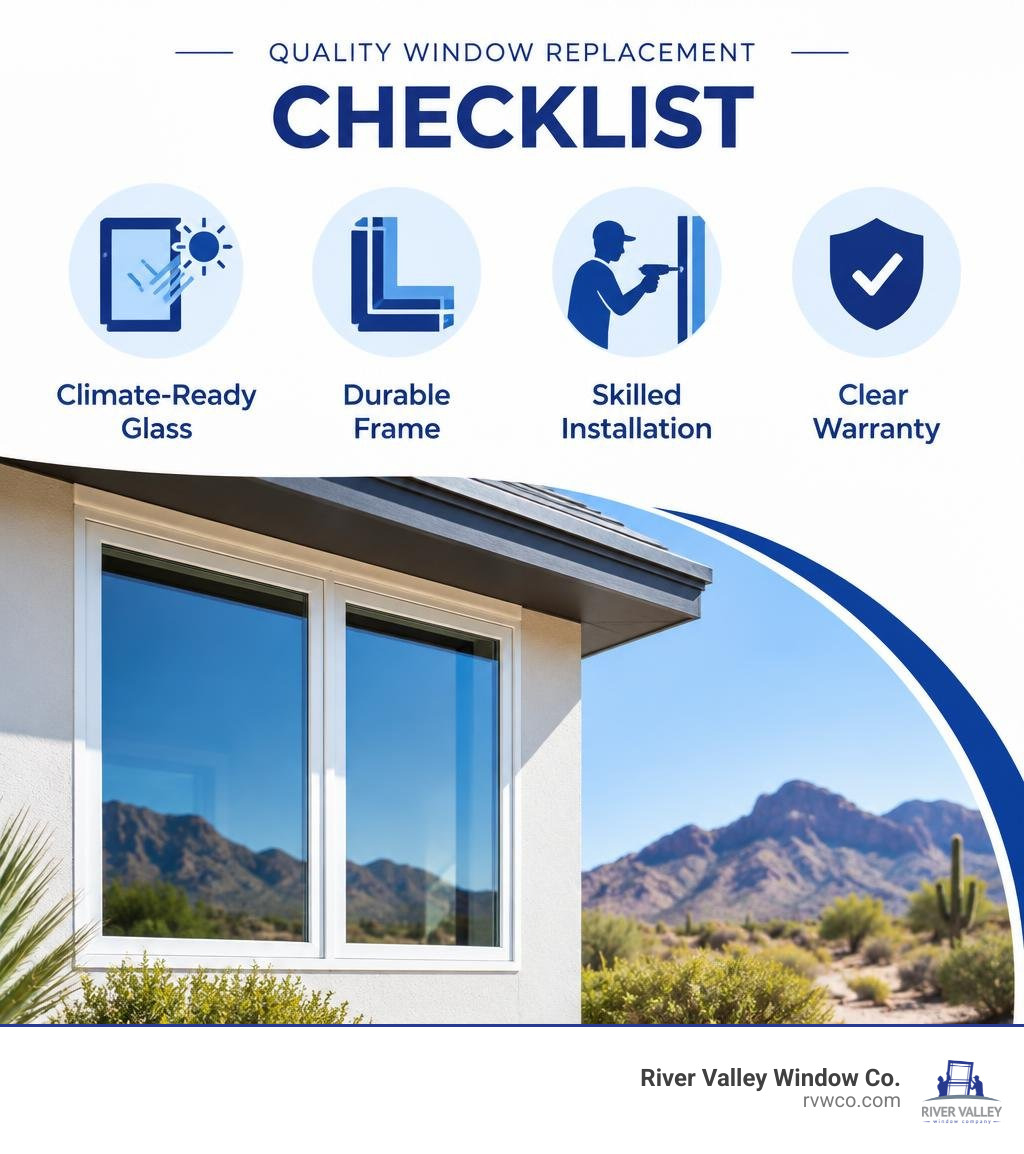
Start with the glass, the frame, and the installer. In Northwestern Arizona, compare windows with a low solar heat gain coefficient (SHGC) to limit heat from the sun. Check the NFRC label for energy ratings, choose a frame you can maintain, and get written quotes that spell out the window model, installation method, and warranty.
A good window can still leak air or water if it is installed poorly. This guide will help you compare options and know when a repair may be enough.
When to Invest in Quality Window Replacement: Signs and Diagnostics
Windows are the hardest-working architectural components in your home. They must resist intense sun, insulate against shifting temperatures, admit natural light, provide security, and open and close smoothly. Over time, desert heat and natural house settling cause materials to degrade. Knowing the 3 signs it’s time for window replacement allows you to address failing units before moisture damage or soaring cooling bills impact your household budget.
The most common sign of failure is seal degradation in insulated glass units (IGUs). When the perimeter seal around dual-pane glass fails, the insulating argon gas leaks out and ambient air enters. This leads to permanent condensation build-up, creating a foggy or milky film between the panes that cannot be wiped clean.
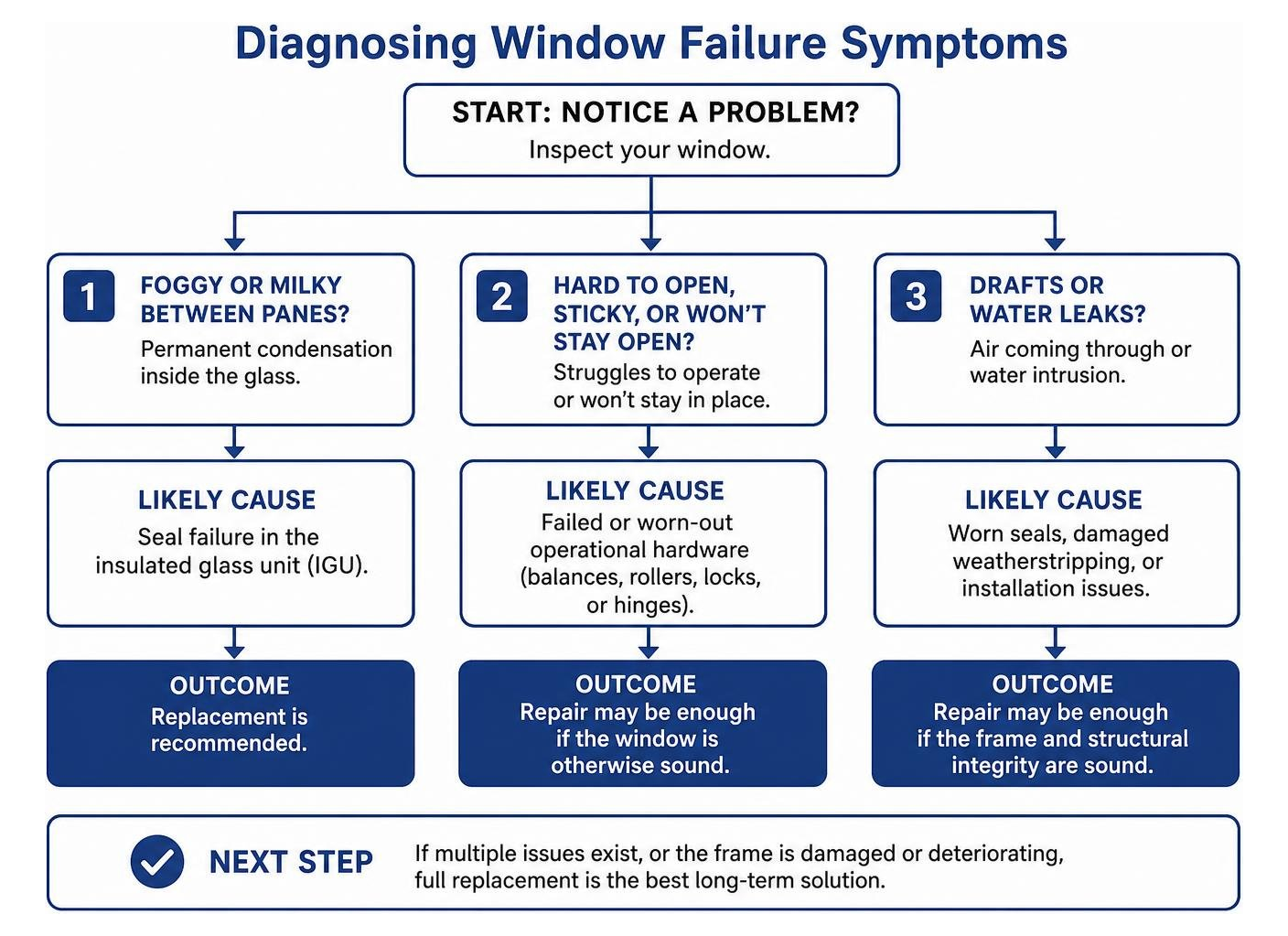
Operational failure is another primary indicator. If you have to prop open a sash with a stick, wrestle with a stubborn slider, or deal with broken balances, the internal mechanics have failed. Understanding how to know when you need a window replacement helps prevent structural damage to the surrounding rough opening.
Repair vs. Full Replacement: Evaluating Structural Integrity
Not every failing window requires immediate replacement. A basic hardware fix—such as replacing a stripped crank handle on a casement window, installing fresh latch mechanisms, or adding new stick-on weatherstripping—can resolve minor air leaks.
However, repairs have clear limits:
- Hardware and adjustments: If a sash sticks because of dust or minor hardware wear, a thorough cleaning, realignment, and hardware swap will often restore smooth operation.
- Seal failure between panes: Once the airtight seal between glass layers fails and moisture enters, replacing only the glass sash or the entire window assembly is necessary to regain thermal performance.
- Structural settling and frame rot: If the window frame has warped, cracked, or sustained dry rot from water intrusion, hardware fixes will not solve the issue. The structural opening is compromised.
Evaluating which of your home windows should you replace lets you prioritize severely degraded openings while keeping intact units in service.
Energy Loss Diagnostics and Indoor Comfort Issues
According to the U.S. Department of Energy, 25% to 30% of residential heating and cooling energy is lost through inefficient windows. In the scorching summers of Lake Havasu City and across Northwestern Arizona, old or single-pane windows turn living areas into greenhouses.
When you walk past a closed window and feel an immediate blast of radiant heat, your glass package is failing to reflect infrared radiation. This radiant transfer forces your air conditioner to run constantly, leading to excess wear and higher electric bills. Learning how new windows and doors can help you save on your energy bills is often the first step toward lower utilities and a more comfortable home. High-performance replacement glass also blocks destructive ultraviolet (UV) rays, protecting hardwood floors, carpets, and furniture from premature fading.
Frame Materials: Balancing Durability, Maintenance, and Style
Choosing the proper frame material directly influences the longevity, thermal efficiency, and exterior appearance of your home. Selecting what materials are best for replacement windows requires balancing local climate demands against your long-term maintenance preferences.
| Material | Thermal Performance | Maintenance Level | Expected Lifespan | Best Regional Application |
|---|---|---|---|---|
| High-Grade Vinyl (uPVC) | Excellent (Multi-chamber air pockets limit heat transfer) | Very Low (Never needs painting; clean with soap and water) | 20–35 Years | High-sun, high-heat desert environments |
| Fiberglass (C700) | Outstanding (Virtually zero thermal expansion) | Very Low (Resistant to rot, warping, and peeling) | 30–40+ Years | Extreme temperature swings and direct sun |
| Thermally Broken Aluminum | Moderate (Requires structural thermal barrier) | Low (Durable anodized or powder-coated finish) | 25–40 Years | Contemporary homes requiring narrow sightlines |
Vinyl Framing: Maximum Thermal Efficiency and Value
High-quality vinyl framing made from premium unplasticized polyvinyl chloride (uPVC) is the most popular choice for modern replacements. Discover why vinyl windows are the top choice for low-maintenance homes: they never need painting, resist salt air, and will not rot or peel.
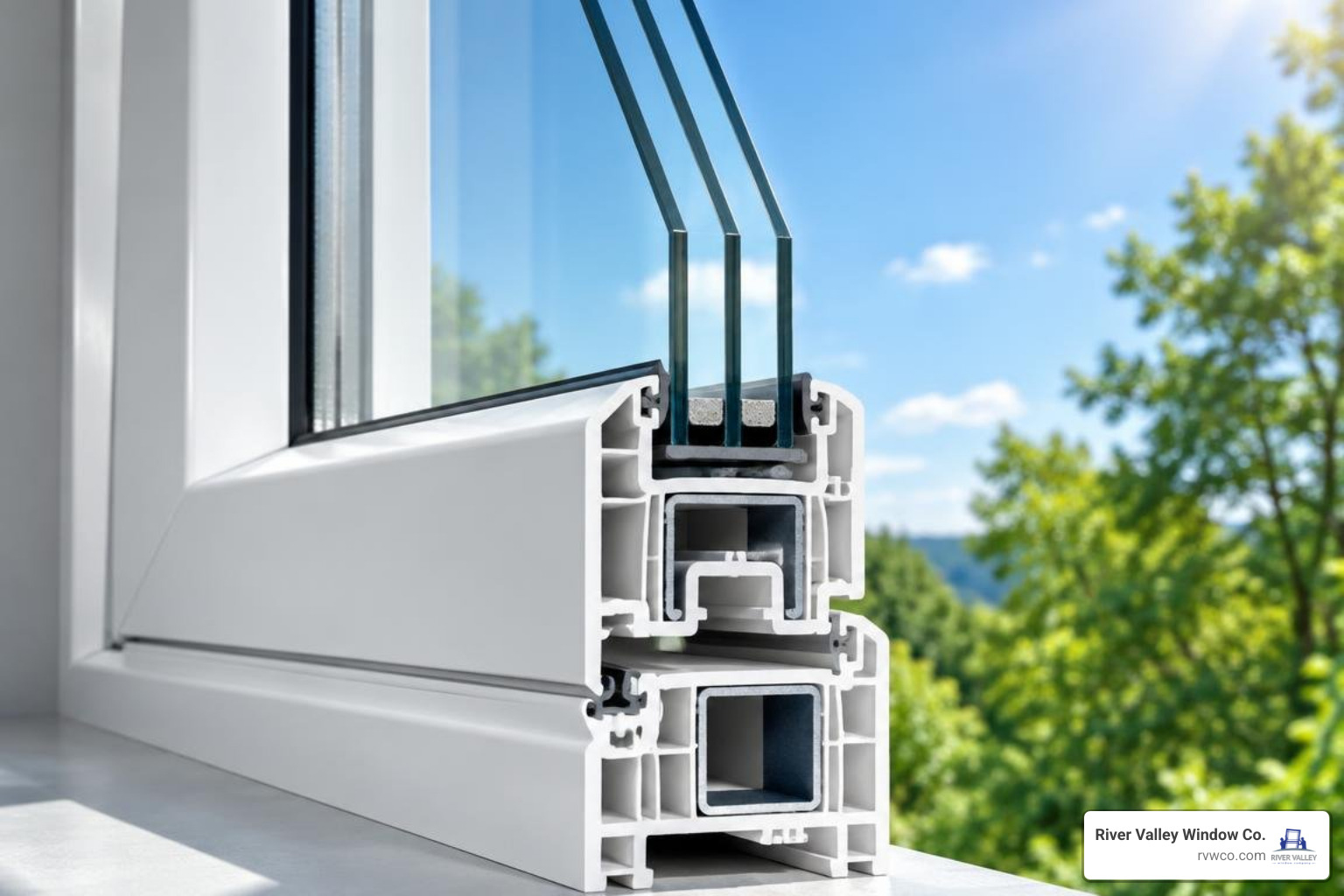
From an engineering perspective, vinyl extrusions feature internal multi-chambered cavities. These chambers act as individual air barriers that slow the conductive transfer of heat from the exterior frame to your interior rooms. When combined with precision fusion-welded corners, these frames form an impermeable barrier against desert dust and drafts. Exploring how vinyl windows enhance energy efficiency in your home demonstrates how modern extrusions handle sustained sun exposure without degrading.
Fiberglass and Aluminum: Structural Strength and Slim Profiles
Fiberglass frames represent a major advancement in window engineering. Because fiberglass is composed of glass fibers saturated with thermoset resins, its rate of thermal expansion and contraction is virtually identical to the glass panes it holds. When comparing fiberglass vs vinyl windows, fiberglass exhibits exceptional tensile strength. This strength allows for slimmer profiles and expansive views without sacrificing structural stability.
Modern aluminum frames offer clean, contemporary sightlines. To meet current efficiency requirements, architectural aluminum profiles include a built-in thermal break—a high-density polyurethane barrier separating the interior and exterior metal sections. Homeowners choosing between vinyl and aluminum windows for longevity and style often select aluminum for modern architecture where maximizing the glass area is the top priority.
Energy Efficiency Standards: Decoding NFRC Ratings and Glass Tech
Every certified window carries an National Fenestration Rating Council (NFRC) label. Understanding these performance metrics allows you to verify energy savings independently of sales claims.
- U-Factor (0.15–0.30): Measures the rate of non-solar heat transfer through the entire window assembly. Lower numbers indicate better insulation against exterior temperature extremes.
- Solar Heat Gain Coefficient (SHGC) (0.15–0.40): Measures how much solar radiation enters through the glass. In Northwestern Arizona, keeping this number at or below 0.25 is essential to prevent the sun from turning living spaces into ovens.
- Visible Transmittance (VT) (0.30–0.70): Indicates how much natural light passes through the glass. A higher number means brighter interiors.
- Air Leakage (AL) (≤ 0.30): Measures cubic feet of air infiltrating per minute per square foot of window frame. Lower ratings ensure stronger draft prevention.
Learning how energy-efficient windows can save substantial money begins with matching these NFRC ratings to regional ENERGY STAR® Southern Zone criteria.
Low-E Coatings and Gas Fill Technology
Low-emissivity (Low-E) coatings consist of microscopically thin, transparent layers of metal oxides applied to the glass surface. These coatings act as thermal filters: they allow visible daylight to enter while reflecting short-wave infrared heat back outward during hot months.
High-efficiency IGUs replace standard air between the panes with denser, inert gases. Argon gas fill slows conductive and convective heat transfer across the glass unit. Quality manufacturers combine argon gas fills with warm-edge composite or stainless steel spacers, reducing thermal conductivity at the glass perimeter and preventing condensation along the edges.
Glazing Configurations: Double-Pane vs. Triple-Pane Engineering
Dual-pane IGUs are the standard across most residential retrofits, offering a practical balance of weight, thermal efficiency, and affordability. For properties facing extreme solar exposure or high exterior noise—such as homes near busy thoroughfares—specialized glazing upgrades offer significant value.
Triple-pane windows incorporate three glass panes with two distinct gas-filled chambers, delivering exceptional thermal resistance. However, for noise dampening, dual-pane units configured with asymmetric glass thicknesses (such as a 1/8-inch outer pane paired with a 3/16-inch inner pane) or laminated interior glass disrupt sound frequencies effectively. This configuration provides high Sound Transmission Class (STC) ratings without the added wall-stress and cost of triple-pane frames.
Installation Methods, Project Scope, and Cost Considerations
Understanding what you need to know before getting new windows helps prevent project surprises. Replacement costs generally range from $400 to $1,200 per window installed for standard residential applications, with overall costs spanning $300 to $3,700+ per opening depending on size, material, structural adjustments, and custom finishes.
In our experience across Northwestern Arizona, the median residential retrofit project size is approximately 9 windows, with nearly half of projects involving 10 or more openings. Planning your budget carefully and understanding how to budget for window replacement in your home ensures you get the features you need. Evaluating what kind of window offers the best ROI will help guide your glass, style, and hardware selections.
Pocket vs. Full-Frame: Selecting the Best Quality Window Replacement Strategy
The architectural condition of your existing frame dictates the proper installation method. Choosing the right path ensures a lasting quality window replacement that preserves your home’s structural integrity.
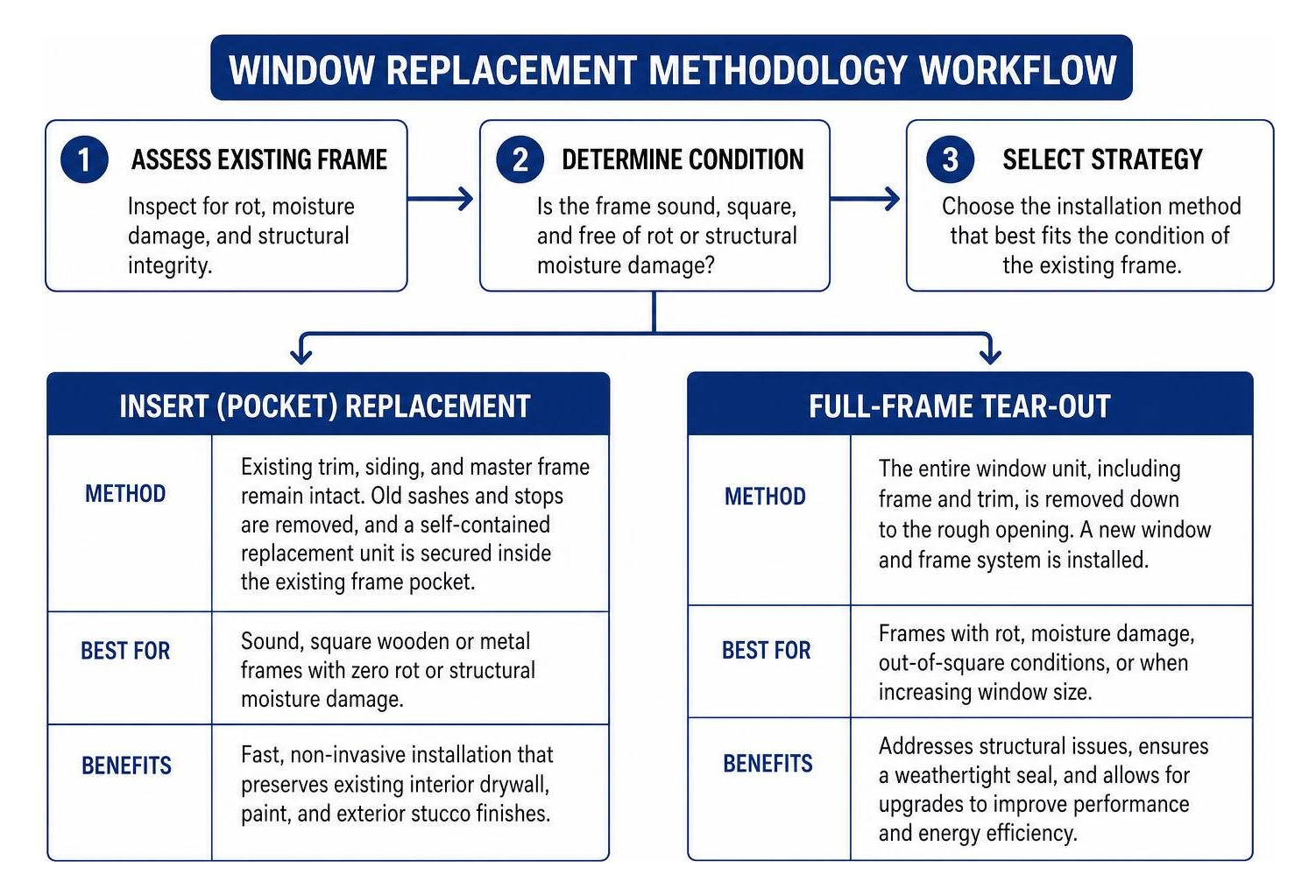
- Insert (Pocket) Replacement:
- Method: The existing interior/exterior trim, siding, and master frame remain intact. Only the old sashes and stops are removed, and a self-contained replacement unit is secured inside the existing frame pocket.
- Best For: Sound, square wooden or metal frames with zero rot or structural moisture damage.
- Benefits: Fast, non-invasive installation that preserves existing interior drywall, paint, and exterior stucco finishes.
- Full-Frame Tear-Out:
- Method: The entire window assembly—including the sashes, master frame, sill, and interior/exterior casing—is stripped down to the rough stud opening.
- Best For: Severely rotted framing, out-of-square openings, structural water intrusion, or when altering the physical dimensions and operation style of the window.
- Benefits: Complete inspection of perimeter framing, installation of new flashing systems, and maximum visible glass area.
Vetting Certified Installers for a Quality Window Replacement
A high-performance window will only perform as well as the crew installing it. Poor shimming, missing perimeter backer rods, or using standard expanding spray foam that bows the frame can ruin an expensive window. Learning how to pick the best window installers protects your investment.
When interviewing contractors, ask these 3 questions to ask a window replacement company:
- Are your installation crews factory-certified dealers for the products they install? Factory certification ensures the crew uses manufacturer-approved flashing, low-expansion polyurethane foam, and commercial sealants, keeping all warranties intact.
- What specific moisture-barrier and perimeter-sealing systems do you use? Installers should detail their backer rod methods, non-compressing shims, and exterior sealants designed for local temperature ranges.
- What explicit workmanship guarantee covers the installation beyond the manufacturer product warranty? A dependable contractor backs their labor with a written guarantee that covers water and air infiltration.
Frequently Asked Questions About Window Replacement
How much can high-efficiency replacement windows reduce heating and cooling costs?
Replacing outdated single-pane windows with ENERGY STAR® certified models can reduce household heating and cooling bills by up to 12% to 15%. In high-heat areas like Northwestern Arizona, selecting low-SHGC glass packages provides immediate relief to your air conditioning system during triple-digit summers.
What is the difference between a standard limited warranty and a full lifetime warranty?
When reviewing Milgard products, warranties use a tiered structure:
- Standard Limited Lifetime Warranty: Varies by new construction versus replacement scope and occupancy type. If transferred after the home is sold, it transitions to a 10-year parts-only limited warranty calculated from the manufacture date, including 10-year hardware coverage and product-specific finish and weatherstripping limitations.
- Full Lifetime Warranty Upgrade: A paid upgrade valid for the natural lifetime of the original consumer owner (non-transferable). It covers both parts and labor. It includes accidental glass breakage coverage for Tuscany® V400 and V450 series, while requiring glass breakage to be added as an optional upgrade for Trinsic™ V300 series.
- Component-Specific Limits: Both warranty levels carry specific time limits on select parts: a 10-year limit applies to insulated glass unit delamination, internal blind defects, and peeling or fading frame finishes; a 1-year limit applies to weatherstripping, insect screens, and corrosion on stainless steel hardware.
How long does a typical residential window replacement project take from start to finish?
Once custom measurements are finalized and the windows are built to your home’s exact opening dimensions, on-site installation by a professional crew typically takes one to two days for a median 9-window project. Non-invasive pocket installations are often completed in a single day, with minimal disruption to your daily routine.
Conclusion
Upgrading your home with high-performance windows is one of the most effective improvements you can make. It enhances architectural style, eliminates interior drafts, provides everyday comfort, and helps protect your home from summer heat.
At River Valley Window Co., we specialize in fast, non-invasive installations using premium Milgard vinyl and fiberglass products built for the desert climate. Our factory-certified crews deliver clean workmanship, energy efficiency, and peace of mind backed by comprehensive warranty coverage.
Schedule a consultation with our local experts today to explore our complete line of quality window replacement services tailored to your home.