
Desert-Proof Doors for Lake Havasu City’s Extreme Heat
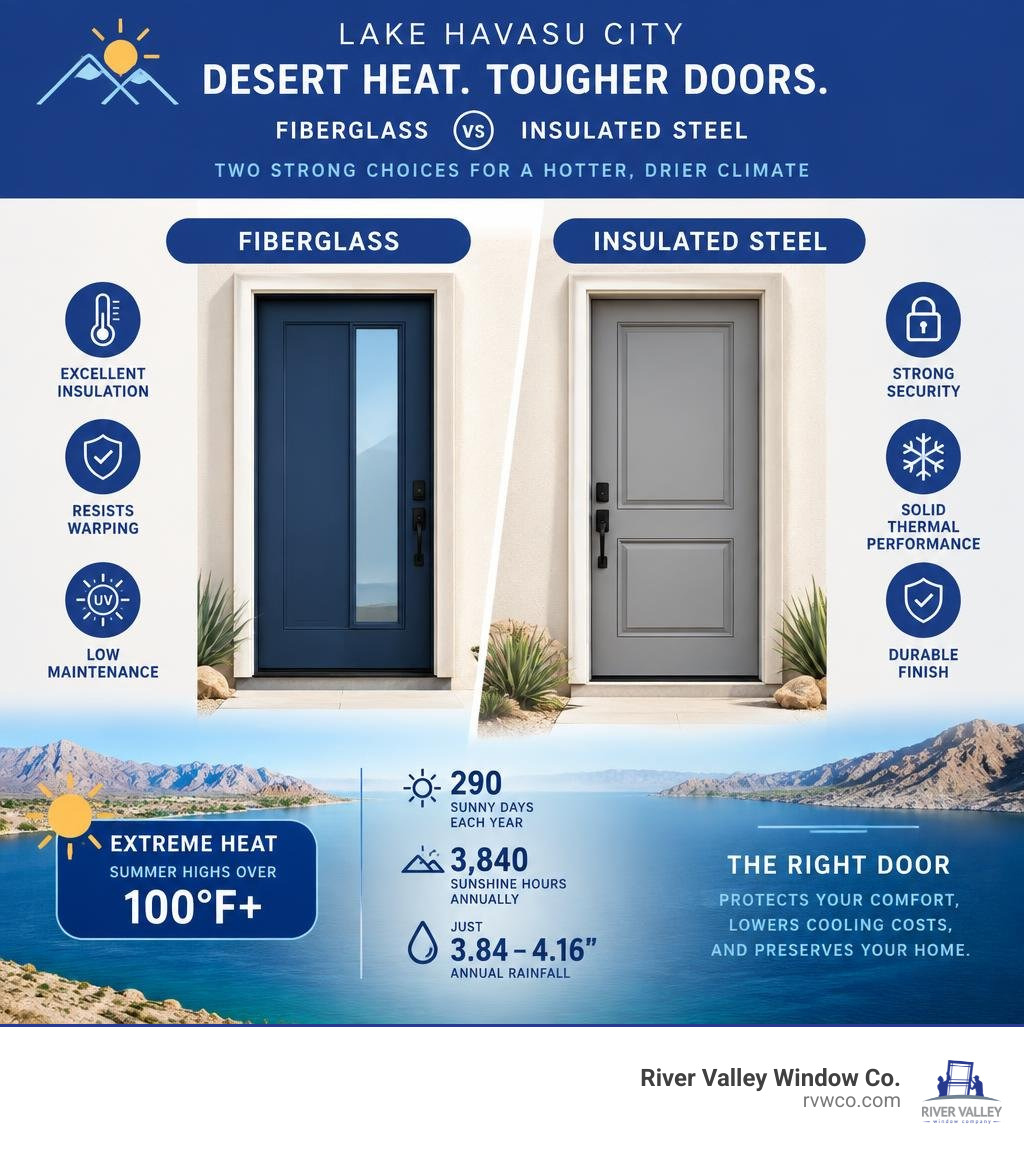
For the Lake Havasu City door desert climate, choose a fiberglass entry door or an insulated steel door with a foam core, UV-resistant finish, tight weatherstripping, and an insulated frame or composite jamb. These materials are far better suited to intense sun, extreme heat, and dry air than standard wood doors.
Look for:
- Fiberglass for strong insulation, low maintenance, and resistance to warping
- Insulated steel for security, durability, and solid thermal performance
- Low-E glass in any door lite or sidelight to limit solar heat and UV damage
- High-quality seals and professional installation to block hot air and fine desert dust
Lake Havasu City is not a mild-climate door market. Summer highs regularly exceed 100 degrees F, July averages can reach about 109 degrees F, and the city has recorded a high of 128 degrees F. Combined with abundant sunshine and very low rainfall, those conditions can fade finishes, dry out seals, expand materials, and turn a weak entry door into a major source of heat gain.
The right door helps protect comfort, cooling costs, and the interior surfaces that harsh UV can fade.
Why Lake Havasu City Door Desert Climate Demands Specialized Materials
Living along the Colorado River offers incredible recreation, but the surrounding Mojave and Sonoran desert ecotone exposes building envelopes to some of the most punishing thermal conditions in North America. Lake Havasu City holds the state record for the hottest temperature ever documented in Arizona at a blistering 128°F. During July and August, afternoon highs routinely stay above 110°F, while average annual rainfall amounts to just 3.84 to 4.16 inches.
With approximately 290 sunny days each year and nearly 3,840 annual sunshine hours, exterior building components endure an unyielding solar beating. When standard residential doors face intense solar radiation and sustained extreme heat, ordinary materials quickly break down. High thermal expansion forces frames out of alignment, while microscopic UV rays degrade standard paints and adhesives.
Understanding the critical role of weatherproofing your home the role of quality doors play is essential for long-term comfort and energy savings. Without purpose-built thermal barriers, an exterior door acts as an oversized radiator, transferring intense exterior heat directly into your living room and driving your air conditioning system into overdrive.
The Impact of Lake Havasu City Door Desert Climate on Standard Wood and Metal
Standard off-the-shelf building materials were never designed to endure sub-10% relative humidity paired with surface temperatures exceeding 140°F on sun-facing walls. Here is what happens when conventional entry doors are exposed to Lake Havasu City’s environment:
- Wood Warping and Splitting: Natural solid wood contains organic moisture. In our hyper-arid climate, unshaded wood bakes dry, leading to severe contraction, bowing, splitting, and permanent structural warping that makes deadbolts impossible to throw.
- Thermal Conduction in Uninsulated Metals: Hollow-core or standard uninsulated metal doors rapidly conduct heat straight through their skin. Touching an uninsulated metal door handle or panel facing a July afternoon sun can feel hot enough to cause discomfort.
- Finish Blistering and Chalking: Standard exterior paints and low-grade stains blister, peel, and oxidize under an average UV index of 6 to 7. Within a few seasons, rich colors turn dull, faded, and powdery.
- Seal Degradation and Dust Intrusion: Standard rubber weatherstripping turns brittle, cracks, and flakes away in the dry heat. Once the seal fails, fine desert dust penetrates the home during seasonal wind events.
Knowing how to protect your doors from harsh weather conditions begins with replacing outdated, vulnerable assemblies with modern thermal engineered systems.
Coastal vs Lake Havasu City Door Desert Climate Performance
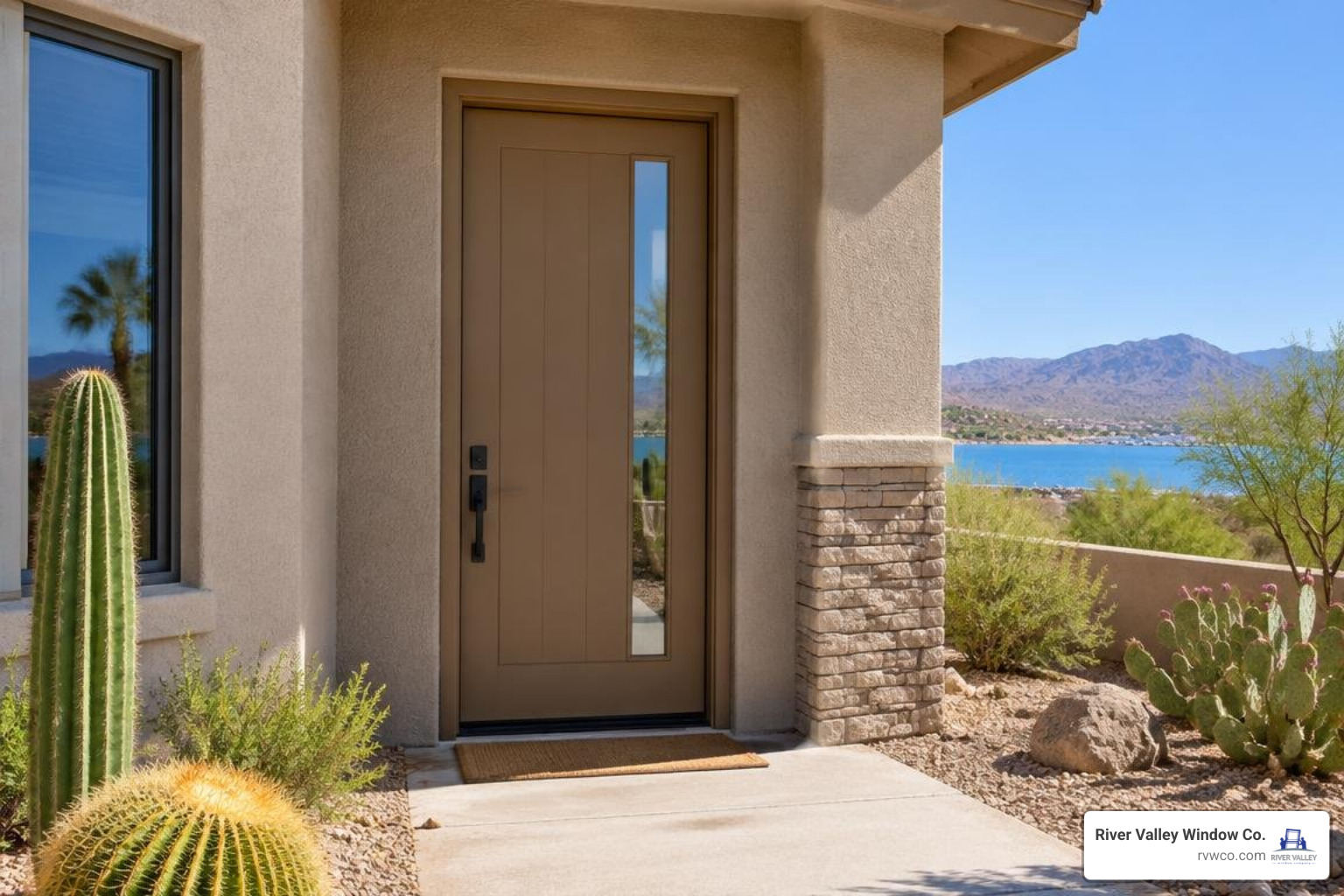
To appreciate the demands placed on doors in Mohave County, compare Lake Havasu City to coastal or temperate regions like Lakewood, California. Coastal areas benefit from marine air layers, higher ambient humidity, and moderate diurnal (day-to-night) temperature shifts. In contrast, Lake Havasu City deals with 175.5% fewer rainy days, 85 more sunny days per year, and severe day-to-night temperature swings where daytime highs of 115°F drop into the 80s or 70s overnight.
These massive daily thermal cycles cause materials to expand rapidly during peak afternoon sunlight and contract sharply at night. In coastal climates, standard vinyl or wood doors last for decades without significant maintenance. In Lake Havasu City, that same door will bow, lose its weather seal, and permit massive solar heat gain within a few short years. Desert homes require materials engineered for dimensional stability, high UV resistance, and zero moisture-dependent elasticity.
The Best Entry Door Materials for Extreme Desert Conditions
When choosing replacement doors in Lake Havasu City, selecting the right base composition prevents early product failure. Knowing what materials are best for replacement windows and doors ensures your investment withstands decades of triple-digit temperatures.
| Feature / Metric | Solid Natural Wood | Uninsulated Steel | High-Performance Fiberglass | Insulated Steel (Thermal Break) |
|---|---|---|---|---|
| Thermal Insulation (R-Value) | Low to Moderate (R-2 to R-3) | Poor (R-1 to R-1.5) | Exceptional (R-5 to R-7) | High (R-5 to R-6) |
| Warp & Crack Resistance | Poor (High Risk in Low Humidity) | Moderate | Excellent (Zero Expansion Movement) | High (Maintains Rigidity) |
| UV Resistance | Requires Yearly Resealing | Moderate (Prone to Chalking) | Superior (Advanced Gel-Coats) | High (Factory Baked Enamel) |
| Heat Conduction to Interior | Low | Extremely High | Negligible | Low (Requires Thermal Break) |
| Maintenance Level | High | Low to Moderate | Extremely Low | Low |
Fiberglass Entry Doors
Fiberglass stands as the gold standard for desert entry systems. Built using compression-molded composite materials surrounding a dense, closed-cell polyurethane foam core, high-end fiberglass doors deliver up to five times the insulating power of solid wood doors.
Fiberglass does not expand, contract, warp, split, or rot, regardless of how intense the summer gets. Manufacturers can mold fiberglass with authentic, deep woodgrain textures like oak, mahogany, or knotty alder, giving you the classic beauty of historic craftsmanship without any of the maintenance headaches. Paired with composite door jambs rather than traditional wood frames, fiberglass entry systems eliminate exterior rot and pest vulnerabilities entirely while how modern doors improve home security and comfort becomes immediately apparent in quieter, cooler interiors.
Insulated Steel Doors
Insulated steel entry doors are another fantastic option for desert homeowners prioritizing maximum security and structural longevity. Unlike hollow utility doors, residential insulated steel doors incorporate thick polyurethane insulation locked between heavy-gauge galvanized steel skins.
To perform properly in our climate, steel doors must feature a built-in thermal break—a non-conductive barrier running along the edges of the door that prevents exterior heat from traveling directly through the metal skin into the home. When evaluating the factors to consider before installing new doors, choosing a factory-applied, UV-reflective finish on your steel door ensures the surface reflects harsh infrared radiation rather than absorbing it.
Critical Energy-Efficiency Features and Glass Packages

A solid door slab is only part of the equation; decorative glass inserts, sidelights, and sliding glass patio doors represent significant surface area where heat gain can occur. Integrating the proper glass technology turns potential weak points into reliable thermal shields.
- Advanced Low-Emissivity (Low-E) Coatings: Low-E coatings consist of microscopically thin, transparent layers of metal oxides applied to the glass panes. These coatings reflect invisible infrared and ultraviolet light while allowing visible natural light to pass through. In hot desert climates, Low-E glass blocks solar heat before it enters your home, protecting floors, upholstery, and artwork from sun damage.
- Low Solar Heat Gain Coefficient (SHGC): SHGC measures how much solar radiation enters through a glass opening on a scale from 0 to 1. For homes in Lake Havasu City, look for assemblies with a low SHGC rating (typically 0.25 or lower) to stop passive solar heating.
- Multi-Pane Insulated Glass Units with Gas Fills: Dual-pane or triple-pane glass units create an insulating air space that disrupts thermal transfer. Filling this space with dense, non-toxic argon gas provides superior insulation compared to plain air, reducing conductive heat flow.
- Warm-Edge Spacer Systems: High-performance composite spacers hold glass panes at precise distances while minimizing heat movement around the glass perimeter.
If your existing patio sliders feel hot to the touch or display condensation between panes, review these 3 signs your patio door isnt energy efficient to identify when a complete replacement is necessary.
Weatherstripping and Thermal Breaks
Even the thickest fiberglass slab cannot protect your home if the surrounding perimeter leaks air. In our arid region, thermal transfer often happens right around the frame edges.
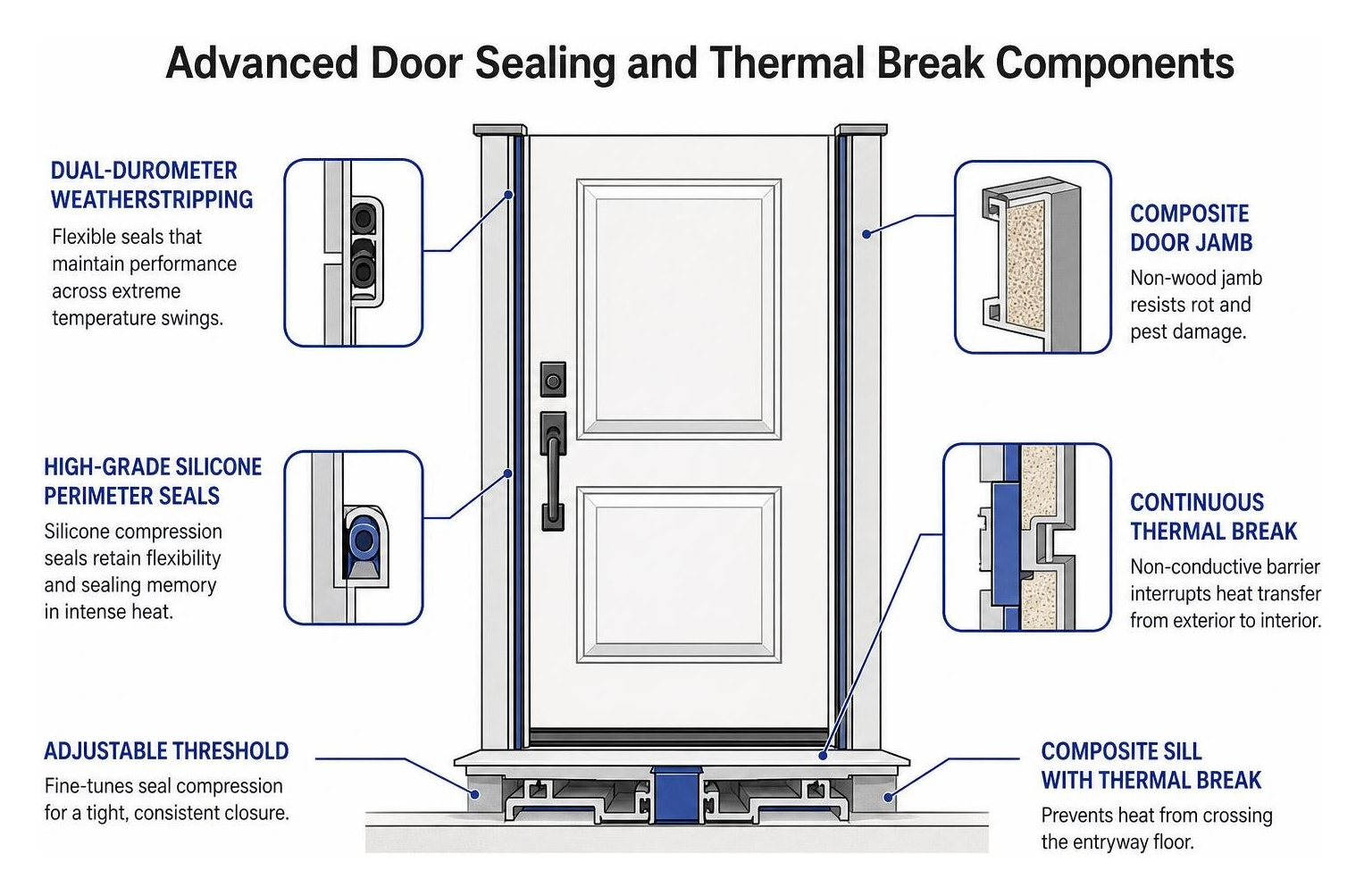
High-performance desert door frames utilize dual-durometer weatherstripping and high-grade silicone perimeter compression seals. Unlike basic foam or vinyl seals that flatten and crumble under intense heat, silicone retains its flexibility and sealing memory across extreme temperature swings.
Additionally, look for composite door sills with adjustable thresholds and continuous thermal breaks. By interrupting the metal pathway from exterior to interior, these sills stop desert heat from creeping across your entryway floor. Addressing perimeter sealing is essential to avoid common mistakes homeowners make when choosing a new door.
Installation Quality and Long-Term Maintenance
Investing in premium doors is only half the battle; precision installation determines whether that system actually delivers its rated energy efficiency. In Lake Havasu City, even a slight 1/16-inch framing misalignment can allow drafts, desert sand, and hot air to bypass the seals.
At River Valley Window Co., we specialize in fast, non-invasive installation techniques tailored specifically to the structural demands of northwestern Arizona homes. By using high-temperature, UV-stable elastomeric sealants, non-conductive shims, and heavy-duty anchoring systems, our certified installation teams ensure your door frame remains plumb, level, and square regardless of extreme exterior ground and wall temperatures.
Failing to address an old, degraded door exposes your home to substantial risks. The 3 dangers of not upgrading your windows and doors include skyrocketing cooling bills, compromised home security, and dust infiltration during monsoon haboobs. When planning your home improvements, reviewing everything you need to know about door replacement cost will help you budget effectively for long-term comfort.
To keep your newly installed desert doors operating smoothly for decades, follow these straightforward maintenance best practices:
- Clean Weatherstripping Seasonally: Wipe down door perimeter gaskets with a damp microfiber cloth to clear away fine silica dust that can abrade seals over time.
- Inspect and Lubricate Hardware: Apply a dry silicone or graphite lubricant to deadbolts, hinges, and multipoint lock mechanisms twice a year. Avoid heavy petroleum oils, which attract desert dust and create sticky grit.
- Clear Sliding Tracks: If you have sliding patio doors, regularly vacuum the lower tracks to remove blown sand and debris that can damage bottom rollers.
- Inspect Exterior Caulk Lines: Annually inspect the perimeter caulking around the exterior brickmould to ensure relentless solar UV hasn’t caused gaps or cracking.
Frequently Asked Questions About Desert Entry Doors
Which door material lasts longest in Lake Havasu’s summer heat?
High-density fiberglass mounted on composite jambs is the longest-lasting entry door option for Lake Havasu City. Fiberglass resists warping, rotting, cracking, and denting, while maintaining dimensional stability even during 120°F+ summer heat waves. Unlike wood, which requires regular sanding and resealing, or steel, which can transfer intense heat without a thermal break, quality fiberglass requires virtually no maintenance beyond occasional surface cleaning.
How does extreme heat affect door warranties?
Extreme thermal stress can cause lower-grade doors to warp or delaminate, often voiding basic retail warranties that exclude heat damage. When investing in premium products like Milgard, it is important to understand the available warranty coverage:
Milgard offers a tiered warranty structure consisting of a standard Limited Lifetime Warranty versus a paid Full Lifetime Warranty upgrade.
- Paid Full Lifetime Warranty Upgrade: This upgrade remains valid for the natural lifetime of the original consumer owner, is non-transferable, and covers both parts and labor. It includes glass breakage coverage for Tuscany® V400 and V450 series products, while glass breakage is available as an added upgrade for Trinsic™ V300 series. Specific components feature defined limits: a 10-year limit applies to insulated glass unit delamination, internal blind defects, and peeling or fading exterior finishes, while a 1-year limit applies to weatherstripping, screens, and corrosion on stainless steel hardware.
- Standard Limited Lifetime Warranty: This baseline coverage varies depending on whether the project is new construction or replacement scope and occupancy type. If transferred after the initial sale, it converts into a 10-year parts-only limited warranty calculated from the original manufacture date, including 10-year hardware coverage and product-specific finish and weatherstripping limitations.
Can energy-efficient doors noticeably lower summer electric bills?
Yes. Replacing an uninsulated wood or hollow metal door with a foam-core fiberglass or thermally broken insulated steel door can reduce heat transfer by up to 70%. When combined with Low-E glass lites and airtight silicone weatherstripping, an energy-efficient entry system eliminates hot spots in your entryway, minimizes air infiltration, and takes significant strain off your air conditioning system during peak summer months.
Conclusion
Lake Havasu City’s desert climate is one of the most demanding environments in the country. With record summer heat, relentless sunlight, low humidity, and blowing dust, your exterior doors serve as the front line of defense for your home’s comfort and efficiency. Standard wood doors and uninsulated metal systems quickly warp, peel, and leak valuable cool air. Upgrading to high-density fiberglass or thermally broken insulated steel systems ensures lasting structural integrity, security, and low energy bills.
At River Valley Window Co., our team brings deep local expertise and precision, non-invasive installation practices to every project in Northwestern Arizona. Ready to equip your home with beautiful, climate-engineered doors designed to thrive under the Arizona sun? Contact our team today to schedule your personalized in-home consultation.