

What Are Ultrex Fiberglass Windows and How Do They Work?
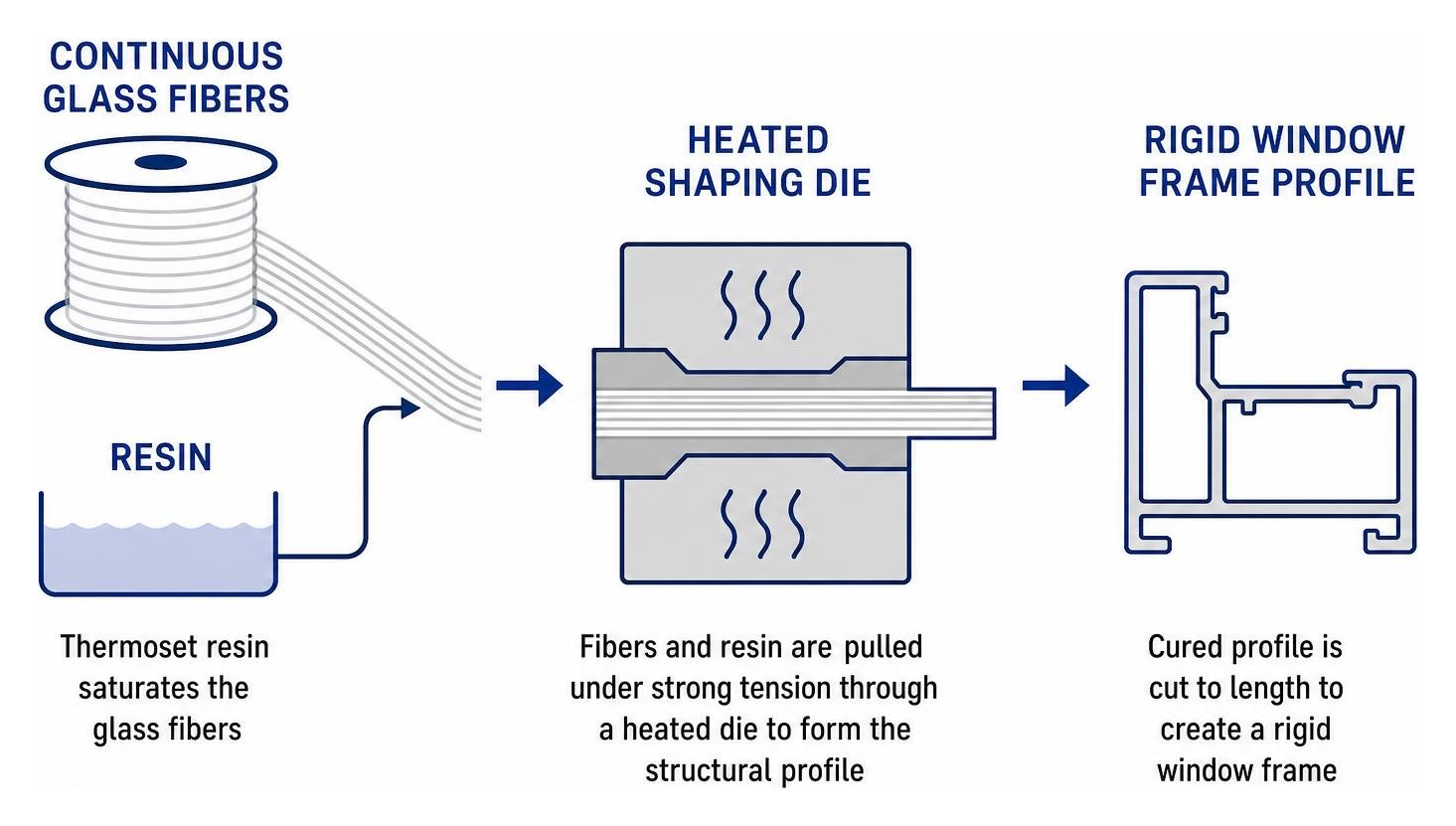
To understand why ultrex fiberglass windows perform so well over time, it helps to look at how the frame material is constructed. Unlike standard vinyl frames that are melted and extruded into shapes, Ultrex is built through a specialized manufacturing method known as pultrusion.
During pultrusion, high-density continuous glass fibers are saturated with a thermoset resin and pulled under strong tension through a heated shaping die. This creates a solid, structural profile that will not melt, sag, or lose its shape under extreme heat. Because glass fibers make up the core of the frame, the material shares physical properties with the glass pane itself.
The structural bond achieved through pultrusion provides key 3 Benefits of Having Fiberglass Windows Installed. Most notably, because the frame and the insulated glass unit expand and contract at virtually the exact same rate, thermal movement is near-zero. This structural alignment eliminates the constant stress placed on edge seals during rapid heat shifts, keeping the internal argon gas secure and helping prevent premature seal failure.
Key Benefits of Ultrex Fiberglass Windows for Long-Term Durability
When selecting replacement window materials, physical durability is paramount. Ultrex fiberglass windows offer a material tensile strength roughly eight times stronger than standard vinyl. This immense structural rigidity allows for thinner frame profiles and larger areas of visible glass without compromising stability.
Key performance advantages include:
- Zero Warping or Swelling: Ultrex is completely impervious to moisture absorption. It will not rot, swell, or warp regardless of humidity or rain exposure, offering proven advantages similar to the 3 Benefits of Fiberglass Windows for Coastal Homes.
- Factory-Bonded Acrylic Finish: Rather than using simple exterior paint, Ultrex features a thick, co-extruded acrylic topcoat applied during manufacturing. This finish resists fading, chalking, scratching, and denting over decades of sun exposure.
- Superior Joint Integrity: The mechanical strength of pultruded fiberglass ensures that window corners stay tight and leak-free, preventing frame deflection during high winds.
Sizing and Specifications for Ultrex Fiberglass Windows
When specifying high-performance fiberglass windows—such as the Marvin Essential Casement series (e.g., CN30 models)—precise sizing and code compliance are essential for a smooth installation.
For a standard 35½” wide casement unit, common dimension height codes and rough opening rules follow specific guidelines:
- Rough Opening Calculation: To find the correct rough opening, add 0.5 inches to both the frame width and frame height. For example, a frame measuring 35.5″ wide by 59.5″ high requires a rough opening of 36″ by 60″.
- Egress Designations (‘E’): Window sizes marked with an ‘E’ in manufacturer specification charts meet standard emergency egress codes for bedroom clear openings. Always verify local building codes prior to placing an order.
- Tempered Glass (‘T’): Codes marked with a ‘T’ indicate factory-tempered safety glass, required for windows located near doors, floors, or hazard zones.
- Hardware & Security: Premium casement units feature heavy-duty folding crank handles that fold flush against the frame to avoid interference with window treatments, along with concealed multi-point locking mechanisms for maximum air seal tightness and home security.
Ultrex Fiberglass vs Other Window Materials: A Performance Comparison
Choosing the right window frame material requires evaluating how each option handles climate stress, maintenance demands, and structural wear over time.
| Performance Metric | Ultrex Fiberglass | Standard Vinyl | Natural Wood | Composite (e.g., Fibrex) |
|---|---|---|---|---|
| Tensile Strength | Exceptional (8x Vinyl) | Moderate to Low | Moderate | Moderate |
| Thermal Expansion | Near-Zero (Matches Glass) | High | Low | Moderate |
| Maintenance Need | Very Low (No Painting) | Very Low | High (Paint/Stain) | Low |
| Moisture / Rot Risk | None | None | High if Unsealed | Low |
| Frame Profile | Sleek & Narrow | Thick / Bulky | Traditional | Moderate |
When deciding What Materials Are Best for Replacement Windows, fiberglass consistently ranks at the top for balancing beauty with low-maintenance strength.
Material Degradation and Maintenance Demystified
Understanding How to Choose the Right Window Material means looking at how materials degrade over time. Natural wood offers classic warmth, but requires regular sanding, painting, or staining to avoid moisture intrusion and rot. Vinyl is rot-proof, but its high thermal expansion rate causes it to bow and twist under scorching summer heat, putting heavy strain on weatherstripping and double-pane glass seals.
Composite materials like Fibrex incorporate wood fibers into a plastic binder. While stronger than basic vinyl, composites still retain some organic materials that can make them more vulnerable to extreme environmental stress than pure, pultruded fiberglass. Ultrex fiberglass windows bypass these issues entirely: they provide the slim aesthetic lines of painted wood without the structural expansion issues of vinyl or the moisture risks of wood.
Cost, Lifespan, and Long-Term Value
Evaluating window frames strictly by their initial price tag often gives an incomplete picture of total ownership cost. Highlighting What Kind of Window Offers the Best ROI involves reviewing long-term performance:
- Extended Lifespan: Because fiberglass does not degrade under solar exposure or moisture, Ultrex frames often last decades longer than basic vinyl, delaying future replacement cycles.
- Sustained Energy Savings: Stronger seals and non-expanding frames mean fewer drafts and lower heating and cooling bills year after year.
- Resale Appeal: High-end fiberglass finishes elevate curb appeal and retain value better during real estate appraisals than budget frame options.
Energy Efficiency and Technical Specifications for Fiberglass Windows
Frame material is only half the efficiency equation; the glass unit completes the envelope. Understanding How Energy Efficient Windows Can Save You Substantial Money starts with selecting low-emissivity coatings and insulating gas fills.
Low-E2 argon-filled glass units block harmful ultraviolet and infrared light, keeping solar heat out during hot summer months while trapping indoor warmth during winter. Combining Low-E glass with warm-edge spacers reduces cold-spot conductivity around the pane edges, drastically lowering interior glass surface condensation.
Double-Pane vs. Triple-Pane Options
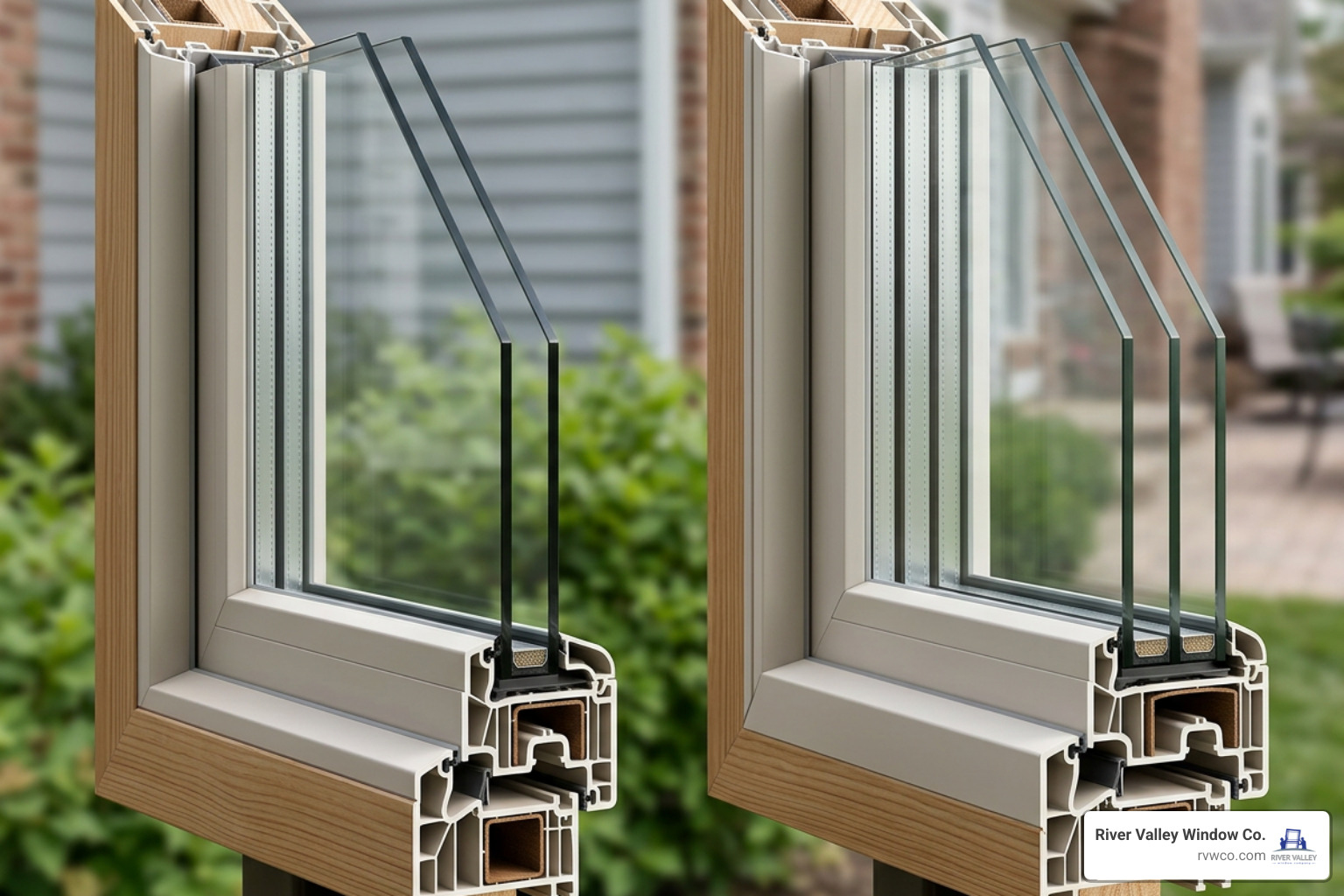
When selecting between double-pane and triple-pane glass configurations, homeowners should match the technology to their specific room orientation and sound-dampening goals. Learn more about pane options in our guide Understanding Single vs Double Pane Windows for Your Home.
- Double-Pane Glass: Ideal for standard residential applications. It offers light sash weight, excellent daylighting, and strong thermal insulation at a lower price point. It works exceptionally well on southern and western elevations where passive solar balance is desired.
- Triple-Pane Glass: Best suited for severe northern climates or street-facing rooms requiring maximum acoustic insulation. The third pane of glass and extra gas chamber add noticeable sound dampening and thermal resistance, though they increase total sash weight and upfront cost.
Warranty Coverage and Protection Terms
When making an investment in new or replacement windows for your home, understanding warranty protection is vital. Industry warranty terms often vary based on installation scope, frame material, and coverage tiers:
- Tiered Warranty Structure: Standard coverage typically comes as a Limited Lifetime Warranty, with some manufacturers offering a paid Full Lifetime Warranty upgrade.
- Scope Differences: Standard Limited Lifetime coverage can vary based on whether the project is new construction versus replacement, as well as property occupancy types.
- Shorter Component Limits: Standard warranties often carry shorter term limits on specific items—such as 10-year limits on insulated glass unit delamination, internal blind defects, and factory finish peeling or fading; and 1-year limits on weatherstripping, insect screens, and stainless steel hardware corrosion.
- Transfer Limits: If a standard warranty is transferred to a second homeowner after a house sale, it commonly converts to a 10-year parts-only limited warranty measured from the original manufacture date, retaining 10-year hardware protection alongside finish and weatherstripping limitations.
- Full Lifetime Warranty Upgrades: Paid Full Lifetime Warranty upgrades typically protect the natural lifetime of the original consumer owner, are non-transferable, and cover both parts and labor. For specific window collections like Milgard Tuscany® V400 and V450, glass breakage coverage is included, whereas for series like Trinsic™ V300, glass breakage must be added as a specific upgrade option.
Frequently Asked Questions About Ultrex Fiberglass Windows
Is Ultrex different from standard pultruded fiberglass?
Yes. While both utilize glass fibers, Ultrex features a proprietary formulation of high-density pultruded fiberglass bonded with a specially engineered acrylic topcoat. This co-extruded finish is significantly thicker and more durable than painted finishes found on generic fiberglass, resisting scratches, chalking, and UV fading over long periods.
Do fiberglass window frames fade, chalk, or warp over time?
No. Because fiberglass has near-zero thermal expansion and is impervious to moisture, it will not warp, bow, or twist under temperature extremes. Furthermore, factory-bonded acrylic topcoats are engineered to resist chalking and UV degradation, retaining their rich finish without requiring routine repainting.
How do you calculate the rough opening size for casement window installation?
To calculate the rough opening for a new construction or full-frame replacement casement window, add 0.5 inches to the total frame width and 0.5 inches to the total frame height. Always double-check manufacturer spec sheets for exact framing clearances before roughing in walls.
Conclusion
Choosing the right window replacement involves balancing structural strength, low upkeep, and thermal performance. Ultrex fiberglass windows deliver an impressive combination of durability, sleek aesthetics, and long-term energy efficiency that outperforms traditional vinyl and wood materials over time.
At River Valley Window Co., our experienced team helps homeowners across Northwestern Arizona navigate frame materials, glass packages, and sizing options to ensure flawless performance. Explore our wide range of Fiberglass Windows today to upgrade your home’s comfort, noise reduction, and curb appeal.