
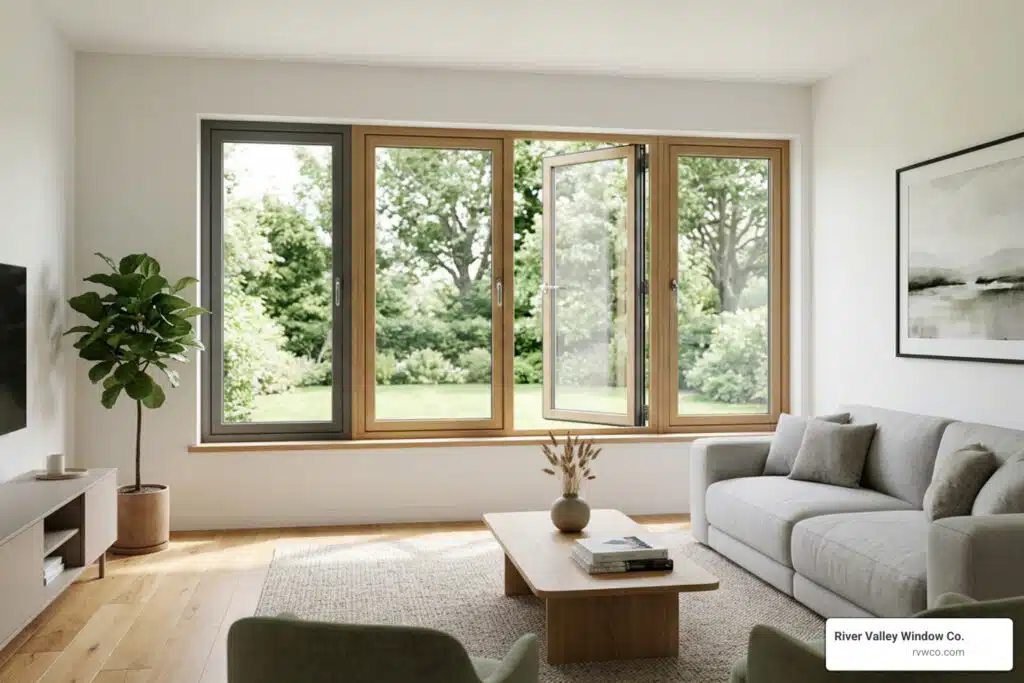
The Best Casement Windows Worth Your Money in 2026
If you’re shopping for the best casement windows on the market, here’s a quick look at the features and frame options most homeowners should compare before making a decision:
Top Casement Window Options at a Glance:
| Window Option | Frame Material | Best For |
|---|---|---|
| Premium fiberglass casement windows | Fiberglass | Long-term durability, heat resistance, slim profiles |
| Energy-efficient vinyl casement windows | Vinyl or uPVC | Low maintenance, strong value, moisture resistance |
| Composite casement windows | Engineered composite | Stable performance, low upkeep, modern styling |
| Wood-clad casement windows | Wood interior + protected exterior | Traditional interiors, architectural character |
| Thermally broken aluminum casement windows | Aluminum with thermal break | Modern designs, larger openings, structural strength |
| Milgard energy-efficient casement windows | Vinyl or fiberglass options | Northwestern Arizona homes, warranty-backed performance |
Old, drafty windows are more than an eyesore. In a place like Northwestern Arizona, where summer heat is relentless and energy bills climb fast, the windows you choose have a real impact on your comfort and wallet.
Casement windows are one of the smartest upgrades you can make. They seal tighter than most other window styles, crank open wide for maximum airflow, and come in materials built to handle extreme heat and UV exposure.
But not all casement windows are created equal. The frame material, glass package, hardware quality, and installation team you choose will determine how well your windows actually perform – and how long they last.
This guide breaks down everything you need to know to pick the right ones.
What Are Casement Windows and How Do They Work?
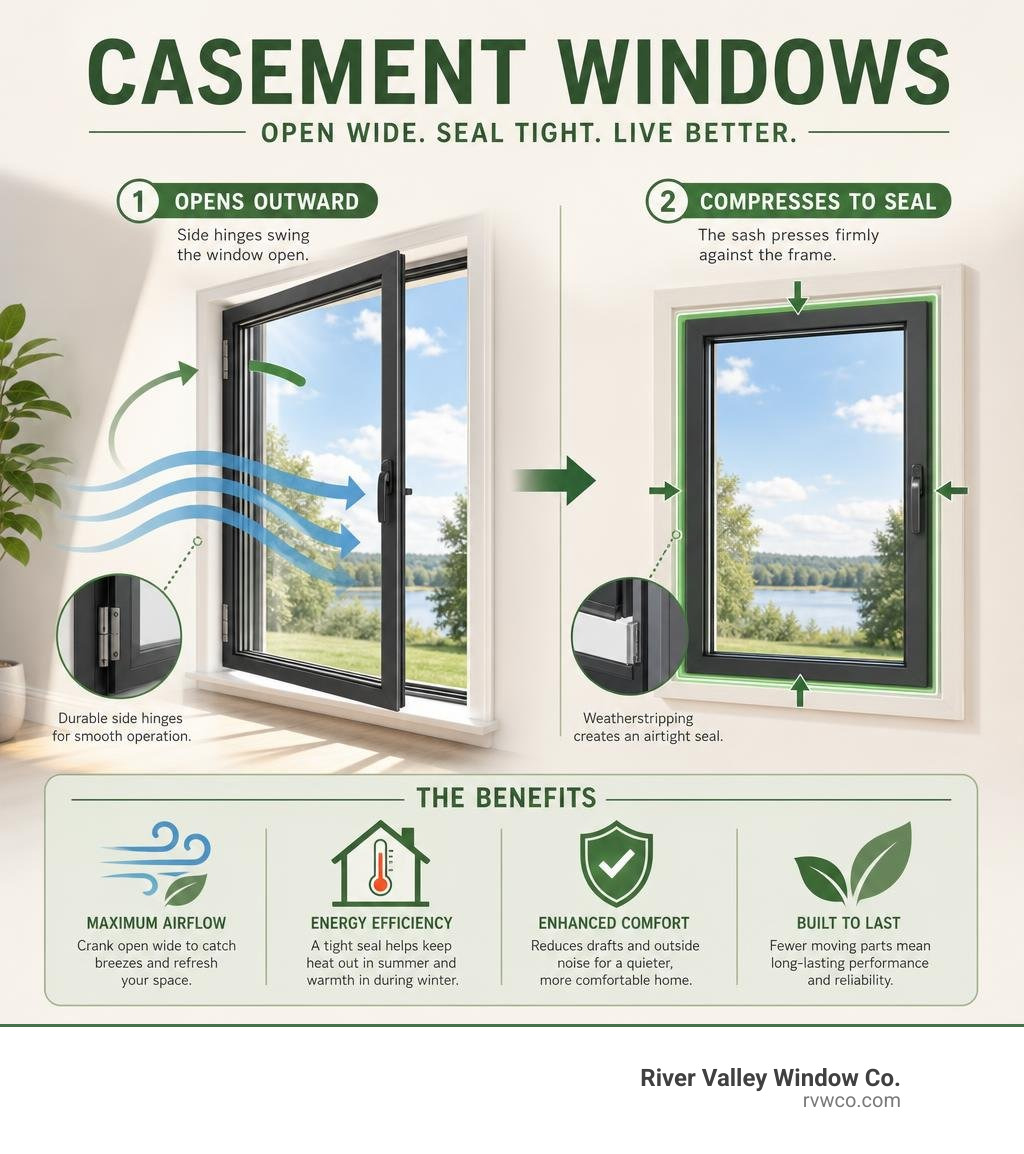
A casement window is a vertically oriented window attached to its frame by one or more hinges on the side. Unlike traditional windows that slide up and down, casement windows swing outward to open—very much like a door.
Most modern casement designs utilize a manual crank mechanism located at the base of the frame. Turning this crank smoothly pushes the window sash open and pulls it shut. For those who prefer a more minimalist aesthetic, push-out casement windows are also available. Instead of a crank, push-out models feature a simple handle that allows you to manually push the window open and lock it into place.
When compared to other popular styles like double-hung or sliding windows, casements offer several distinct mechanical advantages:
- Double-Hung Windows: These feature two sliding sashes that move vertically within the frame. While classic, the tracks required for double-hung windows naturally leave tiny gaps where air can seep through.
- Sliding Windows: These operate horizontally along a track. Much like double-hung units, their sliding seals are inherently more prone to minor air infiltration over time.
- Casement Windows: Because the sash of a casement window presses flat against the frame when locked, it creates an exceptionally tight, airtight seal.
Understanding these physical differences helps highlight What Are the Benefits of Replacement Windows? when you are upgrading your home’s thermal envelope.
Key Benefits of Casement Windows
The unique engineering of casement windows provides several unmatched benefits for homeowners:
- Exceptional Ventilation Control: Because the open sash acts like a sail, it can capture side breezes and funnel fresh air directly into your living space. This is highly effective for cooling your home naturally during those pleasant Arizona spring and autumn evenings.
- Unobstructed Views: Unlike double-hung windows, which have a horizontal meeting rail right in the center of your sightline, casement windows feature a single, clear pane of glass. This gives you a picture-window view of the outdoors while maintaining full operability.
- Enhanced Security Features: Casement windows are incredibly difficult to break into. The lock mechanisms are embedded deep within the frame, and the hook-shaped multi-point locks secure the sash at multiple spots. Because the hardware is entirely on the inside, there is no way for an intruder to pry a locked casement window open from the exterior.
- Superior Energy Efficiency: From a thermal perspective, casement windows are widely considered the most energy-efficient operable window style. When closed, the single sash design minimizes air leakage. Furthermore, when wind blows against the exterior of a casement window, it actually pushes the sash tighter against the weatherstripping, reinforcing the seal.
If you are noticing draftiness, high utility bills, or frames that are warped from the blistering desert sun, it might be time to review the 3 Signs It’s Time for Window Replacement to protect your home.
Sizing, Configurations, and Egress Requirements
Casement windows are incredibly versatile and can be configured to fit almost any architectural layout. Standard sizes typically range from 1 foot to 4 feet in width, and 2 feet to 8 feet in height. For larger openings, manufacturers can join multiple casement units together—often called twin or triple casements—without requiring supportive wall framing between them. This maximizes your glass area and preserves your desert views.
When selecting window sizes, it is vital to understand the industry’s four-digit sizing notation. For example, a window labeled “2436” measures 2 feet, 4 inches wide by 3 feet, 6 inches tall. If standard sizes do not fit your existing openings, premium brands offer custom sizing down to 1/8-inch increments, ensuring a perfect fit without extensive wall reconstruction.
For bedrooms and basements, casement windows are an excellent choice for meeting emergency egress codes. Egress codes require windows to be large enough for a firefighter to enter and a resident to escape safely during an emergency. The minimum standards under the International Residential Code (IRC) generally require:
- A minimum net clear opening of 5.7 square feet (or 5.0 square feet for ground-floor windows).
- A minimum net clear opening height of 24 inches.
- A minimum net clear opening width of 20 inches.
Because casement windows open fully outward rather than sliding halfway, they require a much smaller overall rough opening to meet these strict egress standards compared to double-hung or sliding windows. This makes them ideal for smaller rooms where wall space is limited. When planning your project, knowing How to Choose the Right Replacement Windows for Your Needs will save you time and keep your home compliant with local building safety codes.
Designing with the Best Casement Windows for Your Home
Whether your home features a modern mid-century aesthetic, a rustic Southwestern design, or a classic Spanish-revival stucco exterior, casement windows can be customized to match.
For contemporary homes, clean lines and dark interior frames (such as bronze or black) emphasize geometric simplicity and frame your outdoor scenery like a piece of art. If your home has a traditional look, you can add custom grille patterns—such as Prairie or Colonial grids—to mimic the appearance of classic divided-lite windows without sacrificing the energy efficiency of a single, continuous pane of glass.
Upgrading your windows also has a massive impact on your home’s exterior appeal. To learn more about how frame profiles and colors can completely upgrade your home’s facade, explore How Window Frames Impact Your Curb Appeal. Understanding How New Windows Can Transform the Look of Your Home allows you to design a space that is both highly functional and visually stunning.
Evaluating the Best Casement Windows by Frame Material
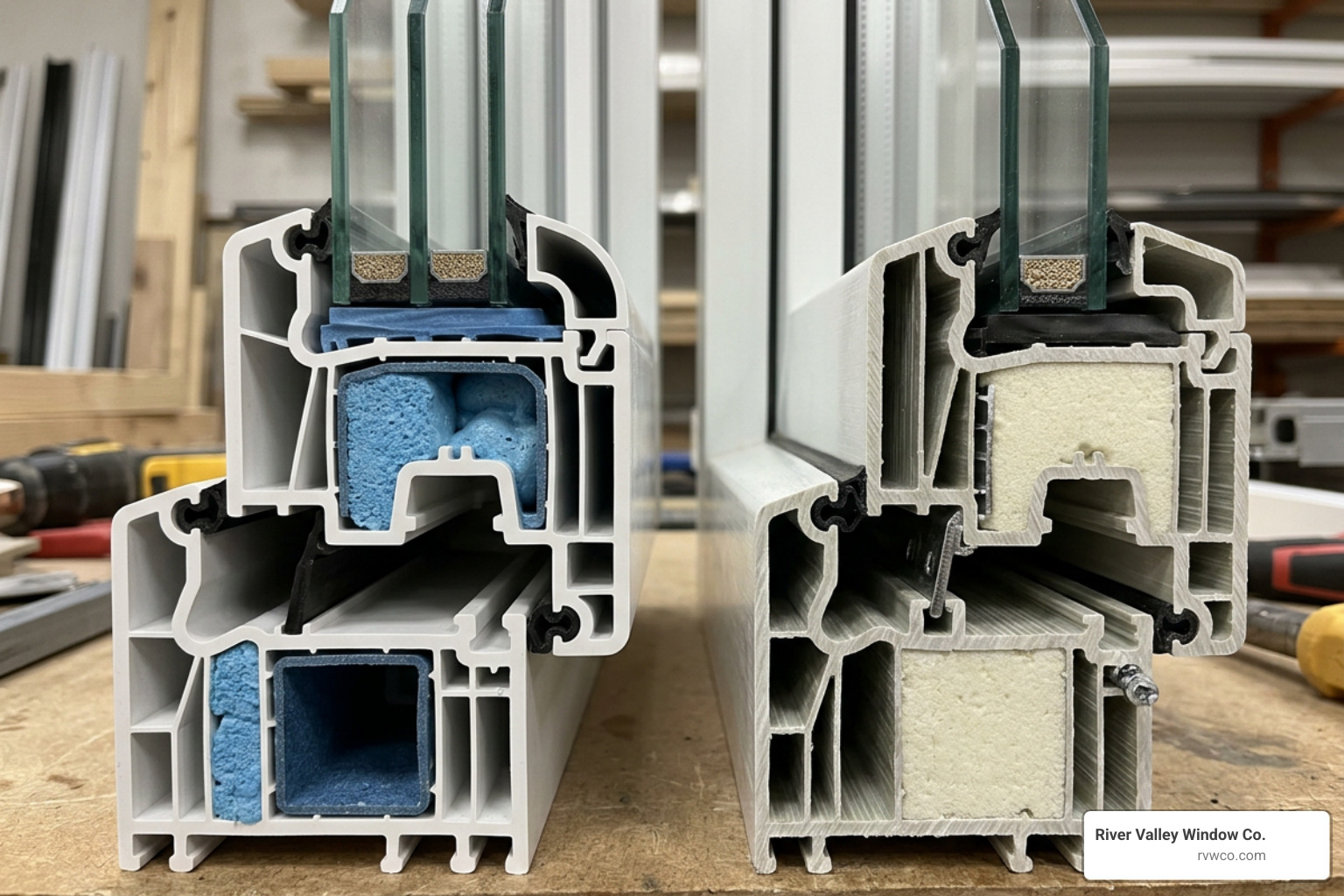
The material you choose for your window frames directly impacts their durability, maintenance requirements, and thermal performance – especially in areas like Lake Havasu City, where summer temperatures regularly soar past 110°F.
To help you make an informed decision, let’s compare how the four primary frame materials stack up against each other:
| Feature | Vinyl | Fiberglass | Wood | Aluminum |
|---|---|---|---|---|
| Durability | Moderate (can expand/contract in high heat) | Exceptional (highly stable, won’t warp) | High (requires protection from moisture) | High (structural strength, prone to scratches) |
| Maintenance | Very Low (never needs painting) | Very Low (wipe clean, highly fade-resistant) | High (regular painting, staining, sealing) | Low (occasional cleaning) |
| Thermal Insulation | Good | Excellent | Excellent | Poor (conducts heat unless thermally broken) |
| Aesthetics | Clean, modern, limited dark colors | Versatile, mimics wood, dark colors available | Unmatched classic beauty, paintable | Sleek, industrial, modern |
| Relative Cost | Budget-friendly | Mid-to-High | Premium | Mid-to-High |
Choosing the right material requires balancing your budget with your home’s specific architectural style and climate needs. For a deeper dive into materials, check out our guide on How to Choose the Right Window Material.
Vinyl and Fiberglass: The Best Casement Windows for Durability
For homeowners in Northwestern Arizona, vinyl and fiberglass are often the top recommendations due to their incredible durability and low-maintenance profiles.
Vinyl windows are highly popular because they are cost-effective, resistant to moisture, and never require painting or staining. Premium vinyl compounds are engineered to resist UV degradation, ensuring they won’t crack or peel under the desert sun.
If you are looking for the absolute peak of durability, fiberglass is the ultimate material. Fiberglass frames are incredibly strong – often twice as strong as vinyl – allowing for thinner frame profiles and larger expanses of glass. Fiberglass has a very low thermal expansion rate, meaning it expands and contracts at virtually the same rate as the glass pane itself. This stability prevents seals from breaking and preserves your home’s energy efficiency for decades.
Innovations in frame technology continue to push boundaries. For example, advanced multi-chambered uPVC frame designs, such as this technical example of a 90mm casement window, show how deeper frame profiles can support low U-values and improved acoustic performance.
When evaluating options for your home, reading about What Materials Are Best for Replacement Windows? and 3 Materials to Consider for Your Replacement Windows will help you choose a frame that stands up to the elements.
Key Factors to Consider Before Buying Casement Windows

Before you invest in new casement windows, there are several practical factors to keep in mind:
- The Local Climate: In Northwestern Arizona, heat rejection is your number one priority. Look for casement windows equipped with double or triple-pane glass, argon gas fills, and spectrally selective Low-E coatings. These technologies work together to block infrared heat while letting in beautiful natural light.
- Hardware Quality: Because casement windows rely on mechanical gears to open, high-quality hardware is non-negotiable. Look for corrosion-resistant stainless steel or heavy-duty die-cast zinc operators. Folding crank handles are also a fantastic feature, as they fold flat against the frame to prevent interference with your blinds or curtains.
- The Installation Process: Even the most expensive window will fail if it is installed poorly. Proper flashing, leveling, and air-sealing are critical to preventing desert dust, hot winds, and occasional heavy monsoon rains from penetrating your walls.
When planning your window replacement project, working with an experienced, licensed local installer is the best way to ensure your new casement windows perform perfectly for decades. A professional team will ensure a precise fit, proper insulation, and a seamless finish that protects your home from the harsh desert elements.
Frequently Asked Questions About Casement Windows
Are casement windows secure?
Yes, casement windows are among the most secure operable windows available. When closed, the latch operates a multi-point locking system that secures the sash tightly to the frame at multiple points. Because the crank mechanism is located entirely inside the home and the sash closes flush with the frame, there are no exterior leverage points for an intruder to use to pry the window open.
Do casement windows work well in windy areas?
They perform exceptionally well in high winds. The design of a casement window utilizes a compression seal around the entire perimeter. When strong winds blow against the window, they actually press the sash firmly into the frame, compressing the weatherstripping and creating a tighter seal against drafts and dust.
Can casement windows be used over kitchen sinks?
Absolutely. In fact, they are the preferred choice for hard-to-reach locations like kitchen sinks or laundry counters. Reaching over a deep sink to lift a heavy double-hung window can be difficult and strain your back. A casement window’s easy-to-turn crank handle is located at the very bottom of the frame, making it simple to open with just one hand.
Conclusion
Upgrading your home with the best casement windows is an investment that pays off in lower energy bills, improved comfort, and gorgeous views. By selecting the right frame materials and working with a trusted local team, you can enjoy a more beautiful, energy-efficient home for years to come.
At River Valley Window Co., we serve homeowners throughout Northwestern Arizona—including Lake Havasu City—specializing in Milgard’s top-tier, energy-efficient window products. We pride ourselves on providing fast, non-invasive installations backed by an industry-leading lifetime warranty.
Ready to transform your home? Explore our full range of River Valley Window Co. Services and schedule your consultation with us today!